25 Most Beautiful Places in the World to Visit Once in a Lifetime
Published: 20 Jun 2026

Affiliate Disclosure: I may earn a small commission if you book through the links in this guide, at no additional cost to you.
Some trips are enjoyable. Others become stories you tell for the rest of your life.
From ancient cities carved into stone and mountaintop ruins hidden among clouds to remote islands, wildlife-filled plains, and landscapes that seem almost impossible to exist, certain destinations leave a lasting mark on everyone who visits them.
If you’re searching for the best places to visit in the world once in a lifetime, this list brings together some of the famous places around the world. These destinations span continents, cultures and landscapes, but they share one thing in common: they offer moments that are difficult to forget and nearly impossible to replicate anywhere else.
Whether you’re planning your next adventure or simply building your travel bucket list, these remarkable places deserve a place on it.
1. Eiffel Tower, France
The Landmark Every Traveler Dreams Of
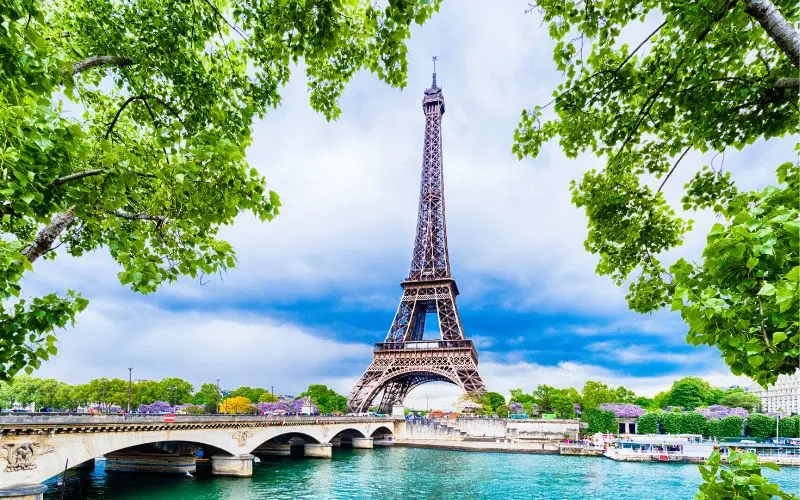
Some landmarks become more than just attractions, they become symbols of the places they represent. The Eiffel Tower is one of those rare sights. Rising above Paris, this famous iron structure has become a defining image of France and one of the most visited landmarks in Europe.
Built for the 1889 World’s Fair, the Eiffel Tower was once considered a daring achievement in architecture and engineering. Today, it offers travelers a completely different experience: a chance to see Paris from above and enjoy one of the most memorable city views in the world.
From the observation decks, the beauty of the French capital unfolds below. The River Seine winds through the city, charming neighborhoods stretch across the horizon, and famous attractions like the Louvre Museum and Notre-Dame de Paris create a stunning skyline.
For many travelers, visiting the Eiffel Tower is a bucket-list moment. It is often the first place people imagine when planning a trip to Paris, turning a simple city visit into a memory that lasts for years. The experience is not only about reaching the top but it is about seeing the city from a new perspective and feeling the atmosphere of one of the world’s most iconic destinations.
The magic continues after sunset when the tower sparkles above Paris. Watching it glow while walking beside the Seine or relaxing in the nearby gardens is one of those simple travel moments that feels unforgettable.
Spring and early autumn are usually ideal times to visit Paris, with comfortable weather for exploring the city on foot. Early mornings and evenings are great choices if you want beautiful views with fewer crowds.
Bucket-List Experience: Watching the Eiffel Tower sparkle at night while Paris lights up around you.
Travel Tip: View the Eiffel Tower from the gardens, Seine riverbanks, and nearby streets for different perspectives. If you want to visit the summit, reserve your entry ticket in advance to save time.
Read Also:
- Best Places to Visit in France Beyond Paris
- Most Beautiful Cities in the World to Visit
- Best Countries to Visit in Europe
2. Great Wall of China, China
Where History Meets the Mountains
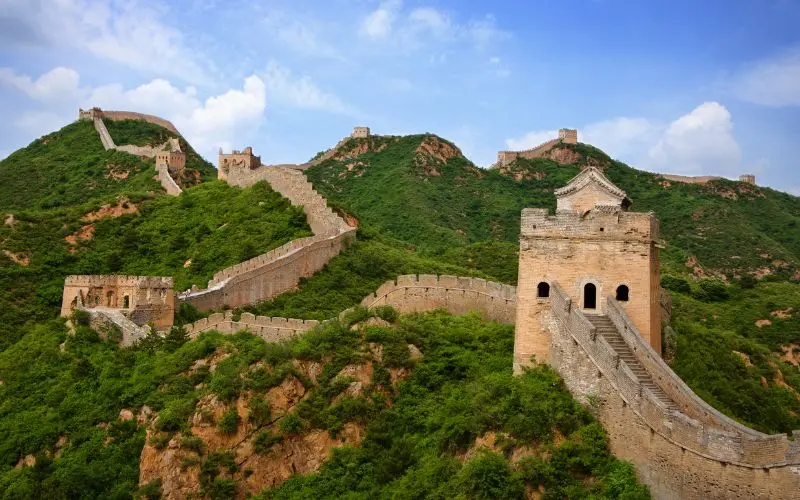
Stretching across thousands of kilometers of rugged landscapes, the Great Wall of China is one of the few landmarks in the world that feels almost impossible to fully imagine. It follows mountain ridges, crosses valleys, and disappears into the distance, showing the incredible ambition behind one of history’s greatest construction projects.
Built over many generations, the wall tells the story of ancient China’s past. Its watchtowers, stone paths and defensive sections reveal how this massive structure once protected important territories and connected different regions.
A visit to the Great Wall is about more than seeing an ancient monument. It is the feeling of standing on a pathway shaped by centuries of history while looking over endless mountains and forests. Every turn brings a new view, and every section has its own character.
For many travelers exploring China for the first time, visiting the Great Wall becomes the highlight of the journey—a place where history, culture, and breathtaking landscapes come together in one unforgettable experience.
The sections near Beijing are the most popular with visitors because they are easier to reach and offer some of the best-preserved views. Travelers looking for a quieter adventure can explore less crowded areas where the wall feels more connected to the surrounding nature.
Spring and autumn are usually the best seasons to visit, with comfortable temperatures and clearer views for walking and photography.
Bucket-List Experience: Standing on the Great Wall and watching it disappear across the mountains ahead.
Travel Tip: Wear comfortable shoes and plan extra time for exploring. The most memorable views often appear beyond the busiest viewpoints.
Read Also:
3. Colosseum, Italy
Where Ancient Rome Comes Alive
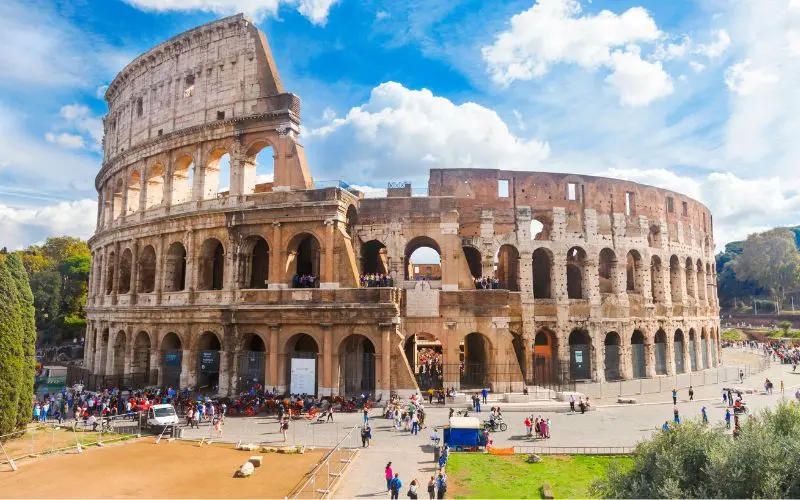
In the heart of Rome stands a landmark that has witnessed centuries of history. The Colosseum is more than an ancient structure—it is a reminder of the power, creativity, and complexity of the Roman Empire.
Built nearly two thousand years ago, this massive amphitheater once hosted public events that attracted thousands of spectators. Its enormous stone arches and carefully designed spaces show the incredible engineering skills of ancient Rome.
Walking through the Colosseum gives travelers a chance to connect with the past in a way few places can offer. The underground chambers, worn stone pathways, and towering walls reveal stories of ancient entertainment, architecture, and daily life.
What makes the Colosseum unforgettable is its location. Surrounded by some of Rome’s most historic areas, it sits close to the Roman Forum and Palatine Hill, allowing visitors to explore the remains of the city that shaped much of the modern world.
For travelers visiting Italy for the first time, the Colosseum often becomes one of the most memorable stops. It is a place where history feels real—not just something you read about, but something you can stand inside and experience.
Spring and autumn are ideal seasons to explore Rome, with pleasant weather for walking through the city’s ancient streets.
Bucket-List Experience: Standing inside the Colosseum and imagining the crowds that filled this legendary arena centuries ago.
Travel Tip: Visit early in the morning or later in the afternoon for better light, cooler temperatures and a more enjoyable experience.
Read Also:
- Best Time to Visit Italy
- Best Things to Do in Rome,Italy and Places to Visit
- Italian Words and Phrases to Know Before Visiting Italy
- Best Places to Travel Safely for Solo Female
- Most Beautiful Countries in the World to Visit
4. Statue of Liberty, USA
Where Freedom Meets the Skyline
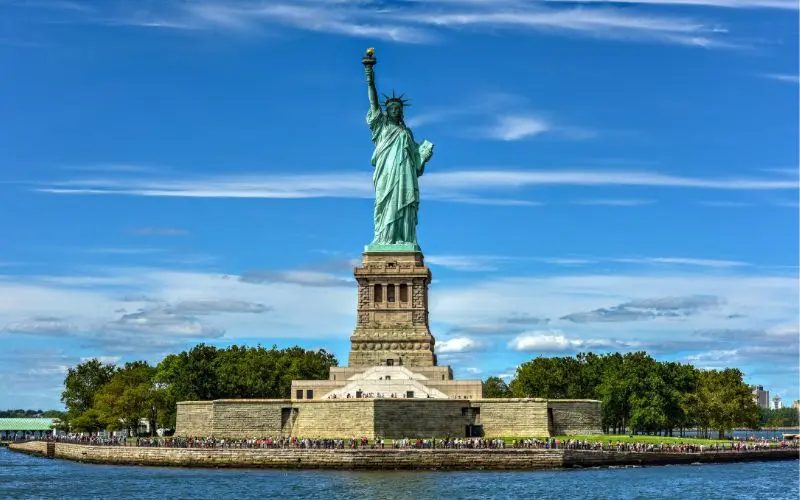
Standing tall in New York Harbor, the Statue of Liberty has welcomed travelers, dreamers, and newcomers for generations. More than just a famous monument, it has become a powerful symbol of freedom, hope, and the spirit of the United States.
Gifted by France and unveiled in 1886, this copper statue was created as a symbol of friendship between nations. Over time, it became one of the most recognizable landmarks in the world and a defining part of New York City’s identity.
The experience begins before reaching the island. As the ferry moves across the harbor, the Statue of Liberty slowly comes into view with the Manhattan skyline behind it. That first sight is often the moment travelers realize they are seeing one of the world’s most iconic places in real life.
A visit allows you to explore the island, learn about the history behind the monument, and enjoy panoramic views of New York Harbor. The nearby Ellis Island adds another meaningful layer, sharing stories of millions of people who arrived in America through this gateway.
For many visitors traveling to the USA, seeing the Statue of Liberty becomes a bucket-list moment. It represents not only a landmark but also the stories, cultures, and journeys connected to New York.
Spring and autumn are often great times to visit, with comfortable weather for exploring the harbor and the city.
Bucket-List Experience: Taking the ferry across New York Harbor and seeing the Statue of Liberty with the Manhattan skyline behind it.
Travel Tip: Go early in the day to enjoy calmer ferry rides and more time to explore the island.
Read Also:
- Most Beautiful Places to Visit in the United States
- Largest Shopping Malls in the USA
- Largest Airports in the US by Size
5. Burj Khalifa, UAE
The Landmark That Defines Dubai
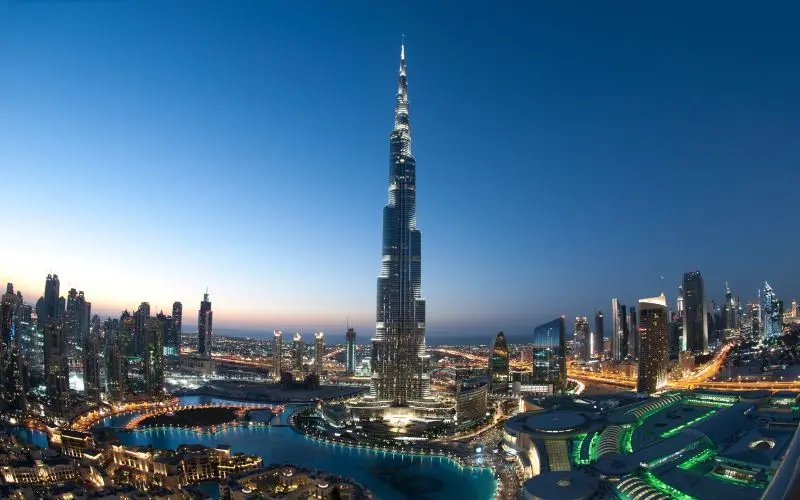
Rising above the futuristic skyline of Dubai, the Burj Khalifa is a landmark that represents ambition, innovation, and modern architecture. Standing as the tallest building in the world, it has become one of the most recognizable sights on the planet.
The tower changed the way people imagine city skylines. Its sleek design, incredible height, and engineering achievements turned it into more than a building—it became a symbol of Dubai’s rapid transformation into a global destination.
The experience begins as you approach Downtown Dubai and see the tower stretching far above the city. From the observation decks, travelers can look across Dubai’s unique landscape, where desert surroundings meet modern skyscrapers, coastline views, and futuristic developments.
Visiting the Burj Khalifa is not only about reaching the top. The area around it offers some of Dubai’s most memorable experiences, including the famous Dubai Fountain and the vibrant atmosphere of Downtown Dubai. Seeing the tower illuminated at night creates a completely different impression from the daytime views.
For many travelers visiting the UAE, the Burj Khalifa becomes a highlight of the trip—a place where modern design, luxury, and a vision for the future come together.
The cooler months between November and March are usually the most comfortable for exploring Dubai’s outdoor attractions and enjoying city views.
Bucket-List Experience: Watching Dubai’s skyline from the world’s highest observation deck.
Travel Tip: Book your observation deck time around sunset to experience both daytime views and the city lights after dark.
Read Also:
- Burj Khalifa At the Top vs SKY – Which Is Worth It?
- Best Places to Visit in Dubai
- Things to Do in Dubai with Family
- One Week in UAE: 7-Day Dubai & Abu Dhabi Itinerary
- Dubai Dress Code for Women & Tourists
6. Niagara Falls, Canada & USA
Where Water Creates a Natural Wonder
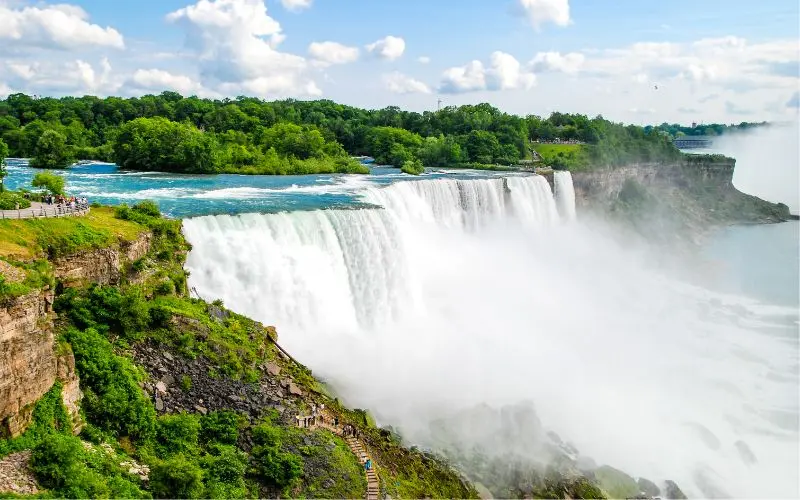
Few natural sights create such an immediate sense of awe as Niagara Falls. Located on the border between Canada and the United States, this powerful group of waterfalls turns the movement of water into one of the most unforgettable landscapes in North America.
Created by the Niagara River, the falls are made up of three main sections: Horseshoe Falls, American Falls, and Bridal Veil Falls. Together, they create a breathtaking display of rushing water, mist, and sound that can be experienced from many different viewpoints.
The beauty of Niagara Falls is not only in its size but also in its atmosphere. Standing near the viewpoint, travelers can feel the power of millions of liters of water flowing over the cliffs every minute. The mist rises into the air, rainbows appear in the sunlight, and the surrounding landscape adds to the magic.
A visit becomes even more memorable when you explore beyond the main viewing areas. Boat experiences, scenic walks, and nearby attractions allow travelers to see the falls from different angles and appreciate how unique this natural wonder truly is.
For first-time visitors to North America, Niagara Falls often becomes one of those rare travel moments where the scale of nature feels completely different from anything seen before.
The best time to visit is usually during late spring through early autumn when the weather is pleasant and outdoor experiences are fully available.
Bucket-List Experience: Seeing the massive flow of Niagara Falls up close and feeling the mist rise around you.
Travel Tip: Stay until evening if possible. The falls look completely different when illuminated after sunset.
7. Taj Mahal, India
Mughal Architecture’s Greatest Symbol of Love
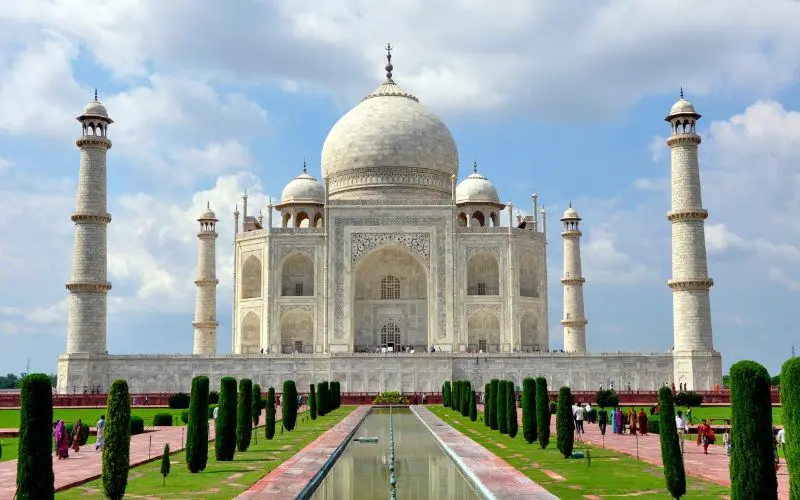
Standing along the Yamuna River in Agra, the Marble Monument of Love rises in perfect symmetry, appearing almost weightless against the sky. Built entirely from white marble, its surface changes throughout the day, soft pink at sunrise, bright white under midday sun, and golden in the fading light of evening.
Commissioned in the 17th century by Mughal emperor Shah Jahan, the monument was built in memory of his wife Mumtaz Mahal. More than a symbol of love, it represents one of the finest achievements of Mughal architecture, where Persian, Islamic, and Indian design traditions merge into a single, unified expression.
What makes the Taj Mahal remarkable is not only its structure but its sense of balance. The main dome rises gently above symmetrical gardens, reflecting pools extend toward its entrance, and minarets frame the central mausoleum with precise alignment. Every element feels deliberately placed, creating a visual stillness that draws the eye inward.
Approaching it at dawn, the monument appears almost suspended in silence. Mist often lingers over the river, and the first light slowly reveals the details of carved marble and delicate inlay work that define its surface.
The ideal time to experience the Taj Mahal is between October and March, when the weather is cooler and early morning light enhances its shifting colors.
Bucket-List Experience: Watching the Taj Mahal change color as the sun rises over the Yamuna River.
Travel Tip: : Sunrise is the best time to visit, offering fewer crowds and the most stunning views.
Read Also:
- Taj Mahal Travel Guide: Everything You Need to Know Before Visiting
- 20 Most Beautiful UNESCO World Heritage Sites in the World (Travel Guide)
8. Machu Picchu, Peru
Where Ancient Stones Touch the Clouds
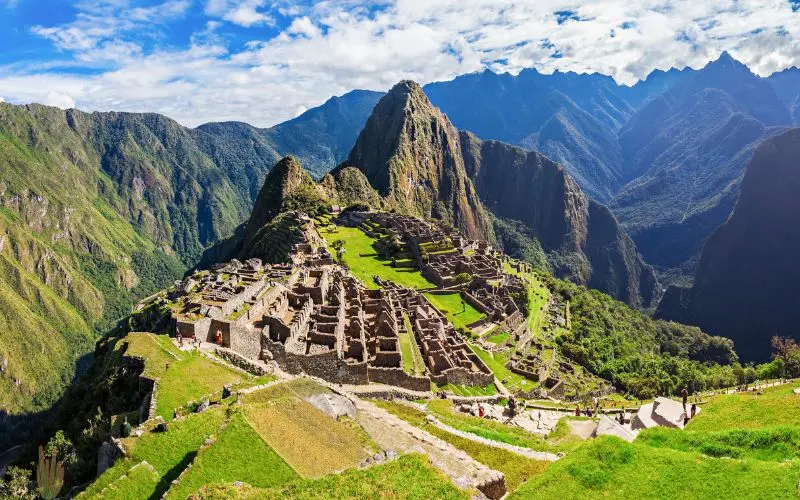
High above the Sacred Valley, where the Andes fold into steep green ridges and low clouds drift like slow-moving rivers, Machu Picchu emerges in fragments rather than all at once. Stone structures appear between shifting mist, as if the mountain itself is revealing a memory it has held for centuries.
Widely regarded as the finest surviving example of Inca engineering, Machu Picchu is a UNESCO World Heritage Site and one of South America’s most celebrated archaeological landmarks.
Constructed in the 15th century under the Inca civilization, this mountaintop citadel reflects an extraordinary level of planning and precision. It remained untouched by the outside world for hundreds of years, hidden deep within rugged terrain that naturally protected its silence.
What makes Machu Picchu remarkable is not only its historical depth, but the way it belongs to its environment. Terraces step down the mountain like carved layers of the earth itself, while temples and open plazas follow the natural lines of the ridge. Nothing feels forced; everything appears to belong exactly where it stands.
The route to reach it adds to the overall experience. Some travelers arrive after long hours on ancient trails that cut through cloud forests and high-altitude passes, entering through the Sun Gate as the first light spreads across the valley. Others approach by rail, following the Urubamba River as it winds through narrow canyons and dense green slopes until the ruins appear above the landscape without warning.
At dawn, the site has a stillness that feels almost suspended. Wind moves gently through stone corridors, clouds slide between terraces, and the entire mountain slowly comes into focus as daylight strengthens. It is not a moment of spectacle, but of quiet intensity, the kind that stays in memory long after the journey ends.
Machu Picchu leaves its strongest impression not through grandeur alone, but through the feeling of standing in a place where time seems layered rather than linear where past and present exist in the same breath.
The most rewarding time to experience Machu Picchu is between May and September, when clearer skies open the mountain views and trekking conditions are at their most stable.
Bucket-List Experience: Watching the first light unfold across the ruins as the valley below slowly emerges from morning mist.
Travel Tip: Arriving early in the day offers the calmest atmosphere, and spending time in Cusco beforehand helps your body adjust to the altitude more comfortably. For a hassle-free way to explore the region, consider booking a Sacred Valley tour that includes highlights like Pisac, Ollantaytambo, Moray, and the Maras Salt Mines.
Read Also:
- Best Things to Do and Top Places to Visit in Peru
- Best Time to Visit Machu Picchu: Month-by-Month Guide
- 12 Best Countries to Visit in South America
9. Petra, Jordan
Where a Lost City Emerges from Rose-Red Cliffs
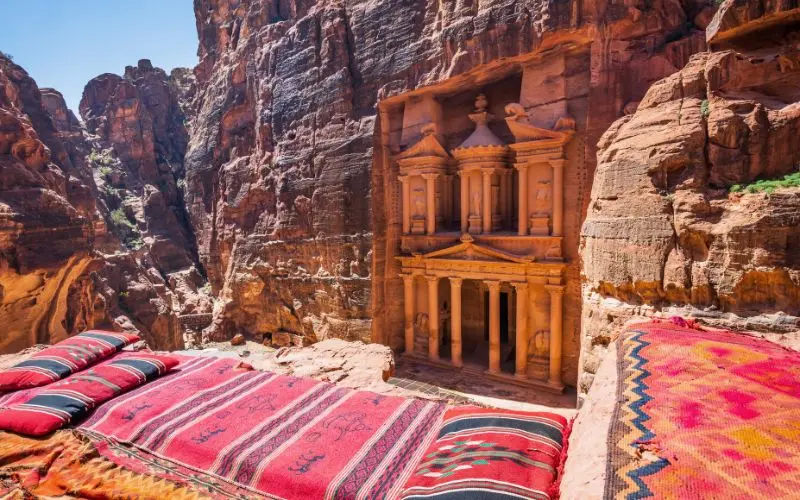
Carved deep into the sandstone mountains of southern Jordan, Petra feels less like a place that was built and more like a landscape that was slowly revealed by human hands. The cliffs glow in shifting shades of rose and amber, changing with the angle of the sun, as if the desert itself is alive with color.
Recognized as one of the New Seven Wonders of the World, Petra remains Jordan’s most iconic historical site and one of the Middle East’s greatest archaeological treasures.
Once the thriving heart of the Nabataean civilization, Petra grew into a powerful trading city more than two thousand years ago, connecting caravan routes between Arabia, Egypt, and the Mediterranean. Over time, its importance faded, and the city was gradually left to silence, sheltered within its canyon walls and forgotten by the wider world for centuries.
What makes Petra so striking is the way it blends into its surroundings. Tombs, facades, and ceremonial spaces are not imposed on the landscape, they are cut directly into it. The rock face becomes architecture, and architecture becomes part of the mountain, making it difficult to tell where nature ends and history begins.
The experience of reaching the city unfolds slowly. The path narrows into the Siq, a long winding canyon where towering cliffs rise on either side, filtering light into thin ribbons that shift with every turn. The silence grows heavier as you move deeper, until the passage suddenly opens and the first view of Al-Khazneh appears, carved with precise detail into the stone wall ahead.
Beyond this moment, Petra expands into a vast network of carved pathways, hidden chambers, and high viewpoints scattered across desert terrain. Some routes rise toward cliffside tombs, while others continue deeper into the canyon, where buildings emerge from the stone.
At its core, Petra is not defined by a single monument but by the feeling of movement through space, of walking through a city that is both exposed and concealed at the same time.
Best time to visit Petra is between March and May, and again from September to November, when the desert heat softens and the light brings out the natural tones of the stone.
Bucket-List Experience: Moving through the Siq and witnessing the Treasury appear suddenly at the end of the narrow canyon.
Travel Tip: Visiting early in the morning or later in the afternoon offers softer light, fewer crowds, and a more atmospheric sense of the site’s scale and silence.
Read Also:
- Best Hidden Gems in Asia for Adventure Seekers
- Best Places to Visit in Sharjah for Tourists
- Best Things to Do in Abu Dhabi
- Best Places to Visit in Dubai
10. Cappadocia, Turkey
Where Hundreds of Balloons Drift Over Fairy Chimneys
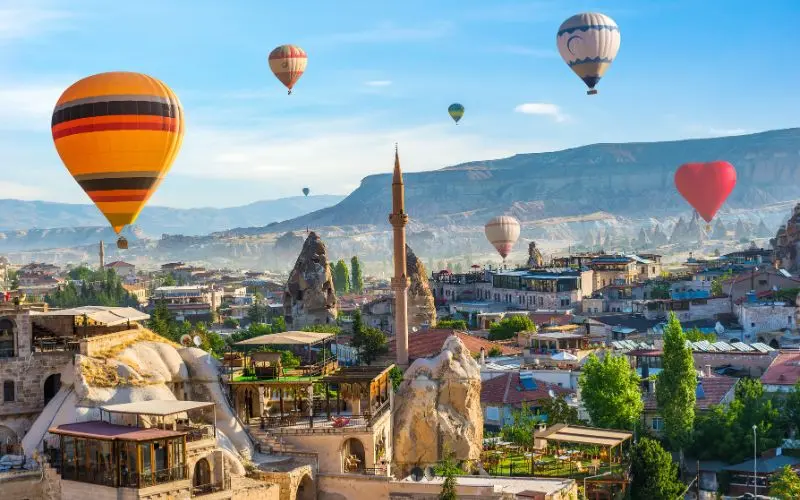
In the heart of central Turkey, Cappadocia unfolds like a landscape carved by imagination rather than geology. Towering rock formations rise from the earth in soft, sculpted shapes, their surfaces eroded over time into delicate spires and valleys that feel almost unreal in scale and form.
Famous for its fairy chimneys and sunrise balloon flights, Cappadocia is widely considered one of the world’s most distinctive and photogenic landscapes.
This unusual terrain was created by ancient volcanic activity, later shaped over thousands of years by wind and water. What remains today is a region filled with narrow valleys, hidden rock chambers, and natural formations that resemble something closer to a dreamscape than a conventional landscape.
Human history is deeply woven into this environment. Early communities carved homes, churches, and entire underground settlements into the soft volcanic rock, creating spaces that blend seamlessly with the land itself. These structures still exist today, forming a quiet connection between natural formation and human adaptation.
One of the most memorable experiences here unfolds at sunrise, when the valleys slowly fill with light and hundreds of hot-air balloons begin to rise into the sky. From above, the terrain reveals its full scale, winding valleys, layered rock formations, and scattered cave dwellings stretching toward the horizon in every direction.
Beyond the skies, Cappadocia is best experienced on foot. Trails through Love Valley, Rose Valley, and Pigeon Valley reveal carved dwellings, old pathways, and quiet viewpoints that shift constantly with the light. The atmosphere is calm, almost suspended, as if the region exists in its own rhythm.
At its core, Cappadocia is not a destination defined by a single landmark, but by movement through space, shifting light, changing perspectives, and landscapes that feel alive in every direction.
The most rewarding time to experience Cappadocia is between April and June, and again from September to October, when weather conditions are stable and the skies are most favorable for balloon flights.
Bucket-List Experience: Watching hundreds of hot-air balloons rise over the valleys at sunrise as the first light spreads across the rock formations.
Travel Tip: Balloon flights are weather-dependent and highly demand-driven, so booking several weeks in advance is essential to secure a spot.
Read Also:
- Cheapest Countries in Asia to Travel
- Largest Shopping Malls in Europe
- Top 10 Safest Countries in Asia to Travel
- Explore the Cheapest European Countries to Visit
- Most Beautiful Countries in the World You Must Visit
11. Ha Long Bay, Vietnam
Where Emerald Waters Weave Through Limestone Giants
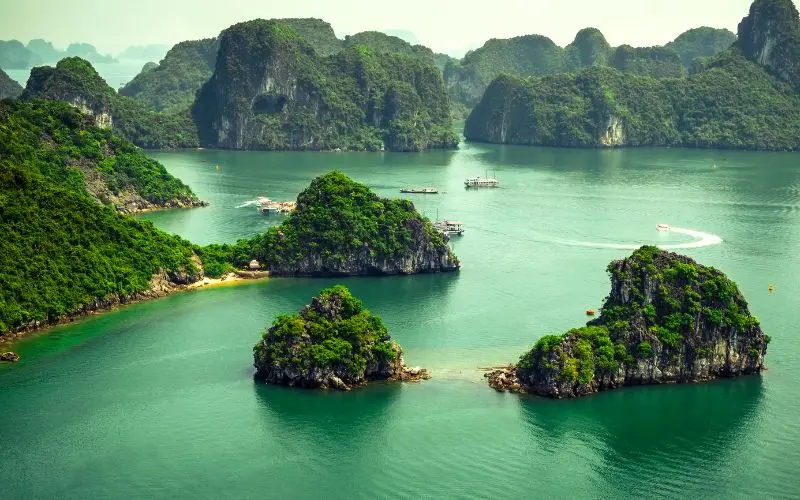
In northern Vietnam, Ha Long Bay stretches across the Gulf of Tonkin like a vast, slow-moving painting shaped by water and stone. Thousands of limestone islands rise abruptly from emerald-green waters, their sheer cliffs softened by mist that drifts in and out throughout the day.
Recognized among the most beautiful UNESCO World Heritage Sites in the world, Ha Long Bay is renowned for its thousands of limestone karsts and islands scattered across the Gulf of Tonkin.
Over millions of years, wind and sea have sculpted this coastline into one of the most distinctive natural formations on Earth. What remains today is a surreal seascape of hidden caves, vertical cliffs, and quiet inlets where water moves almost without sound.
Life here unfolds on the water itself. Floating villages rest gently between rock formations, and small boats glide through narrow passages that feel enclosed by nature on all sides. The scale of the landscape becomes more apparent with distance, islands layering into the horizon, each one slightly different in shape and shadow.
One of the most memorable ways to experience Ha Long Bay is by spending time on the water as the day shifts. Early mornings often begin with a soft haze over the limestone peaks, while evenings bring a warm glow that reflects across the calm surface of the bay. Between these moments, the landscape constantly changes in tone, light, and texture.
Deeper exploration reveals hidden caves and quiet lagoons, some accessible only by small boats passing through narrow openings in the rock. Inside, still water reflects vaulted stone ceilings shaped by time rather than design.
Ha Long Bay is not defined by a single viewpoint, but by movement through it, a slow passage across water where each turn reveals a new formation, a new silence, a new perspective.
The most rewarding time to experience Ha Long Bay is between October and April, when the weather is cooler, skies are clearer, and cruising conditions are at their most stable.
Bucket-List Experience: Drifting through the bay at sunrise as limestone peaks slowly emerge from morning mist.
Travel Tip: Choose an overnight cruise to experience both sunset and sunrise on the water, when the bay feels at its most peaceful and atmospheric.
Read Also:
- Cheapest Countries to Travel Without Breaking the Bank
- Top 10 Most Beautiful Asian Countries You Should Visit Once
- Best Beaches in Asia for Your Next Tropical Adventure
- Things to Do in Hanoi: Complete City Travel Guide
- Best Things to Do in Vietnam
12. Angkor Wat, Cambodia
A Monument Where Stone Holds Centuries of Memory
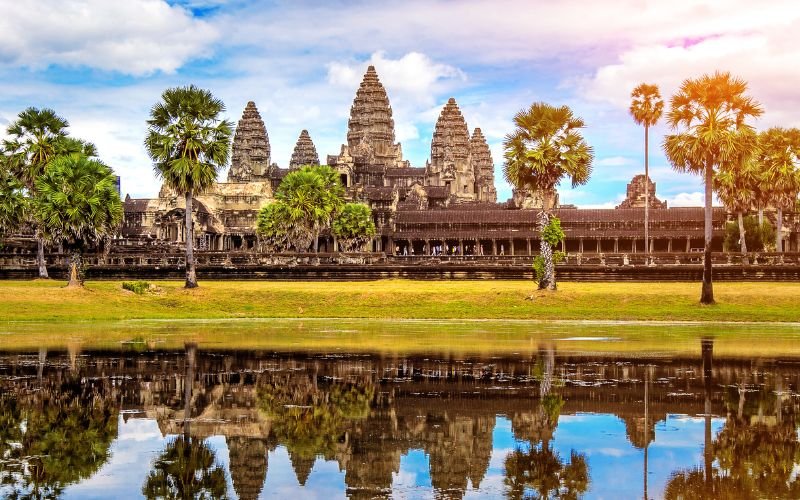
Rising from the forests near Siem Reap, Angkor Wat unfolds as a vast, geometric presence carved from sandstone and time. The towers resemble Mount Meru in Hindu cosmology and the long corridors and bas-relief walls unfold with a precision that feels almost ritual in nature.
Built in the early 12th century under the Khmer Empire, the complex began as a Hindu temple dedicated to Vishnu before gradually becoming a Buddhist sacred site. Over the centuries, it remained partially hidden within encroaching jungle, where tree roots, vines, and stone merged into a single intertwined landscape.
Approaching Angkor Wat in the early hours of the morning, the atmosphere feels unusually still. Water pools in front of the main complex hold a dark reflection of the temple spires, and as light slowly rises, the structure begins to separate itself from the sky — first in outline, then in detail, until every carved surface becomes visible.
Inside the complex, long passageways lead through galleries filled with intricate carvings that depict ancient epics, battles, and symbolic scenes from Khmer mythology. The scale is overwhelming not because of height or size alone, but because of the density of detail that continues uninterrupted across walls and corridors.
Beyond the central temple, the wider Angkor Archaeological Park reveals a scattered world of ruins, some partially reclaimed by forest, others standing in quiet isolation. Ta Prohm, where massive tree roots wrap around stone structures, offers a striking contrast between human architecture and natural reclamation.
Angkor Wat is not experienced in a single moment, but through gradual discovery, each corridor, courtyard, and carved surface adding another layer to its presence. It is a place where architecture and spirituality feel deeply intertwined, shaped by both devotion and time.
The most rewarding time to experience Angkor Wat is between November and March, when the air is dry, temperatures are more comfortable, and sunrise conditions are at their most visually striking.
Bucket-List Experience: Watching sunrise reflect across the temple pools as the silhouette of Angkor Wat slowly emerges against the morning sky.
Travel Tip: Explore beyond the main temple complex to nearby sites like Ta Prohm and Angkor Thom for a fuller sense of the ancient city’s scale and atmosphere.
Read Also:
13. Pyramids of Giza, Egypt
A Silent Geometry Rising From the Desert
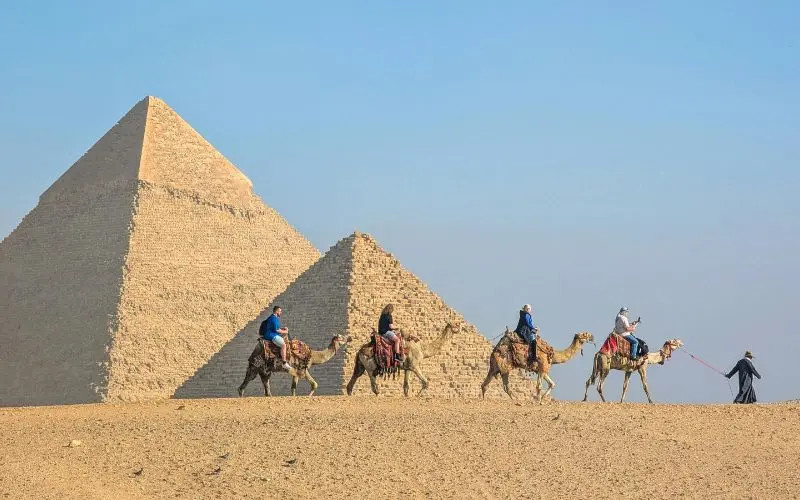
On the edge of Cairo, where city noise fades into open desert, the Pyramids of Giza rise with a presence that feels both distant and absolute. Their massive limestone forms emerge from the sand with a precision that has endured for more than four millennia, standing as the last surviving wonder of the ancient world.
Built during Egypt’s Fourth Dynasty, the Great Pyramid was constructed as a tomb for Pharaoh Khufu, followed by the pyramids of Khafre and Menkaure. Together, they form a carefully aligned complex that reflects the extraordinary engineering and astronomical understanding of ancient Egyptian civilization.
What makes Giza so powerful is not movement or ornamentation, but stillness. The scale of the structures removes any sense of comparison, making everything around them feel smaller, quieter, and temporary. Even at a distance, the pyramids dominate the horizon with a geometry that feels almost abstract against the desert sky.
Nearby, the Great Sphinx rests carved from a single limestone ridge, its weathered face turned toward the rising sun. Together, these monuments create a landscape where myth, history, and architecture merge into a single uninterrupted horizon.
As daylight shifts across the plateau, the stones change tone from soft gold in the morning to deep amber by sunset, when shadows stretch long across the sand. The desert wind occasionally lifts dust through the air, adding a sense of motion to an otherwise still landscape.
The most rewarding time to experience the Pyramids of Giza is between October and April, when temperatures are milder and the desert light is clearer and more comfortable for exploration.
Bucket-List Experience: Standing before the Great Pyramid as the desert horizon glows at sunrise.
Travel Tip: Arrive early in the morning to avoid heat and crowds, and explore the site with time to walk between viewpoints for changing perspectives of the pyramids.
14. Grand Canyon, USA
Where Nature Reveals Its Greatest Canvas
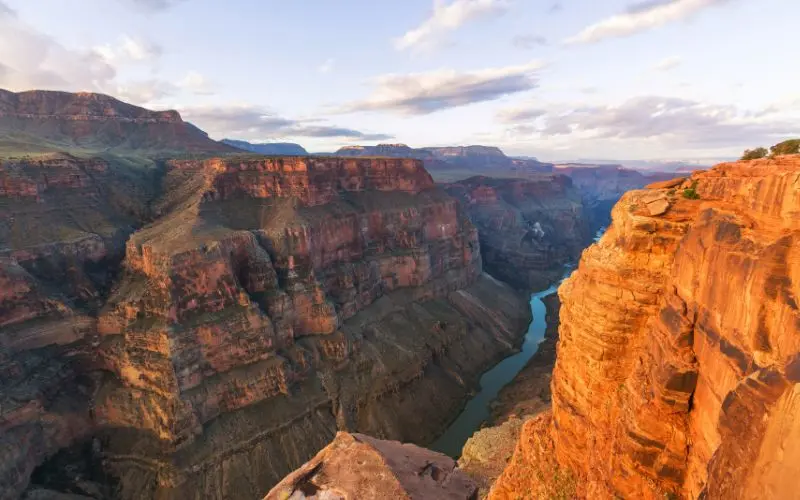
In northern Arizona, the Grand Canyon opens across the land like a wound shaped by time itself. Layer upon layer of rock descends into a vast chasm, revealing nearly two billion years of Earth’s geological history in exposed cliffs, ridges, and shadowed depths.
Formed by the slow persistence of the Colorado River, the canyon stretches for hundreds of kilometers, its scale so immense that distance becomes difficult to judge. From the rim, the terrain drops away in sudden steps of color—rust red, ochre and deep violet, each layer marking a different chapter of planetary history.
What makes the Grand Canyon so striking is the way it alters perception. Objects far below seem motionless, yet rivers carve steadily through stone at a pace too slow to witness. The changing light shapes the scene most strongly, moving from soft gold at sunrise to rich, shadow-filled blues by evening.
Walking along the rim reveals constantly changing perspectives. Every viewpoint offers a slightly different alignment of cliffs and valleys, where shadows stretch and compress depending on the sun’s position. Descending into the canyon adds another dimension entirely, where silence deepens and temperature shifts with altitude.
The most rewarding time to experience the Grand Canyon is between March and May, and again from September to November, when temperatures are more comfortable and visibility across the canyon is at its clearest.
Bucket-List Experience: Watching sunrise from the South Rim as light slowly reveals the canyon’s layered depth.
Travel Tip: Visit multiple viewpoints along the rim rather than staying in one spot, the canyon’s scale changes dramatically with angle and elevation.
Read Also:
- 15 Best Budget Travel Tips for Exploring the USA
- 20 Best Weekend Getaways in the USA
- Best National Parks in the USA
- Most Beautiful Places to Visit in the United States
- Top 10 Beaches in United States
15. Antarctica
A Silence Older Than Civilization
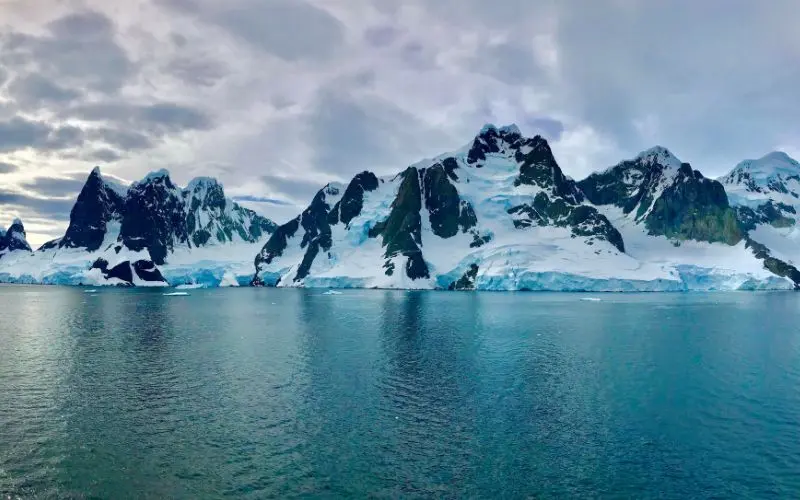
At the very edge of the world, Antarctica feels less like a destination and more like the planet stripped down to its most ancient form. There are no roads, no cities, and no signs of human rhythm, only vast white silence stretching into a horizon that never quite resolves into distance.
Here, the landscape is built from extremes. Ice forms in layers so thick it hides mountain ranges beneath it, while glaciers move so slowly they appear frozen in place, even though they are constantly reshaping the continent. Icebergs break away in sudden silence, drifting into open water like fragments of a world still in formation.
What makes Antarctica so powerful is its absence of distraction. Without color, noise, or density, perception becomes sharper. A single seal resting on an ice floe or a colony of penguins moving across the snow becomes a living focus in an otherwise minimalist world. Everything feels deliberate, even when nothing is designed.
Light defines the entire experience. In summer months, the sun circles low across the sky without fully setting, casting long blue shadows over endless white terrain. The result is a shifting palette of pale gold, steel grey, and deep ice-blue that changes by the minute.
Travel here is not about arrival, but transition crossing the Drake Passage, entering waters where storms reshape the sea, and gradually entering a world that feels detached from everything familiar.
The most rewarding time to experience Antarctica is between November and March, when the austral summer softens conditions and wildlife becomes more active along the coast.
Bucket-List Experience: Standing on the deck surrounded by drifting icebergs as seals, whales, and endless white silence stretch in every direction.
Travel Tip: Choose a small expedition cruise with guided landings to experience wildlife colonies and ice landscapes up close, safely and responsibly.
Read Also:
- Best Time to Visit Antarctica: Weather, Wildlife & Cruise Season
- Antarctica Packing List: What to Pack for a Cruise
- Best Places to Visit in Antarctica
16. Banff National Park, Canada
Where Wilderness and Wonder Share the Same View
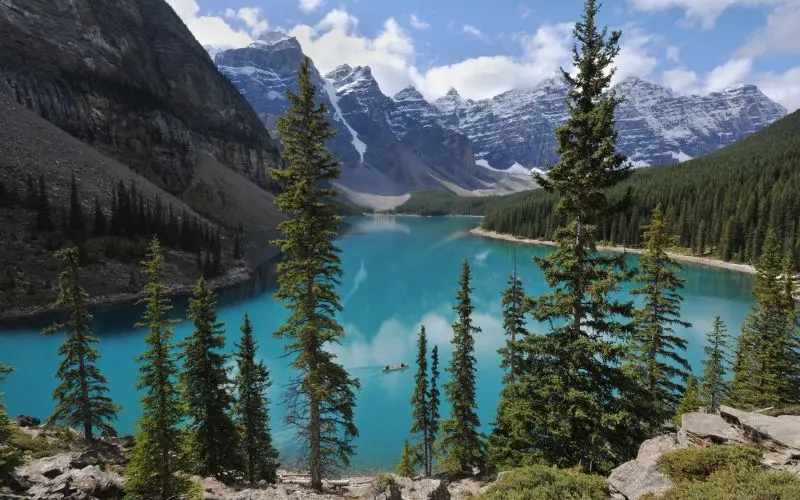
In the Canadian Rockies, Banff National Park feels shaped less by time and more by pressure—glaciers pushing through stone, carving valleys that now hold lakes so still they seem unfinished. Peaks rise sharply from the land like fractured edges of an ancient world, while forests gather in the lower slopes in dense, quiet layers of green.
Much of what defines Banff today was formed during the last Ice Age, when massive glaciers advanced and retreated across the region, reshaping mountains and carving deep basins. What remains is a terrain of contrasts: sharp rock faces above, soft forest corridors below, and water that holds the color of crushed stone and light.
The lakes are what first hold attention. Their color is not decorative but geological, fine sediments carried from melting glaciers suspended in water, scattering sunlight into shifting shades of turquoise and jade. Moraine Lake and Lake Louise often appear still enough to reflect entire mountain ranges without distortion, as if the sky has folded into the earth.
Despite its scale, Banff does not feel distant. Roads pass through wide valleys and small mountain towns, yet a short walk in almost any direction leads quickly back into silence. The soundscape narrows to wind through pine needles, distant avalanches, and the occasional movement of wildlife across open slopes.
Elk, bears, and mountain goats are part of the natural rhythm here, appearing and disappearing with the landscape rather than interrupting it. Their presence reinforces the sense that this is not a curated wilderness, but an active one.
The most rewarding time to experience Banff National Park is between June and September, when snow recedes from the trails and the lakes reach their most vivid color.
Bucket-List Experience: Watching early morning light settle over Moraine Lake as the surrounding peaks reflect perfectly in water that looks almost unreal in stillness.
Travel Tip: Visit at sunrise or late evening to avoid peak crowds, when the valleys feel quieter and the light reveals deeper tones in the mountains.
17. Serengeti National Park, Tanzania
A Living Landscape in Constant Motion
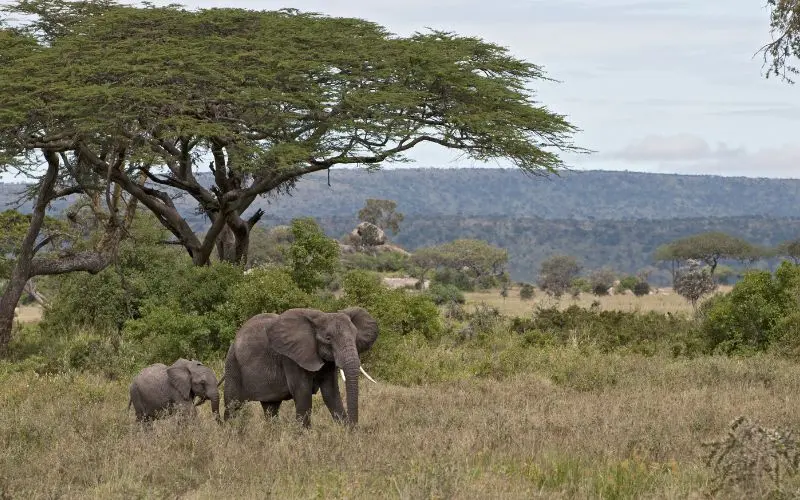
The Serengeti doesn’t announce itself with dramatic landmarks or defined edges. It simply unfolds—endless grass stretching into a horizon that seems to shift with every change in light and wind. At first glance, it feels empty. Then, slowly, it reveals that nothing here is still.
This is one of the few places where an ancient rhythm is still intact. The land breathes through migration. Wildebeest move in long, unbroken lines across the plains, followed by zebra and gazelle, not as a spectacle, but as survival written into geography. The scale of it makes human presence feel almost temporary.
There are moments when the plains appear completely open, broken only by scattered acacia trees that stand like punctuation marks in an otherwise continuous sentence of grass and sky. Then, without warning, life concentrates—movement in the grass, a sudden alertness, the quiet tension of predators watching without revealing themselves.
Nothing here feels arranged. Even the silence is active. It changes with temperature, distance, and time of day. Morning brings softness to the landscape, while late afternoon stretches everything into long shapes and deeper contrasts.
What stays with most people is not a single scene, but the feeling that the land is not being observed, it is continuing, regardless of who is there to witness it.
The most rewarding time to experience the Serengeti is between June and October, when dry conditions draw wildlife into clearer, more concentrated movement across the plains.
Bucket-List Experience: Watching migration herds move across open land where the horizon feels endless and unbroken.
Travel Tip: Move between regions if possible, the experience changes completely depending on where the herds are in their cycle.
18. Bora Bora, French Polynesia
A Lagoon That Redefines Stillness
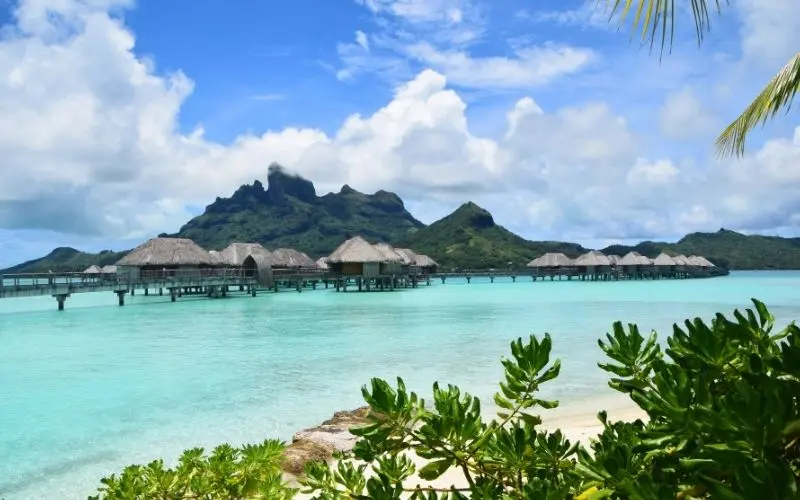
Bora Bora appears first as a ring of deep blue, floating in the South Pacific like a watercolor left to blur at the edges. From above, the island is almost unreal—an emerald peak rising from a lagoon so clear it seems to erase the boundary between water and sky.
At the center stands Mount Otemanu, a volcanic remnant softened by time and wrapped in dense greenery. Around it, shallow turquoise waters spread outward, protected by a coral reef that holds the lagoon in a calm, almost suspended state.
Life here moves differently. Wooden bungalows sit above the water on stilts, connected by narrow walkways that dissolve into open sea views. Beneath them, the ocean shifts in layers of color, pale aquamarine near the surface, deepening into cobalt as it reaches the reef drop-off.
What defines Bora Bora is not activity, but atmosphere. Days unfold slowly, shaped by light and tide rather than urgency. Boats pass quietly across the lagoon, and even distance feels softened by humidity and sun.
There are moments when everything becomes almost still—water without ripple, air without movement, and horizon lines so clean they feel drawn rather than formed. In those moments, the island feels less like a destination and more like a pause in the world’s motion.
The most rewarding time to experience Bora Bora is between May and October, when skies are clearer, humidity is lower, and the lagoon reveals its brightest shades of blue.
Bucket-List Experience: Watching sunset from an overwater bungalow as the lagoon shifts from turquoise to deep indigo.
Travel Tip: Stay on the lagoon side rather than the ocean-facing side for calmer water conditions and uninterrupted views of Mount Otemanu.
19. Salar de Uyuni, Bolivia
A Horizon That Disappears Into Itself
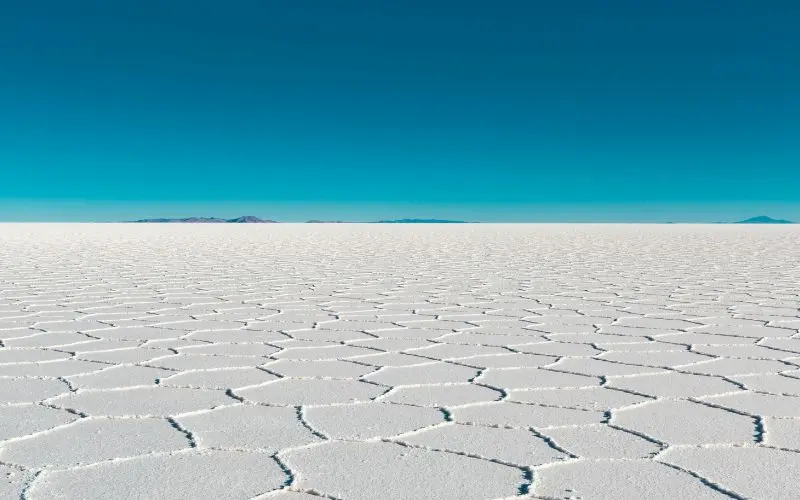
In southwestern Bolivia, the land flattens until it stops behaving like land at all. Salar de Uyuni stretches outward in every direction, a vast mineral surface where scale dissolves and the horizon seems to detach from geography.
During the dry months, the salt crust forms an endless geometric pattern, fractured like natural tiles spread across the earth. After rainfall, even in thin layers, the entire plain transforms into a mirror that reflects the sky with uncanny precision, erasing the boundary between above and below.
Movement across it feels strangely detached. With no trees, structures, or elevation to anchor the eye, distance becomes unreliable. People walking across the flats appear to float slightly above the surface, their proportions shifting with perspective and reflection.
Silence behaves differently here. It is not empty, but expansive—carried across a surface so wide that even wind feels stretched before it reaches you. The result is a kind of stillness that feels physical rather than auditory.
What makes Salar de Uyuni unforgettable is the way it alters perception itself. Perspective becomes fluid, and even simple orientation feels negotiable. The landscape does not just surround you—it resets how scale is understood.
The flooded surface is most visually striking between December and March, when rain creates the mirror effect that blends sky and ground into a single continuous plane. From May through October, the salt crust returns in full, revealing the raw geometric texture of the earth beneath the water.
Bucket-List Experience: Standing on the flooded salt flat where the sky appears to extend both above and below without a visible horizon.
Travel Tip: Sunrise and sunset bring the most dramatic transitions in reflection, when light reshapes the entire surface in minutes.
20. Great Barrier Reef, Australia
Where the Ocean Comes Alive in Color
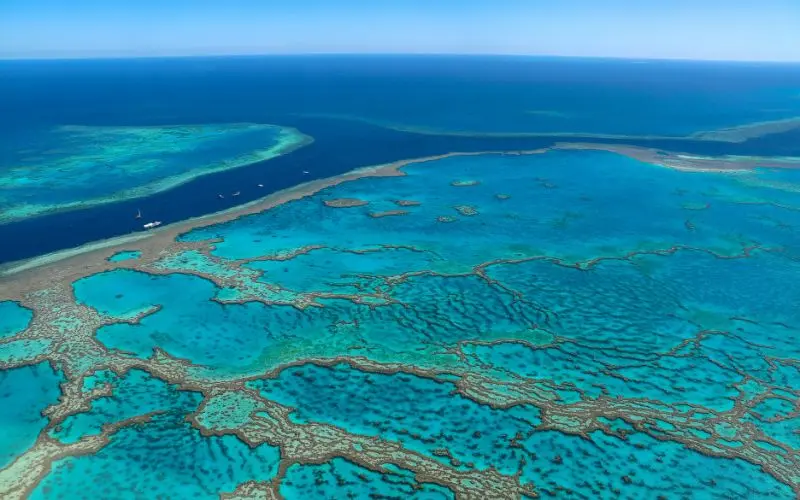
Stretching for more than 1,400 miles (2,300 kilometers) along Australia’s northeastern coast, the Great Barrier Reef is the largest coral reef system on Earth and one of the planet’s most extraordinary natural wonders. Visible from space and home to thousands of marine species, this UNESCO World Heritage Site offers an underwater world unlike anywhere else on the globe.
Composed of nearly 3,000 individual reefs and hundreds of islands, the Great Barrier Reef is a vibrant ecosystem bursting with life. Beneath its crystal-clear waters, travelers can discover colorful coral gardens, giant clams, sea turtles, reef sharks, dolphins, and more than 1,500 species of fish. The sheer scale and biodiversity of the reef make it one of the most remarkable places to visit once in a lifetime.
What makes the Great Barrier Reef truly special is that no two experiences are exactly alike. Snorkelers can drift above shallow coral formations teeming with tropical fish, while divers can explore deeper sections filled with dramatic underwater landscapes. Scenic flights reveal breathtaking patterns of turquoise lagoons, coral cays, and the famous Heart Reef, offering a completely different perspective on this natural masterpiece.
Beyond its beauty, the reef plays a vital role in global marine conservation. It is one of the most important ecosystems on Earth and serves as a reminder of the delicate balance between nature and human activity. Visiting the reef provides not only unforgettable memories but also a greater appreciation for the importance of protecting our oceans.
Whether you’re swimming alongside sea turtles, diving through coral canyons, or admiring the reef from above, every moment feels like stepping into another world.
Best Time to Visit: June to October
Bucket-List Experience: Snorkeling or diving among vibrant coral gardens while swimming alongside sea turtles and tropical fish.
21. Raja Ampat, Indonesia
Where the Ocean Breaks Into Thousands of Islands
Some destinations impress because they are beautiful. Raja Ampat feels different. It almost seems improbable, as though nature ignored conventional rules and arranged thousands of islands across the ocean purely for visual effect.
From high viewpoints, the archipelago resembles scattered emeralds floating in liquid sapphire. Narrow channels weave between limestone formations covered in dense tropical vegetation, creating patterns that appear more like artwork than geography.
The region exists at the meeting point of powerful ocean currents, a fact that has shaped both the islands and the life surrounding them. Beneath the surface lies an astonishing concentration of marine biodiversity, while above it, isolated beaches, hidden lagoons, and jungle-covered cliffs create an environment that feels increasingly rare in the modern world.
Travel here unfolds differently than in most destinations. Distances are measured by boat rides rather than roads. A day might involve crossing perfectly calm water, passing uninhabited islands, and arriving somewhere that feels entirely disconnected from the rest of the planet.
What remains with travelers is often the sense of scale—not the size of any single island, but the realization that hundreds more continue beyond the horizon.
Calmer waters and improved underwater visibility are generally found between October and April across much of the archipelago.
Bucket-List Experience: Looking out over the famous karst islands from above and seeing a maze of green peaks scattered across endless blue water.
Travel Tip: Spend at least a few days island-hopping rather than staying in one location; the diversity of landscapes is part of what makes Raja Ampat extraordinary.
22. Santorini, Greece
Where the Cliffs Meet the Aegean
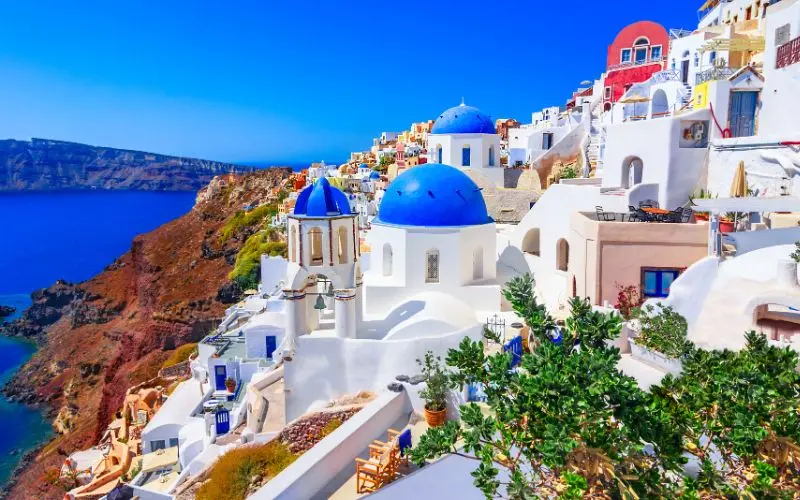
Some destinations are recognized instantly, and Santorini is one of them. Whitewashed houses spill down volcanic cliffs in cascading layers, blue-domed churches overlook the sea, and narrow pathways weave through villages suspended high above the caldera.
The island was shaped by one of history’s most powerful volcanic eruptions, an event that transformed its geography and created the dramatic crescent-shaped coastline seen today. What remains is a landscape where rugged volcanic terrain contrasts beautifully with bright Cycladic architecture.
Santorini’s charm lies in its relationship with the sea. From nearly every viewpoint, the Aegean stretches toward the horizon, changing color throughout the day as sunlight shifts across the water. Even simple moments like a quiet breakfast overlooking the caldera or an evening walk through Oia feel elevated by the setting.
As daylight fades, crowds gather along cliffside terraces to watch one of the world’s most famous sunsets. Yet beyond the photographs, Santorini leaves a lasting impression through its atmosphere: relaxed, timeless, and deeply connected to its surroundings.
April through June and September through October typically offer pleasant weather, fewer crowds, and excellent conditions for exploring the island.
Bucket-List Experience: Watching the sun disappear into the Aegean from the cliffs of Oia.
Travel Tip: Stay within the caldera villages for the most iconic views and easiest access to sunset viewpoints. For a different perspective of Santorini’s beauty, consider booking a sunset cruise around the caldera to enjoy the island’s cliffs, sea views, and golden-hour scenery.
Read Also:
23. Iceland
Where Volcanoes Meet Glaciers
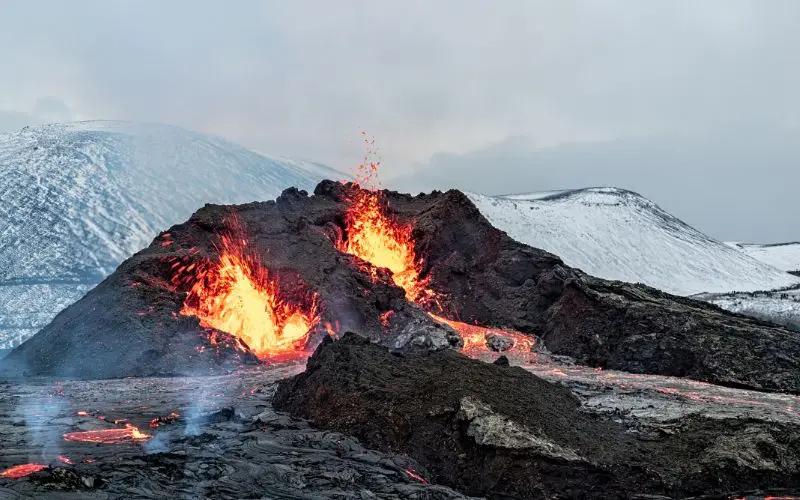
Few places display the forces of nature as openly as Iceland. Volcanoes, glaciers, waterfalls, black-sand beaches, lava fields, and geothermal springs exist side by side, creating a landscape that feels constantly unfinished, as though the island is still being formed.
Driving through Iceland often feels like crossing multiple countries in a single day. One stretch of road may pass steaming geothermal valleys, while the next reveals vast glacial plains or towering sea cliffs battered by the North Atlantic.
The island’s beauty comes from contrast. Ice sits beside active volcanic zones. Moss-covered lava fields soften otherwise harsh terrain. During winter, the Northern Lights sweep across dark skies, while summer brings nearly endless daylight.
What makes Iceland unforgettable is the sense that nature remains in control. Human settlements appear small against the scale of waterfalls, glaciers, and volcanic landscapes that dominate the horizon.
For many travelers, the experience feels less like visiting a destination and more like stepping into a world governed by geology rather than geography.
Summer offers the easiest conditions for road trips, while winter attracts visitors hoping to witness the Northern Lights.
Bucket-List Experience: Watching the Northern Lights dance across the Icelandic sky above snow-covered landscapes.
Travel Tip: Renting a car provides the freedom to explore beyond the country’s most visited attractions.
24. Patagonia, Chile & Argentina
At the End of the Continent
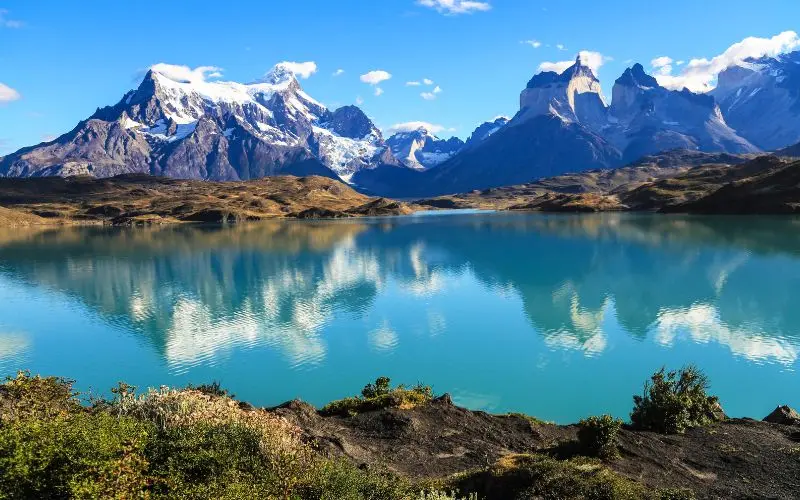
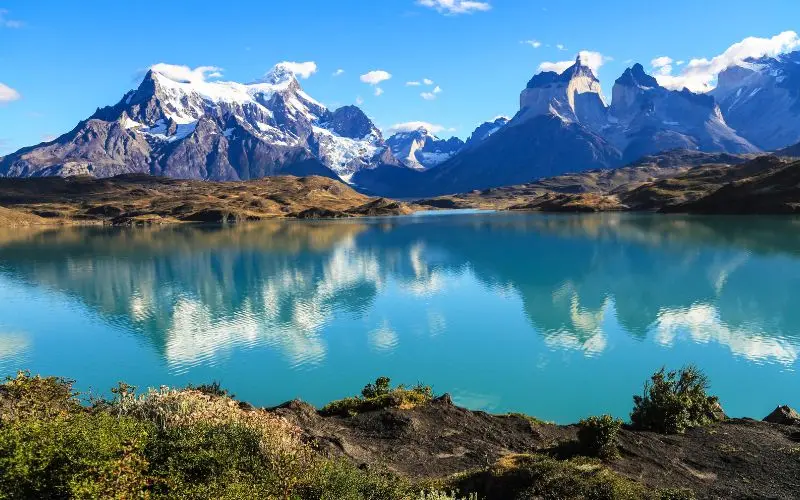
Patagonia occupies the southern edge of South America, a region where mountains, glaciers, and open wilderness stretch across both Chile and Argentina. It is a place defined by distance, where roads grow quieter, settlements become smaller, and nature increasingly takes center stage.
The landscape is remarkably varied. Jagged granite peaks rise above turquoise lakes, massive glaciers descend into valleys, and winds sweep across open steppe for hundreds of kilometers without interruption. Everything feels larger than expected.
Unlike destinations built around a single landmark, Patagonia rewards exploration. Every valley, trail, and viewpoint reveals a different expression of the region’s rugged character. Conditions can change rapidly, adding an element of unpredictability that makes each day feel distinct.
The area’s remoteness is part of its appeal. Travelers come not only for the scenery, but also for the feeling of reaching somewhere that still retains a genuine sense of wilderness.
Whether hiking beneath dramatic mountain spires or standing before the face of a glacier, Patagonia consistently delivers the kind of scale that photographs struggle to capture.
The clearest hiking conditions generally occur between November and March, when temperatures are milder and daylight hours are longer.
Bucket-List Experience: Seeing the granite towers of Torres del Paine emerge beneath the first light of day.
Travel Tip: Weather changes quickly throughout Patagonia, so packing layers is essential regardless of season.
Read Also:
25. Bali, Indonesia
Where Culture, Nature & Island Life Meet
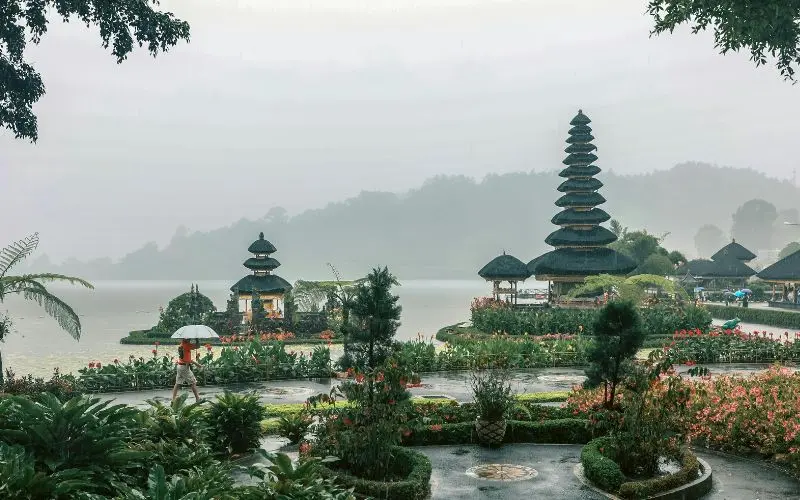
Located in Indonesia, Bali is an island where volcanic landscapes, ancient temples, tropical beaches, and living traditions come together. Known as the Island of the Gods, Bali offers far more than a beach escape, with a culture that remains deeply connected to nature, spirituality, and everyday life.
Across the island, Balinese Hindu traditions shape the atmosphere. Colorful offerings appear outside homes and temples, ceremonies take place throughout the year, and traditional dances continue to tell stories passed down through generations. This cultural connection gives Bali a character that feels different from many other tropical destinations.
The landscape changes with every region. In Ubud, jungle paths, rice terraces, waterfalls, and art villages create a quieter side of the island. Along the southern coast, places like Uluwatu are known for dramatic cliffs, ocean views, and unforgettable sunsets, while areas such as Seminyak and Canggu combine beaches with cafés, restaurants, and a modern island lifestyle.
Beyond the famous sights, Bali’s most rewarding experiences often come from exploring deeper into the island — visiting traditional villages, walking through green rice fields, discovering hidden waterfalls, and experiencing local food and customs away from the busiest areas.
With its mix of culture, adventure, relaxation, and natural beauty, Bali has earned its place among the best places to visit in the world. It is a destination where travelers can enjoy both iconic landmarks and small moments that stay with them long after the journey ends.
The best time to visit Bali is usually from April to October, when the weather is generally drier and ideal for exploring beaches, temples, and outdoor attractions.
Bucket-List Experience: Watching the sunset at Uluwatu Temple while a Kecak fire dance takes place above the ocean cliffs.
Travel Tip: Bali is larger than many first-time visitors expect. Spend time in different areas of the island to experience its beaches, culture, and natural landscapes fully.
Read:
Quick Takeaway
If you’re building a true travel bucket list, focus less on how many places you see and more on the type of experience each destination offers.
A strong once-in-a-lifetime trip usually falls into one of these categories:
- Ancient wonders (like Petra or Machu Picchu) that connect you to history
- Extreme nature (like Antarctica or Patagonia) that changes your sense of scale
- Unique landscapes (like Salar de Uyuni or Cappadocia) that feel almost unreal
- Iconic beauty spots (like Santorini or Bora Bora) that define travel imagination
The most memorable journeys are rarely the most complicated ones — they’re the places where the environment itself does the storytelling.
Use this list not as a checklist to rush through, but as a long-term guide to experiences worth planning properly, saving for and enjoying slowly.