Top 10 Largest Zoos in Europe
Published: 2 Apr 2026
The largest zoos in Europe are measured primarily by total land area (hectares), not just visitor numbers or popularity. These include expansive safari-style wildlife parks and large traditional zoological gardens that provide space for conservation, breeding programs, and naturalistic animal habitats.
In this guide, we rank the largest zoos in Europe by size, focusing on total area as the main metric, along with key details such as location, visitor numbers, and notable wildlife experiences. From open-range parks in the United Kingdom to historic zoos in Germany, Belgium, France, and Austria, Europe offers some of the most diverse and well-developed zoo environments in the world.
This list helps you quickly compare the biggest zoos in Europe and understand what makes each one unique, whether you’re planning a visit or researching wildlife parks by scale.
Largest Zoos in Europe by Area – Ranked List
Here’s a guide to the largest zoos in Europe, ranked by their impressive size and also mentioned the number of visitors they welcome annually.
| Rank | Zoo Name | Country | Area (ha) | Visitors |
|---|---|---|---|---|
| 1 | ZSL Whipsnade Zoo | UK | ~240 | 500K–700K |
| 2 | Port Lympne Wild Animal Park | UK | ~240 | 400K–600K |
| 3 | Tierpark Berlin | Germany | ~160 | 1.0M–1.5M |
| 4 | Chester Zoo | UK | ~52 | ~2.0M |
| 5 | Pairi Daiza | Belgium | ~75 | 2.3M–2.6M |
| 6 | Prague Zoo | Czech Republic | ~58 | 1.4M–1.5M |
| 7 | ZooParc de Beauval | France | ~44 | ~2.0M |
| 8 | Royal Burgers’ Zoo | Netherlands | ~45 | 1.0M–1.2M |
| 9 | Berlin Zoological Garden | Germany | ~35 | 3.5M–3.8M+ |
| 10 | Schönbrunn Zoo | Austria | ~17 | 2.0M+ |
Top 10 Biggest Zoos in Europe – Detailed Guide
Here’s a look at Europe’s largest zoos, with detailed info on size, visitors and the animals you can see up close.
ZSL Whipsnade Zoo – United Kingdom
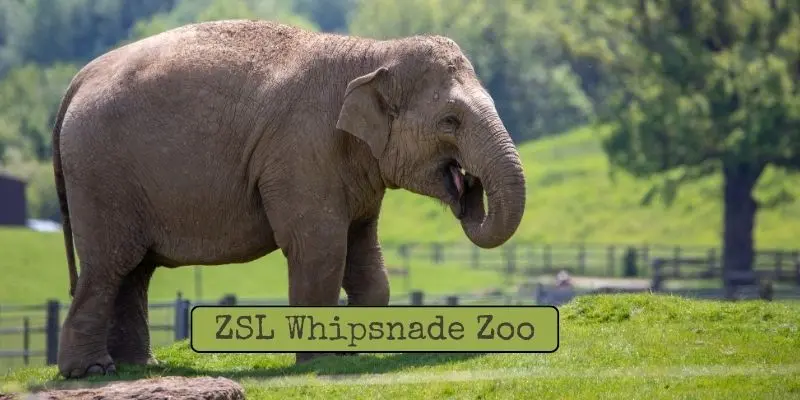
Size : approx. 240 ha
ZSL Whipsnade is not only the Largest Zoo in the UK but also one of biggest zoos in Europe by area. Perched on the Chiltern Hills, it offers sweeping views over the surrounding countryside.
What makes it unique is unlike city-based zoos, Whipsnade feels more like a wildlife park. Visitors can walk, ride a steam train, or drive through open habitats where animals roam freely across expansive, natural landscapes.
See towering Asian elephants, elegant giraffes, majestic rhinos, playful penguins, and free-roaming deer. The zoo also features one of the UK’s largest butterfly biomes and a freshwater aquarium with rare fish.
Explore themed zones like Passage Through Asia, step into the Butterfly House to watch tropical butterflies flutter overhead, catch daily talks and feeding sessions and enjoy interactive habitats such as the walk-through lemur area.
Arrive early to catch the Asian elephant herd feeding and plan your visit to include scenic picnic spots and a ride on the steam train for easy transport across this huge park.
For more info, visit the official ZSL Whipsnade Zoo website.
Port Lympne Wild Animal Park – UK
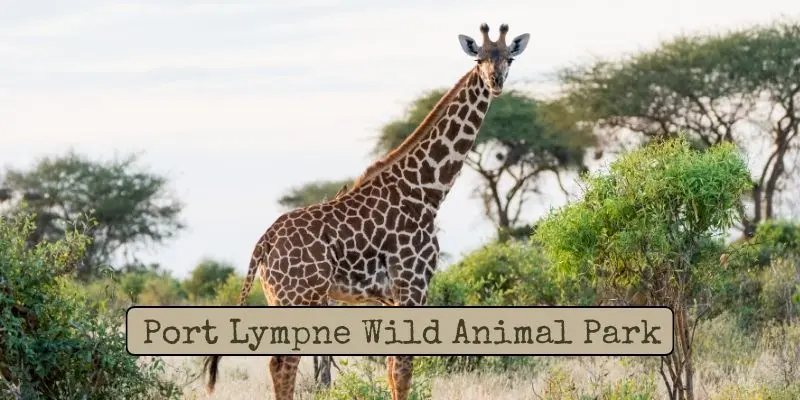
Size : approx. 240 ha
Port Lympne is one of Europe’s largest wildlife parks, offering animals plenty of space to live in natural-feeling habitats.
What makes it unique is the park blends a classic zoo with a safari-style adventure. Visitors can ride specially adapted trucks through African, Asian and South American zones, watching animals roam freely without feeling confined.
Spot giraffes, zebras, antelope, gorillas, lions, leopards and the UK’s largest breeding herd of black rhinos, alongside a variety of rare and endangered species.
Walk through interactive areas to see primates, big cats, and smaller animals up close, or hop on an open-sided safari vehicle to view larger herds from a safe distance.
Book a safari truck ride early when animals are most active. Morning trips often offer the best chances to spot giraffes and zebras before the day warms up.
Tierpark Berlin – Germany

Size : about 160 ha
Tierpark Berlin is one of Europe’s largest traditional city zoos, offering wide-open spaces for animals to roam and naturalistic landscapes for visitors to explore.
Unlike compact urban zoos, Tierpark Berlin feels more like a wildlife park with palace grounds. Its layout around the historic Friedrichsfelde Palace Park provides scenic walking routes, large enclosures and themed areas that mimic natural habitats.
Home to giant pandas, giraffes, big cats, polar bears and a variety of primates. The zoo also features interactive exhibits like the Rainforest House and seasonal animal demonstrations that engage visitors of all ages.
Guests can stroll through themed zones, watch feeding sessions and animal talks, and enjoy plenty of picnic spots and walking trails. The expansive grounds make it ideal for full-day family visits with both educational and recreational experiences.
Arrive early in the morning to catch animals at their most active. Walking the park in a clockwise route often helps cover all the main enclosures without backtracking.
Chester Zoo – United Kingdom
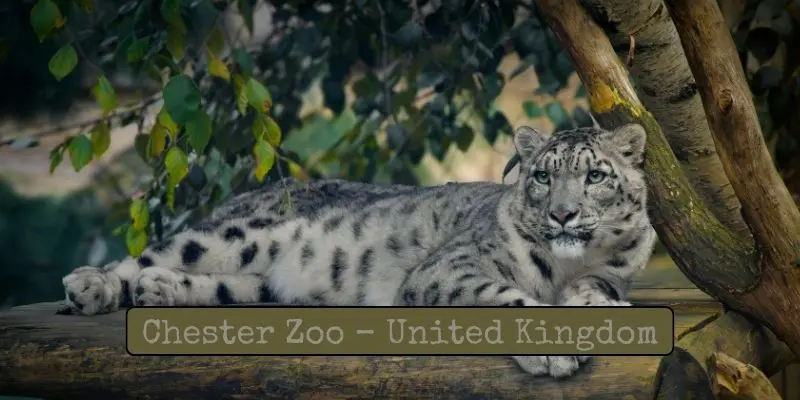
Size : approx. 52 ha
Chester Zoo is one of the UK’s largest and most visited wildlife parks attracting over 2 million visitors annually.
Founded in 1931, Chester Zoo combines immersive indoor habitats with expansive outdoor zones, letting animals thrive in environments that feel close to their natural habitats. Highlights include the Monsoon Forest tropical biodome and the Heart of Africa savannah experience.
See elephants, Sumatran tigers, eastern black rhinos, jaguars, Komodo dragons, lemurs, and snow leopards. The zoo is home to over 30,000 animals across 500+ species, including many rare and endangered creatures.
Compare before you go:
Whipsnade Zoo vs Chester Zoo – Which one is worth visiting?
Wander through themed areas like Islands and Spirits of the Jaguar, enjoy interactive feeding sessions, explore gardens and trails, and take advantage of picnic spots and family-friendly playgrounds. Full-day visits are perfect for both learning and leisure.
Start early and plan your route using the zoo map or app. Visiting popular exhibits in the morning often increases the chance to see animals active before crowds and warmer temperatures set in.
Pairi Daiza – Belgium
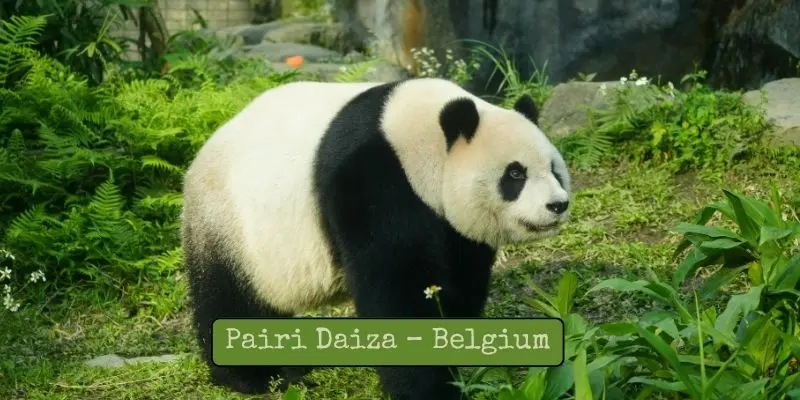
Size: approx. 75 ha
Pairi Daiza is one of Europe’s most enchanting wildlife parks, combining large animal habitats with beautifully landscaped gardens.
The park is famous for its themed gardens and immersive environments, from Asian temples to African savannahs. It blends zoo experiences with botanical artistry, creating a peaceful and visually stunning setting for both animals and visitors.
Home to giant pandas, elephants, white tigers, orangutans, and exotic bird species, along with many rare and endangered animals, Pairi Daiza is a must-visit for wildlife enthusiasts.
Explore walk-through habitats, stroll through themed gardens, enjoy animal feeding sessions and demonstrations, and discover interactive zones for kids. The combination of wildlife, architecture, and nature makes for a full-day immersive experience.
Visit early or late in the day to catch the pandas and elephants at their most active. Don’t miss the Asian-themed gardens for great photo opportunities and quiet strolls away from the crowds.
ZooParc de Beauval – France
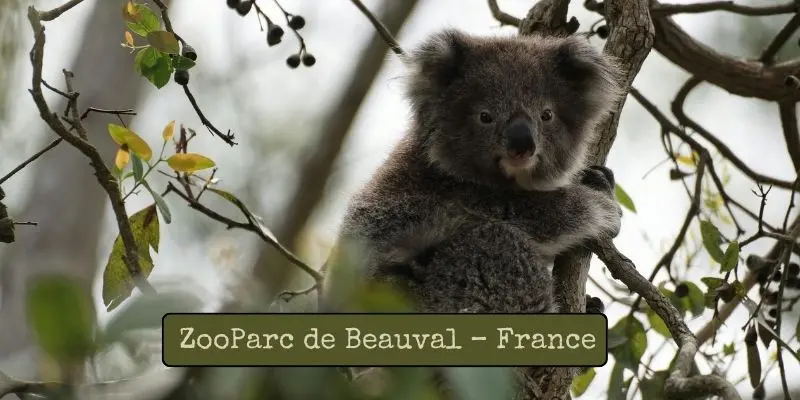
Size : Covering about 44 ha
ZooParc de Beauval is one of France’s largest and most famous zoos, attracting over 2 million visitors annually. The park is consistently ranked among the Best Zoos in Europe thanks to its diverse collection of animals and award-winning visitor experience.
Known for its innovative enclosures and focus on rare species, the park combines modern zoo design with naturalistic habitats. Visitors can explore large open plains, indoor tropical houses, and specialized animal zones that mimic real ecosystems.
Highlights include giant pandas, white tigers, koalas, gorillas and exotic birds. The zoo is celebrated for its rare species breeding programs and educational displays.
Guests can enjoy walk-through exhibits, animal feeding sessions, and interactive talks. The park’s layout encourages full-day exploration, with picnic areas, cafes, and scenic walking paths throughout.
Plan your visit around feeding times for the pandas and big cats as this is when animals are most active and photogenic. Booking tickets online can also help skip long entry lines.
Royal Burgers Zoo – Netherlands
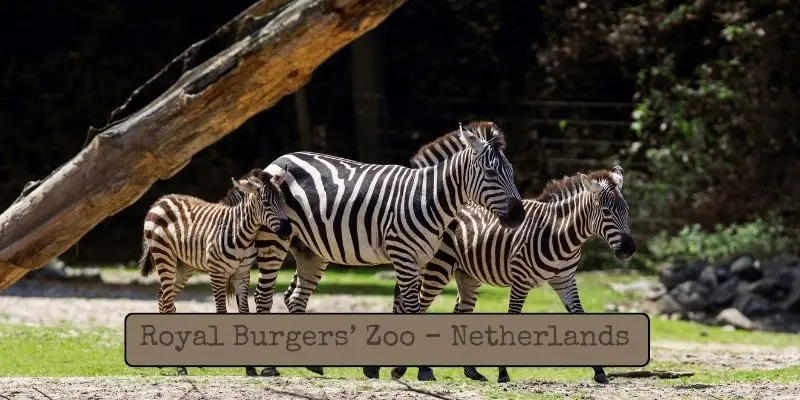
Size : Spanning around 45 ha
Royal Burgers’ Zoo is famous for its immersive indoor ecosystems and expansive outdoor enclosures.
The zoo is known for its indoor rainforest, desert and mangrove ecosystems, allowing visitors to experience different climates and habitats under one roof. It emphasizes interactive and educational experiences, making it ideal for families.
See elephants, orangutans, lions, zebras and exotic birds. The indoor ecosystems also house rare tropical species, including fish, reptiles, and amphibians.
Explore themed indoor zones, walk along river and desert landscapes, and enjoy feeding demonstrations. Outdoor safari-style areas provide views of larger herds and grazing animals, perfect for photography and relaxed exploration.
Start with the indoor ecosystems in the morning to avoid crowds. The desert and rainforest zones are especially active in the cooler hours of the day.
Berlin Zoological Garden – Germany
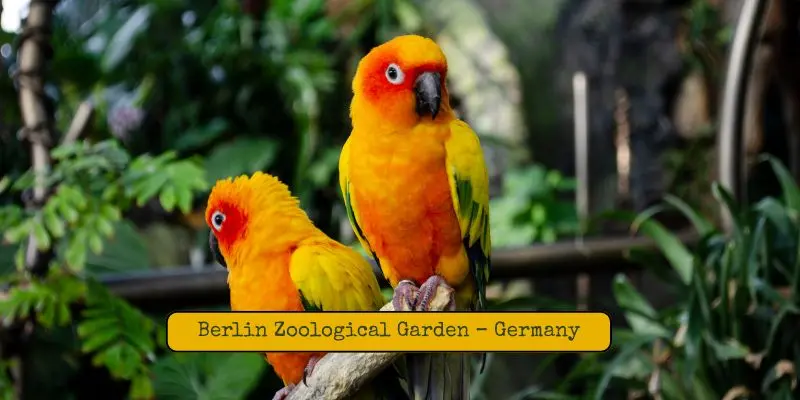
Size : Covering about 35 ha
Berlin Zoological Garden is the city’s largest traditional zoo and one of the most visited in Europe, welcoming over 3.5 million visitors annually.
Known for its diverse species collection, the zoo offers compact yet immersive habitats, making it possible to see a vast range of animals in one day. It combines historic architecture with modern enclosures, including a giant aquarium and tropical halls.
Home to over 20,000 animals across 1,200+ species, Berlin Zoological Garden is widely recognized as the zoo with the most animals in the world. Highlights include giant pandas, polar bears, elephants, big cats and exotic birds. The aquarium adds a fascinating underwater dimension to the visit.
Guests can enjoy animal talks, feeding sessions and indoor exhibits, while exploring themed areas that showcase both terrestrial and aquatic wildlife. The zoo’s compact design makes it accessible for families and first-time visitors.
Arrive early to see the pandas and big cats active before the crowds. Don’t miss the aquarium, which is quieter in the mornings and offers a peaceful experience away from busy enclosures.
For more info, visit the official Berlin Zoological Garden website.
Prague Zoo – Czech Republic
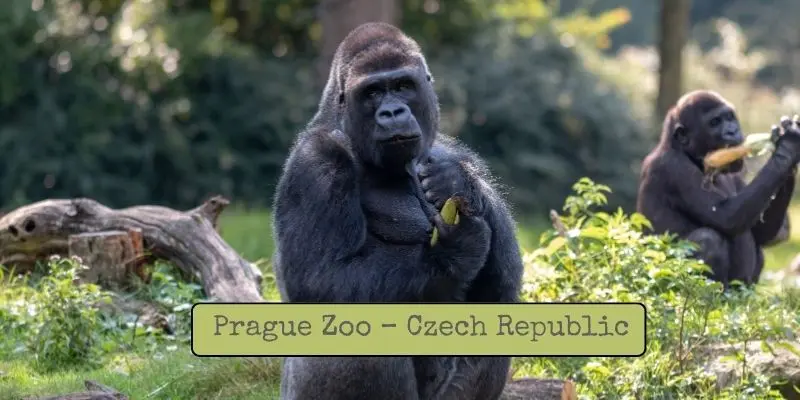
Size : Spanning around 58 ha
Prague Zoo is one of Europe’s top-rated zoological parks, drawing about over 1.4 million visitors annually.
Renowned for its gorgeously landscaped grounds and modern exhibits, the zoo emphasizes naturalistic habitats and conservation programs, providing immersive experiences that highlight animal behavior and biodiversity.
Visitors can see gorillas, Sumatran tigers, elephants, penguins and Komodo dragons, along with many endangered species supported by the zoo’s international breeding efforts.
Explore hillside walking trails, themed exhibits, and interactive areas. Daily animal talks and feeding sessions enhance learning, and scenic viewpoints offer great photo opportunities. The zoo is suitable for full-day family visits.
Take the cable car or plan your route strategically to cover the hilly terrain. Early morning visits increase the chance to observe active gorillas and tigers before the afternoon heat.
For more info, visit the official Prague Zoo website.
Schönbrunn Zoo – Austria
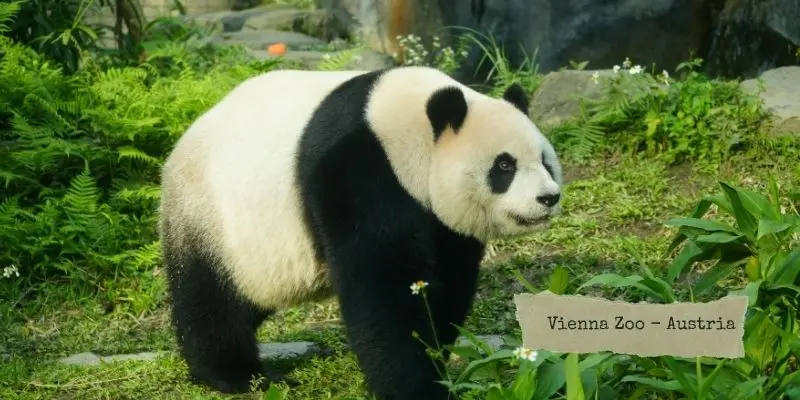
Size : Covering about 17 ha
In Vienna, Schönbrunn Zoo is World’s Oldest Zoo and one of Europe’s most historic zoological parks, attracting around 2.0 M visitors annually.
Founded in 1752, the zoo combines historic architecture with modern habitats, emphasizing conservation, education, and animal welfare. It is part of the Schönbrunn Palace complex, offering visitors a cultural and wildlife experience in one location.
You can see giant pandas, Siberian tigers, elephants, and rare bird species, along with other endangered mammals and reptiles. The zoo is renowned for its successful breeding programs and high standards of animal care.
Guests can explore historic enclosures, interactive exhibits, and themed zones. Daily animal feedings and educational talks bring visitors closer to the animals, while walking paths and gardens provide a scenic and family-friendly environment.
Visit early in the morning to catch the pandas and big cats active. Combine your zoo trip with a walk around Schönbrunn Palace gardens for a full day of sightseeing and wildlife experiences.
Safari Parks vs Traditional Zoos in Europe
Zoos in Europe fall into two main categories: large safari-style parks with open landscapes and traditional zoological gardens with structured, walkable layouts. This difference affects both their size and how they are designed for visitors.
Safari parks are built around expansive natural habitats where animals move freely across large areas. ZSL Whipsnade Zoo in the UK is one of the clearest examples, and among the largest zoos in Europe by land area. Port Lympne Wild Animal Park is another, known for its safari-style experiences and conservation work.
Across Europe, similar large-scale wildlife parks can also be found in places like ZooParc de Beauval in France and Schönbrunn Zoo in Austria, both combining large habitats with strong conservation programs.
Traditional zoos are more compact and designed for walking visits through structured enclosures. Tierpark Berlin in Germany is a major example, while Berlin Zoological Garden is known more for its high species diversity and popularity than for land size. Prague Zoo in the Czech Republic also follows this model with its hillside layout and diverse exhibits.
Best Zoos in Europe (Not Just the Biggest)
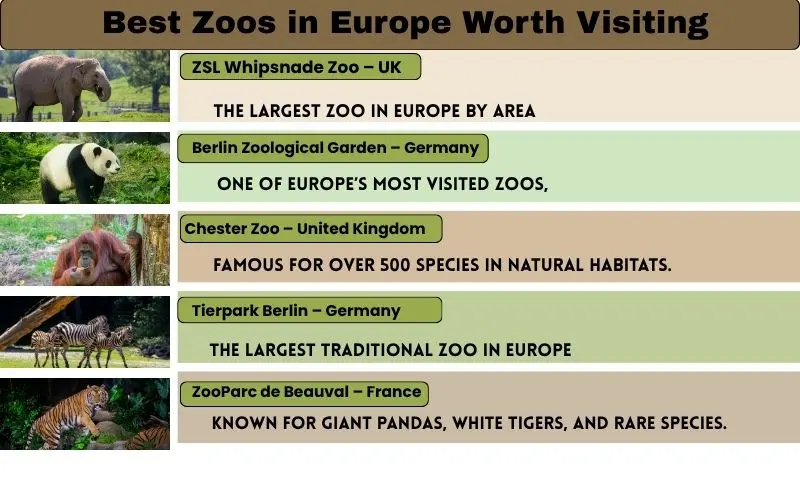
The most famous zoos in Europe are not always the biggest. Here is the list of best zoos in Europe which are famous for unique animal experiences, rare species and immersive habitats rather than just size.
Here are the top 5 must-visit zoos in Europe for wildlife lovers:
- Berlin Zoological Garden – Germany
One of the most visited zoos in Europe, home to giant pandas, elephants, big cats, and thousands of species. Ideal for families and first-time visitors. - Chester Zoo – United Kingdom
Famous for its conservation programs and over 500 species, offering natural-style habitats, tropical domes and interactive exhibits. - Pairi Daiza – Belgium
Known for themed gardens, giant pandas, elephants, and exotic birds, this zoo blends botanical artistry with wildlife for a unique experience. - ZooParc de Beauval – France
One of the top zoos in Europe, featuring giant pandas, white tigers and rare species, with walk-through exhibits and educational talks. - Tierpark Berlin – Germany
The largest traditional zoo in Europe, offering wide open spaces and diverse wildlife in naturalistic enclosures, perfect for a full-day visit.
Explore Our Guide to: Best Family Friendly Zoos in Europe
Hidden Facts About Europe’s Largest Zoos
Europe’s largest zoos are not only impressive for their size, but also for their history, design, and conservation work. Many of them hold unique records and surprising facts that most visitors don’t know.
- ZSL Whipsnade Zoo in the UK is built on open countryside and feels more like a safari park than a traditional zoo, with large roaming spaces for animals.
- Tierpark Berlin is widely regarded as the largest traditional zoo in Europe and is located on historic palace grounds.
- Berlin Zoological Garden is one of the most species-diverse zoos in the world despite its relatively compact size.
- Pairi Daiza in Belgium was originally built on a former monastery site and is now a themed zoo with botanical gardens and immersive habitats.
- Schönbrunn Zoo in Austria is the oldest operating zoo in the world, founded in 1752 and still active today.
- ZooParc de Beauval in France is famous for rare animals, including giant pandas and strong conservation programs.
- Chester Zoo in the UK is one of Europe’s leading conservation zoos, supporting hundreds of endangered species worldwide.
Conclusion
Europe’s largest zoos offer a variety of experiences for every wildlife lover. ZSL Whipsnade Zoo is the largest by area, Tierpark Berlin is the largest traditional zoo, and Berlin Zoological Garden attracts the most visitors. The top 5 must-visit zoos feature rare species, immersive habitats and interactive exhibits, making them perfect for families and wildlife lovers.
Read Also:
FAQs About Largest Zoos in Europe
ZSL Whipsnade Zoo in the United Kingdom is the largest zoo in Europe by area, covering around 240 hectares of open countryside and safari-style habitats.
No. Chester Zoo is one of the UK’s largest zoos, but it is not the biggest zoo in Europe. Several European zoos are larger by land area.
No. Pairi Daiza is one of Europe’s largest zoos, but it is not the biggest by land area.
Tierpark Berlin is widely considered the largest traditional (walk-through) zoo in Europe.
Berlin Zoological Garden in Germany is the most visited zoo in Europe, attracting over 3.5 million visitors annually.
Berlin Zoological Garden in Germany is often regarded as the biggest and most famous zoo in Central Europe, with one of the world’s largest collections of animal species.
Schönbrunn Zoo in Vienna, Austria, is the oldest zoo in the world, founded in 1752.
Berlin Zoological Garden in Germany has one of the highest species collections in the world, making it one of the most biologically diverse zoos in Europe.