Best Beaches of Europe to Visit on Your Next Vacation
Published: 19 Jan 2026
Europe has beaches for every kind of traveler. You can soak up the sun on Mediterranean sands, explore cool northern bays, or discover secluded coves where you can enjoy some peace and quiet. I always get excited finding spots where families can relax, couples can unwind and adventurers can dive into crystal-clear waters. Some beaches are perfect for summer sunbathing, while others shine in spring or early autumn when the crowds are smaller and the scenery feels magical.
Whether you’re planning a family beach vacation in Europe, a romantic getaway or a fun coastal adventure, this guide shows you the best beaches of Europe, from family-friendly shores to stunning hidden gems and the prettiest beaches in Europe.
I’ll also share tips on the best time to visit, how to get there and local highlights to help you plan your perfect European beach vacation.
Explore Europe’s top beach destinations with this interactive map. Find the best coastal spots across the Mediterranean, Atlantic and Northern Europe, discover hidden gems, and plan your perfect beach getaway with ease.
Best Mediterranean Beaches in Europe
Egremni Beach, Lefkada, Greece
Egremni Beach is one of Greece’s most stunning coastal gems, famous for its bluest waters and long, sandy stretch backed by towering cliffs. I love how the soft sand meets the clear turquoise water, creating a picture-perfect spot for swimming or just relaxing under the sun.
Reaching the beach is an adventure itself, you can either descend the 350 steps from the cliff above or take a boat, which makes the experience feel like a true hidden European treasure.
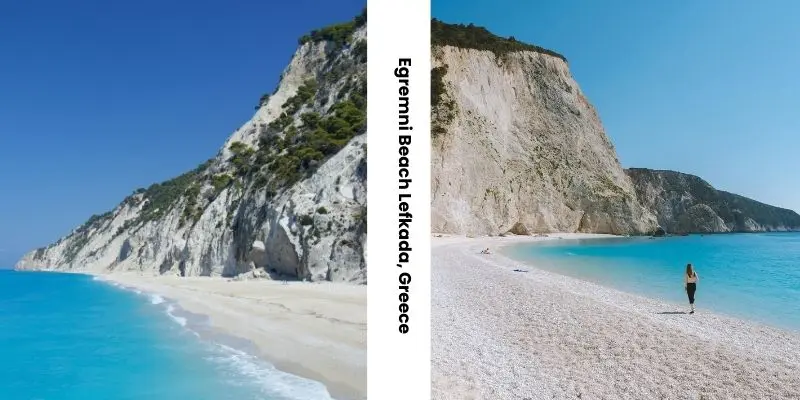
The peaceful surroundings and dramatic views make it ideal for a serene getaway, whether you’re traveling with family or seeking a quiet escape.
- Arrive early or late afternoon to enjoy the beach in peace and soft light
- Wear sturdy shoes and bring sun protection for the long stairs or steep path
- Consider arriving by boat to skip the long descent and climb back
- Pack snacks and drinks since facilities are very limited on the beach
- Check sea and weather conditions before swimming for safety
Monterosso al Mare, Italy
Monterosso al Mare, the largest of Cinque Terre’s five seaside villages, feels like a little coastal resort tucked between lemon groves and olive-covered hills. It’s the only Cinque Terre town with long, wide sandy beaches, ideal if you’re after a proper day by the sea.
The main beach, Fegina, sits right by the station and is known for its turquoise waters, soft sand and a lively summer buzz. You’ll find both free and private beach sections, so it suits every kind of traveler, families, couples or solo beach-seekers.
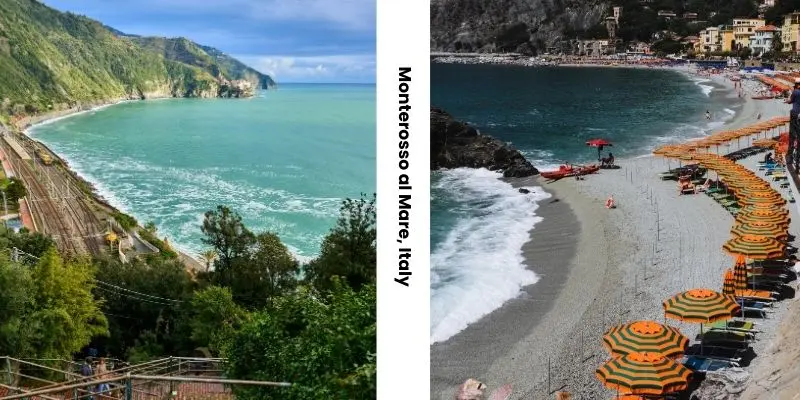
A short stroll leads you to the old town, where colorful houses, cozy trattorias, and gelato shops spill onto the promenade. With calm seas, easy access and postcard views, Monterosso is the spot where Cinque Terre slows down and lets you truly relax.
- Fegina Beach near the train station is the easiest to reach and perfect for families with kids
- Visit early morning or late evening to avoid the day crowds and enjoy the calm sea
- Pack light shoes as the old town’s cobblestone lanes are made for slow, scenic walks
- Explore both sides of the village, the new town for beaches, the old town for charm and food
- The sunset view from the promenade is magical, especially with a gelato in hand
Navagio Beach (Shipwreck Beach), Zakynthos, Greece
Navagio Beach, famously known as Shipwreck Beach, is one of the most breathtaking and photographed beaches in Europe. Hidden within a horseshoe-shaped cove on Zakynthos Island, this Mediterranean gem is framed by sheer white cliffs and shimmering turquoise waters. The rusty remains of the MV Panagiotis shipwreck, stranded here since the 1980s, rest dramatically on the soft pebbled sand, giving the beach its iconic name and cinematic appeal.
You can only reach Navagio Beach by boat, adding to its allure. Most tours depart from Porto Vromi or Agios Nikolaos, offering stunning views of the island’s rugged coastline along the way. Above the cliffs, a famous viewpoint reveals one of the most jaw-dropping panoramas in all of Greece, the shipwreck, the glowing sea, and the curve of the cove below.
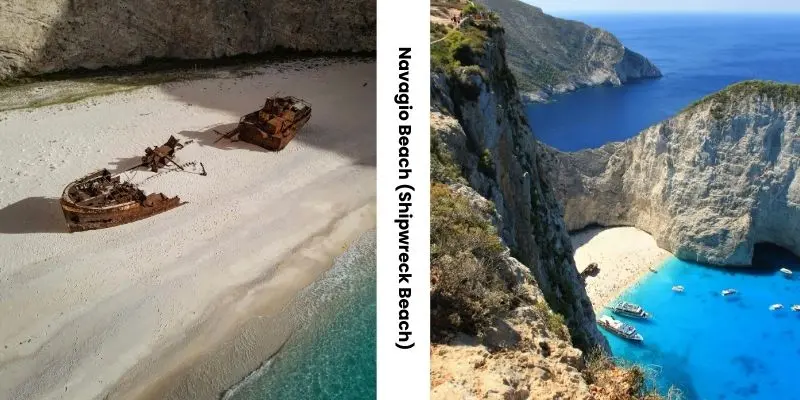
Facilities are limited, and because of safety restrictions and occasional landslides, swimming or disembarking may not always be allowed. Still, even if you view it from above, Navagio Beach is a must-see place where nature, mystery, and beauty meet in one unforgettable setting.
- Arrive early to enjoy the calm, golden light before the tour boats arrive.
- Take a half-day boat tour from Porto Vromi or Agios Nikolaos for the best access and scenic route.
- Visit the cliff-top viewpoint for those postcard-perfect photos as it’s one of Greece’s most photographed spots.
- Wear sturdy shoes and pack essentials; there are no shops or shade on the beach.
- Check local updates before visiting because cliff access and swimming rules can change seasonally for safety.
Myrtos Beach, Kefalonia, Greece
Situated along the stunning northwest coast of Kefalonia, Myrtos Beach is one of those breathtaking spots that instantly makes you fall in love with Greece. It’s framed by towering white limestone cliffs, forming a breathtaking cliff-framed cove. The shoreline is mostly soft white pebbles, and the turquoise waters deepen quickly, making it perfect for a refreshing swim but just keep an eye on the waves which can get choppier on windy days.
The beach is accessible via a winding road from Divarata village, and while parking is limited in the busy summer months, the journey is worth it. Don’t miss stopping at the cliff-top viewpoints along the road the view from above is nothing short of magical and gives you the best photo opportunity.
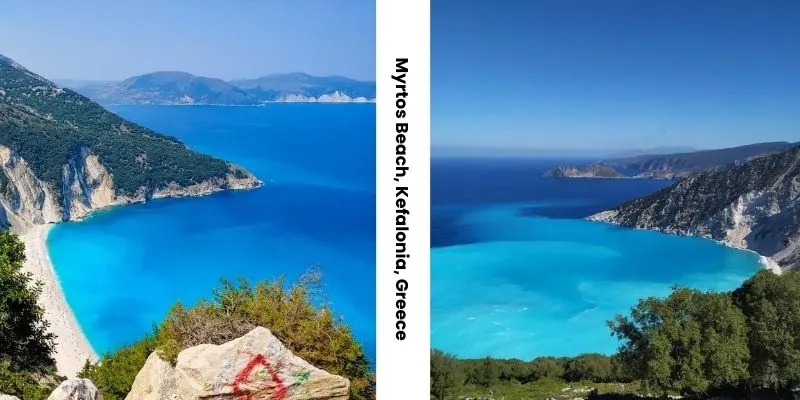
Myrtos Beach consistently ranks among Greece’s and Europe’s most beautiful beaches and visiting it is an experience you’ll remember long after you leave.
- Visit early morning or late afternoon to enjoy the beach with fewer crowds and capture the perfect light for photos
- Make time to stop at the cliff-top viewpoints along the coastal road, the panoramic views are unforgettable
- Wear water shoes if you plan to swim, since the pebbles can feel a little rough underfoot
- Check wind conditions before swimming; the open sea can create stronger waves in the afternoon
- Bring your own snacks and water if you plan to spend the day as facilities are limited, and the beach gets busy in summer
Simos Beach, Elafonisos, Greece
Simos Beach is a true gem on the southeast coast of Elafonisos Island, known for its long stretches of golden sand and striking emerald-green waters. The beach is backed by gentle sand dunes and a fragrant Kedros pine forest, creating a picture-perfect natural setting. The beach has two sides, the calm Sarakiniko area for relaxing and the Frangos area with small waves for a bit of fun in the water, making it perfect for both families and anyone looking to enjoy the sea.
Getting there is simple, with just a 4.5 km drive from Elafonisos village along an easy asphalt road. In peak summer months, small boat trips from the old port also give you a fun approach to the beach. Facilities are convenient, with beach bars and restaurants nearby, so you can spend the day enjoying the sun and sea without worrying about bringing everything with you.
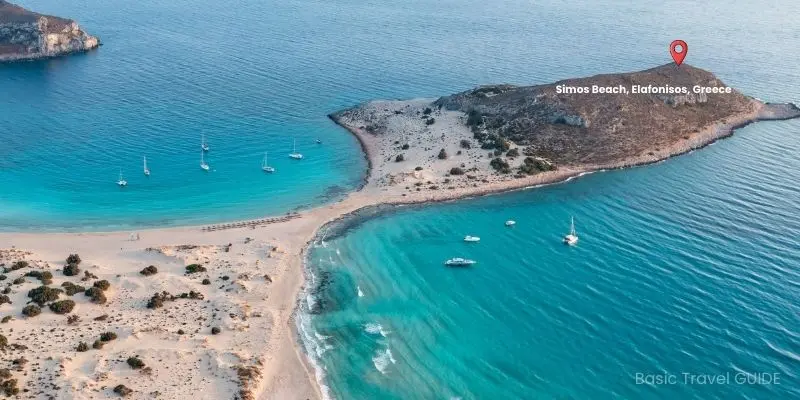
With its combination of natural beauty, family-friendly waters and easy access, Simos Beach is a must-visit spot on any Greek island itinerary.
- Head early in the day or later in the afternoon to enjoy the beach with fewer crowds and softer sunlight for photos
- Explore both sides of the beach, Sarakiniko for calm swimming and Frangos for a bit of water fun
- Bring sun protection and a hat, especially if you plan to wander near the sand dunes or pine forest
- Try the local beach bars for a refreshing drink or snack without leaving the shore
- Consider renting a small boat for a short trip along the coast to see Simos Beach from the water, it’s a unique perspective
Palombaggia Beach, Corsica, France
Palombaggia Beach sits on the southern tip of Corsica, just a short drive from Porto‑Vecchio and around 40 minutes from Bonifacio. This stunning beach stretches over 2 km and actually consists of several adjacent sandy coves, each framed by umbrella pines, orange‑red rocks and crystal-clear turquoise waters. The fine, golden-white sand and calm, shallow waters make it a perfect spot for families.
Getting to Palombaggia is easiest by car or taxi, though summer buses run from Porto‑Vecchio for tourists. Parking can get crowded in peak season, so arriving early is a smart idea.
While facilities are modest, several beachside cafes and restaurants let you enjoy a meal or a refreshing drink without leaving the shore. The gentle slope of the water makes it ideal for kids to splash safely, and the rocky areas nearby are perfect for light snorkeling or exploring.
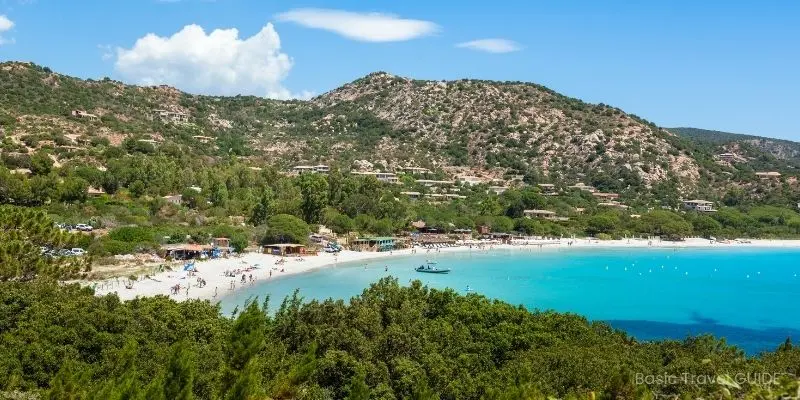
With its mix of natural beauty, family-friendly waters and easy access, Palombaggia Beach is a must-visit destination on any Corsican itinerary.
- Walk along the multiple coves to discover quieter spots away from the main crowds
- Take a moment to enjoy the shade of the umbrella pines, perfect for a break from the sun
- Snorkel near the orange-red rocks where small fish and marine life gather
- Drive from Porto‑Vecchio early in the morning to secure free parking and beat the crowds
- Visit outside peak July‑August if you want a more serene experience and softer beachside lighting
Plage de Santa Giulia, Corsica, France
Plage de Santa Giulia is one of Corsica’s most famous beaches, located just a short drive south of Porto‑Vecchio and about 20 km north of Bonifacio. Its long stretch of fine white sand meets calm, shallow turquoise waters, creating a lagoon-like setting that feels almost tropical.
The beach is framed by umbrella pines and maquis-covered hills, giving it a striking natural backdrop. The gently shelving seabed makes it ideal for families, while the clear waters invite paddleboarding, kayaking, and snorkeling.
Access is easy by car from Porto‑Vecchio, with free and paid parking available, though spots fill quickly in peak summer months. Facilities are convenient, with beachside cafes, restaurants, showers and sun loungers.
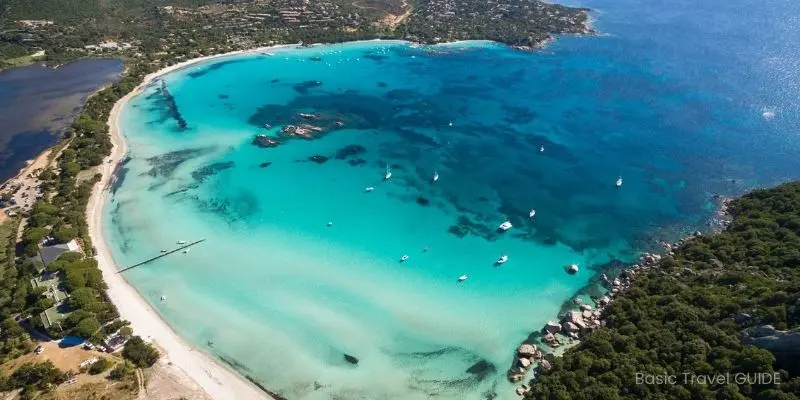
Whether you’re planning a family outing, a romantic day by the sea, or trying out watersports, Santa Giulia Beach combines stunning scenery, safe waters and good amenities to make it a top Corsican destination.
- Arrive early in summer to secure parking and enjoy a quieter stretch of sand
- Rent a paddleboard or kayak to explore the calm lagoon-like waters
- Walk along the edges of the beach to find slightly less crowded spots near the umbrella pines
- Bring snorkeling gear to explore the clear waters near rocky outcrops
- Visit outside July and August for a more peaceful experience and softer sunlight for photos
Read Also:
Cala Goloritzé, Sardinia, Italy
Cala Goloritzé is one of Sardinia’s most famous beaches, known for its dramatic cliffs, crystal-clear turquoise water and the iconic rock arch that makes it feel like a hidden paradise. The beach is small and made up of soft white pebbles, tucked beneath soaring limestone cliffs that give it a truly unforgettable backdrop. The water is perfect for snorkeling, though it gets deep quickly, so keep that in mind if you’re visiting with little ones.
Reaching Cala Goloritzé is part of the adventure. You can hike about 3.5 km down a steep trail from Baunei, or approach by boat, though boats cannot land directly. The beach is protected as a National Monument, so only a limited number of visitors are allowed each day, especially in summer.
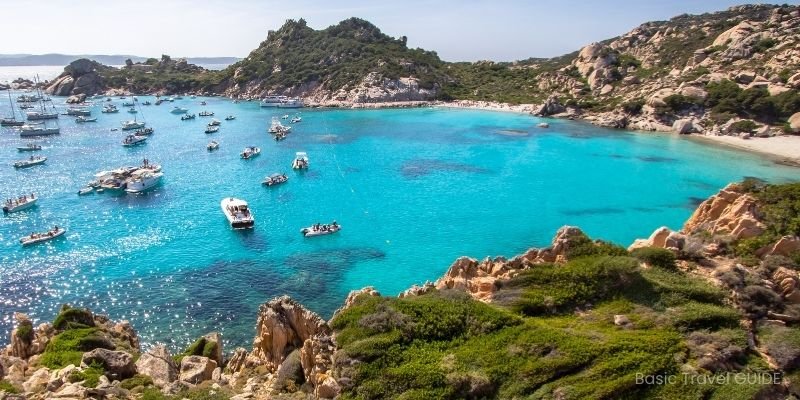
There are very few facilities here, so bring water, snacks, sun protection and sturdy shoes. The effort to get here is worth it as the views, the peaceful setting, and the stunning cliffs make Cala Goloritzé a beach you’ll never forget.
- Start your hike early to enjoy cooler weather and avoid the busiest crowds
- Wear comfortable shoes for the steep trail and bring plenty of water for the return trip
- Reserve your daily entry ticket during peak season to make sure you can visit
- Pack snorkeling gear to explore the clear waters around the rock arch
- Take time to snap photos of the cliffs, the arch and the turquoise water because every angle is postcard-perfect
Read Also:
Zlatni Rat Beach, Brac Island, Croatia
Zlatni Rat Beach, also known as the Golden Horn, is one of Croatia’s most famous beaches and a must-visit spot on Brac Island. Just a short 2 km from the town of Bol, it’s easy to reach by foot, car, taxi-boat or the local tourist train. The beach is made of fine white pebbles and stretches into the sea in a unique horn shape that seems to change direction with the winds, waves and currents, it’s truly a natural wonder.
The crystal-clear waters shift from turquoise near the shore to deep blue just a few meters out. One side of the beach is calm, perfect for families and swimming, while the other side sees stronger waves and wind, making it popular with windsurfers and kite-surfers.
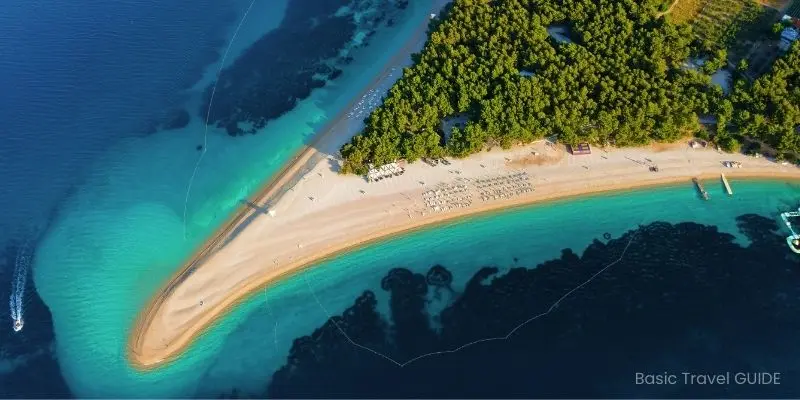
A pine-tree grove at the back of the beach provides natural shade, and there are plenty of amenities nearby, including sunbeds, umbrellas and cafes. In peak summer, the beach can get busy but the stunning scenery and the sense of being in a unique coastal spot make it worth the visit.
- Visit early in the morning or late afternoon to enjoy the beach before it gets crowded
- Bring water shoes as the pebbles are comfortable but can get hot under the sun
- Take a walk to the tip of the horn to see how the shape shifts with the waves and currents
- Rent a paddleboard or try windsurfing if you’re feeling adventurous
- Don’t forget sunscreen and a hat because shade is limited despite the pine grove
Ölüdeniz Beach, Fethiye, Turkey
Ölüdeniz Beach, famously known as the Blue Lagoon, is one of Turkey’s most beautiful beaches. It sits about 14 km from Fethiye town, tucked under the cliffs of Baba Dağ Mountain. The beach has calm, turquoise waters that are perfect for swimming and relaxing, while the open sea side adds a bit of adventure with gentle waves. Soft sand and clear water make it ideal for families, couples and solo travelers.
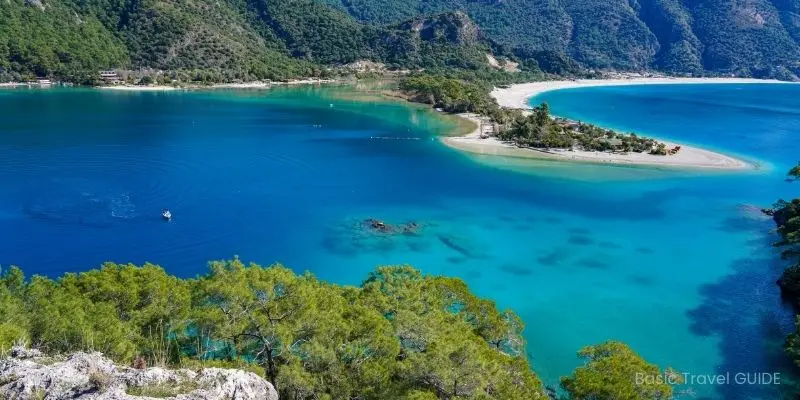
The beach is also famous for paragliding. Thrill-seekers can launch from Baba Dağ and land right on the beach, offering unforgettable views of the lagoon from above. The area is well-equipped with sunbeds, umbrellas, cafes and hotels, but it can get crowded in summer, so early morning or late afternoon visits are best.
- Arrive early to enjoy the calm waters before the crowds arrive
- Try paragliding for a once-in-a-lifetime aerial view of the lagoon
- Explore both the Blue Lagoon side for calm swimming and Belcekız Beach for a slightly more adventurous experience
- Bring snorkeling gear to enjoy the clear waters and spot colorful fish
- Carry some cash for sunbeds, umbrellas and small parking fees
Best Atlantic Beaches in Europe
Praia da Marinha, Algarve, Portugal
Praia da Marinha is one of the Algarve’s most famous beaches, often featured in lists of Europe’s top beaches and recognized globally for its beauty. Situated along the stunning Atlantic coastline near Caramujeira in Lagoa, the beach is famous for its golden sandstone cliffs, crystal-clear turquoise waters, and unique rock arches that create a picture-perfect setting. Its striking landscape earned it the “Golden Beach” award from Portugal’s Ministry of the Environment and a spot among the 100 most beautiful beaches in the world by the Michelin Guide.
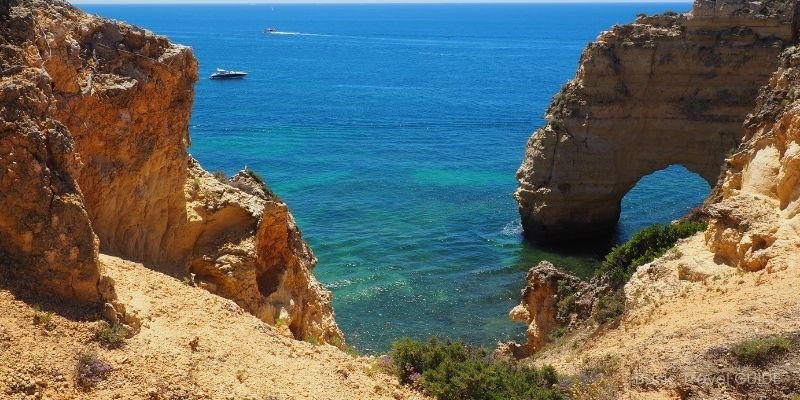
The beach is relatively small and sheltered, offering calm waters ideal for swimming, snorkeling or just soaking in the view. Access involves descending a stairway from the cliff-top parking, so plan ahead during peak season as spaces fill up quickly. Surrounding cliffs also form part of the Seven Hanging Valleys hiking trail, giving adventurous visitors stunning vantage points over the coast.
- Arrive early to secure parking and enjoy a quieter experience before crowds arrive.
- Don’t miss the viewpoint above the cliffs for the iconic “Heart of the Algarve” rock formation.
- Bring snorkeling gear to explore the underwater rock formations and clear waters.
- Wear sturdy shoes if you plan to hike along the Seven Hanging Valleys trail.
- Carry essentials like water and snacks, as there are limited facilities on the beach itself.
Playa de las Catedrales, Galicia, Spain
Playa de las Catedrales, also known as Cathedral Beach, is one of Spain’s most breathtaking Atlantic beaches. Situated along the Cantabrian coast near Ribadeo, this beach is famous for its dramatic natural arches, towering cliff formations, and sea caves that look just like the vaults of a Gothic cathedral. Over millions of years, the ocean and wind have carved the cliffs into a jaw-dropping landscape that changes with the tides. At low tide, you can walk among the arches and explore the caves, while at high tide the area is partially submerged, creating a very different, magical view.
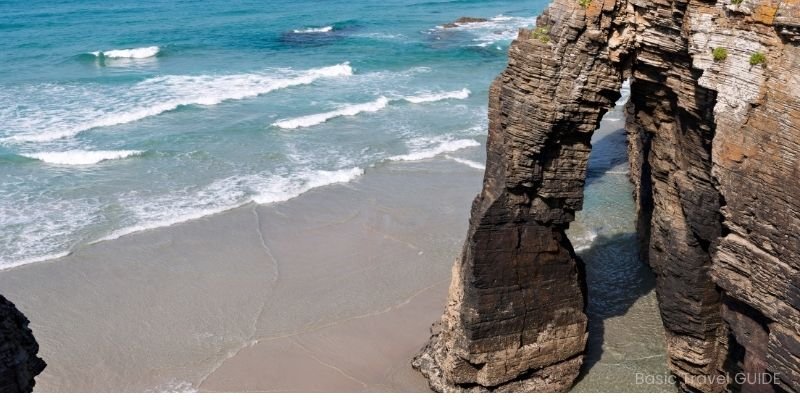
The beach is a protected natural monument, part of Spain’s efforts to preserve its unique geology, and visitor numbers are controlled during peak season. There are two free parking areas, a wooden boardwalk, and a small cafe nearby, but facilities are basic, so it’s best to come prepared.
- Plan your visit around low tide for the best chance to explore the arches and caves.
- Book your entry in advance during high season, as daily visitor numbers are limited.
- Wear comfortable shoes for walking on rocks and sand.
- Bring water, snacks and sun protection since facilities on the beach are minimal.
- Don’t forget your camera, the arches, caves and cliff views are incredibly photogenic.
Zumaia Beach, Basque Country, Spain
Zumaia Beach, also known as Itzurun Beach, is a true natural wonder along Spain’s northern Basque coast. Situated in the charming town of Zumaia, this beach is part of the Basque Coast Geopark, a UNESCO Global Geopark, famous for its dramatic flysch cliffs, layered sandstone and limestone formations carved over millions of years by the Atlantic waves. These cliffs rise up to 150 meters, creating a stunning backdrop for beach walks, photography and simply soaking in the rugged beauty of northern Spain.
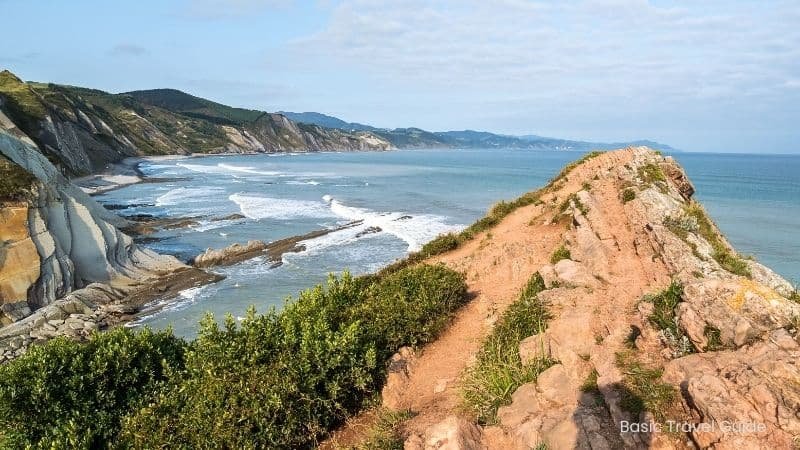
The beach has a unique charm for film and TV enthusiasts, as some of the cliffs and rocky platforms were featured in Game of Thrones as the mythical “Dragonstone.” Depending on the tide, you can explore wide rock platforms and small inter‑tidal pools that are exposed at low tide. While the facilities are modest, with parking, a nearby viewpoint by the chapel of San Telmo, and a few beach amenities, the real highlight is the natural scenery and the dramatic coastal landscape.
- Time your visit around low tide to explore the flysch formations and inter‑tidal pools.
- Walk up to the San Telmo viewpoint for panoramic views of the cliffs and beach.
- Bring sturdy shoes if you plan to explore the rocky areas safely.
- Be prepared for waves and wind, the northern Atlantic can be more dramatic than Mediterranean shores.
- Don’t forget your camera, especially if you’re a fan of natural landscapes or Game of Thrones, as this spot is extremely photogenic.
Côte des Basques, Biarritz, France
Situated on the southwest Atlantic coast of France, Plage de la Côte des Basques is where European surf culture was born. Backed by dramatic cliffs and offering sweeping views all the way to Spain, this beach perfectly blends natural beauty with a lively coastal vibe. It’s especially famous among surfers, as it was here that the first waves were ridden in Europe back in the 1950s.
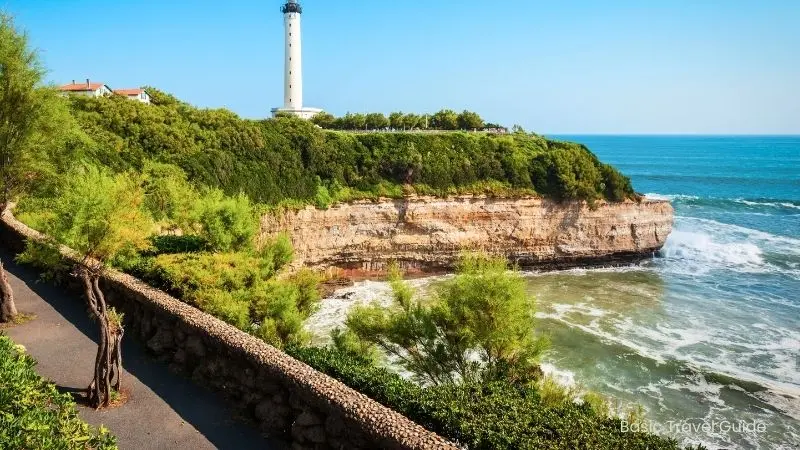
The beach itself changes with the tide, at high tide, much of the sandy area disappears, making timing important for visitors. Access is via the Boulevard du Prince de Galles, with limited parking above the cliffs, so most people prefer walking down from the nearby town center. On calm days, it’s a wonderful spot for sunbathing or watching surfers in action, while evenings offer some of the most stunning sunset views in Biarritz.
Since the waves can be strong and the tides unpredictable, it’s not the best spot for families with young kids, but ideal for surfers and active travelers looking for adventure.
- Plan your visit around low tide, it’s the only time when the beach is fully accessible.
- Bring surf gear or rent locally because this is Europe’s original surfing hotspot.
- If you’re driving, arrive early since parking near the cliff fills up fast.
- Walk to the clifftop viewpoint for the best panoramic shots of the coastline.
- Don’t miss the Queen Classic Surf Festival, a celebration of surf culture held right here every year.
Rhossili Bay, Wales
Situated at the far western tip of the Gower Peninsula, Rhossili Bay is one of the best beaches in Europe, known for its sweeping golden sand and breathtaking scenery. Stretching nearly three miles (around 5 km), the beach is backed by rolling dunes, dramatic cliffs and the iconic Worm’s Head, a tidal island that appears at low tide. It’s a favorite spot for surfers, walkers, and nature lovers looking to experience some of the most beautiful beaches in Europe.
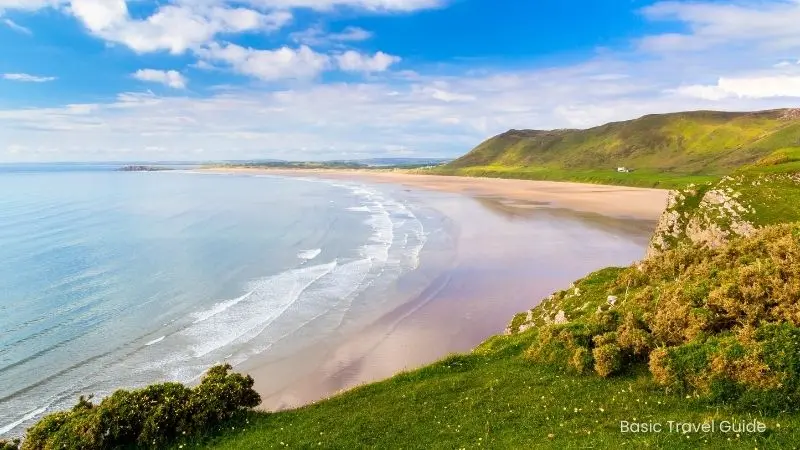
Rhossili Bay is regularly featured among the top beaches in Europe and the world, celebrated for its clean water, natural beauty and expansive views. Paragliders often soar over the cliffs, surfers ride the Atlantic waves and wildlife enthusiasts can spot seals, seabirds and even wild ponies grazing nearby.
Facilities include a National Trust-managed car park at the cliff-top, public toilets and a cafe in the village. The path down to the beach is steep, so a little climb is involved, but the panoramic views make it worth the effort. Dogs are welcome year-round, making it perfect for a scenic beach walk with your furry friends.
- Check the tide times and, if you’re heading across to Worm’s Head, make sure you return before the causeway is submerged.
- Wear shoes with good grip as the cliff-path down and back up can be slippery or steep.
- Bring binoculars or a camera, on a clear day you might spot dolphins, seabirds or even wild ponies on the surrounding hills.
- Arrive early or stay late, that way you’ll catch the best light for photos and avoid the late-morning crowd.
- If you’re visiting with young children, pick a calm day, the Atlantic waves can be strong at times.
Best Beaches in Northern Europe and the Baltic
Nida Beach, Lithuania
Nida Beach sits on the Curonian Spit, a narrow strip of land that’s a UNESCO World Heritage Site. The beach is wide and sandy, with soft white sand stretching along the coast and gentle dunes backed by tall pine forests. It feels peaceful and unspoiled, making it perfect for long walks, relaxing in nature or simply enjoying the calm Baltic Sea views.
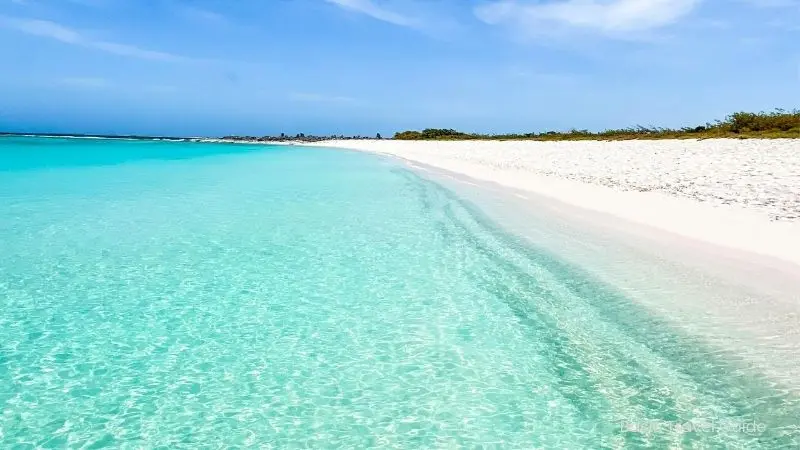
The water here is cooler than in the Mediterranean, so it’s more about soaking in the scenery than swimming. Since the beach is part of a protected national park, there aren’t big resorts or crowded tourist spots, just a few small cafes and facilities, keeping the focus on nature and tranquility.
- Visit early in the morning or during shoulder seasons to enjoy the wide sands in peace.
- Bring a light jacket or windbreaker since the Baltic breeze can be chilly, even on sunny days.
- Explore the pine forest behind the beach, walking or cycling here adds a refreshing change of scenery.
- Plan your travel carefully, the Curonian Spit has limited road access and ferry schedules.
- Swimming might be cool, so focus on walks, dune climbing and soaking in the views instead.
Pärnu Beach, Estonia
Pärnu Beach is one of the most beloved beaches in Northern Europe, located just a short walk from the heart of Pärnu, Estonia’s “summer capital.” The wide, sandy stretch gently slopes into a shallow bay, which warms up quickly on sunny days, making it perfect for families with children. The beach has a Blue Flag status, ensuring clean water, well-maintained surroundings and a safe, welcoming environment.
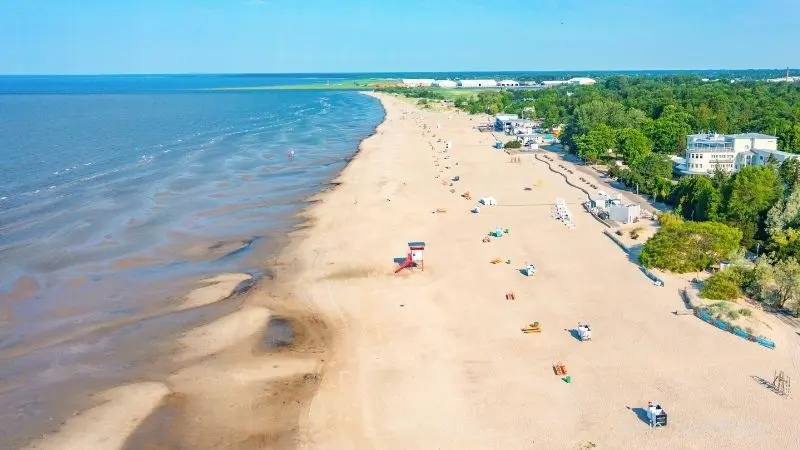
The beach promenade is lively yet relaxed, lined with cafes, restaurants, playgrounds and mini‑golf courses. It’s perfect for a leisurely walk in the evening when the sun sets and the sea breeze cools the day. For those seeking a bit of adventure, paddle-boarding, surfing and sailing are popular activities, while others can simply enjoy the calm atmosphere and the wide sandy expanse.
- Go in the morning or early afternoon to enjoy quieter stretches of sand before crowds arrive.
- Take an evening stroll along the promenade to experience the relaxed seaside vibe and local cafes.
- Kids will love the playgrounds and mini-golf courses right on the beach.
- Try paddle-boarding or surfing in the shallow bay, it’s beginner-friendly and fun.
- Bring a light jacket for later in the day, the Baltic breeze can get cool even after a sunny afternoon.
Jūrmala Beach, Latvia
Jūrmala Beach stretches along the Baltic Sea for over 24 km, just a short ride from Riga. Its wide, golden-quartz sands and gently sloping shoreline make it a perfect destination for families and anyone looking for a safe, relaxing beach day. Behind the beach, pine forests and dunes offer natural shade, fresh air and a peaceful escape from the bustling town.
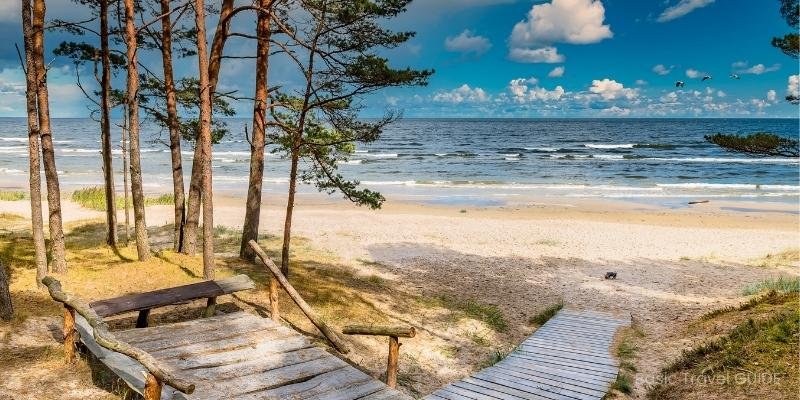
The beach has a lively side around Majori, with cafes, restaurants and summer entertainment, while quieter stretches farther along the coast provide calm, scenic spots to unwind. The water is shallow and clean, though cooler than Mediterranean beaches, making it ideal for children to paddle safely. Accessibility is good, with ramps for wheelchairs and clear pathways to most sections.
- Start your visit early in the morning to enjoy the quieter stretches before the crowds arrive.
- Take a walk through the pine forest behind the beach for shade, fresh air, and some scenic photos.
- Visit Majori if you want cafes, ice cream and lively summer entertainment along the shore.
- Bring a light jacket or hoodie, as Baltic winds can make the water feel cooler, even on sunny days.
- Explore quieter sections further from the town center for peaceful relaxation or sunset views.
Binz Beach,Rugen island, Germany
Binz Beach is one of Germany’s most famous Baltic destinations, stretching about 5 km along Rügen Island’s Prorer Wiek bay. The sand is soft, fine‑grained, and free of stones, while the sea slopes gently, making it perfect for families and safe swimming. The beach is clean, well-maintained and regularly awarded the “Blue Flag” for its water quality and environmental care.
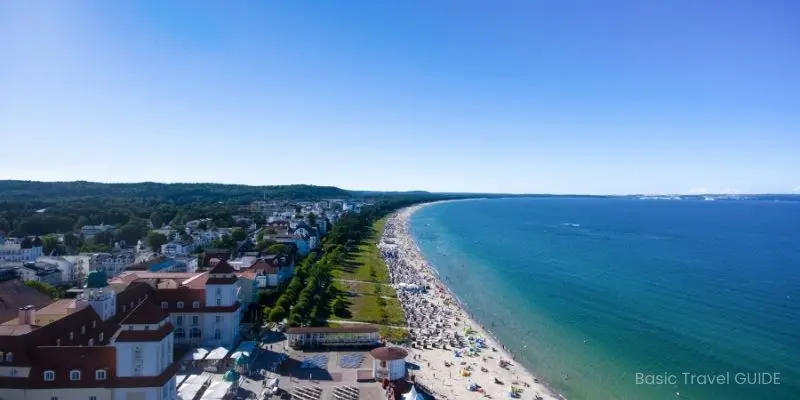
The town of Binz adds charm to the beach experience with its elegant white spa‑style villas, a 370‑meter pier, and a 3.2 km promenade lined with cafes, shops and places to relax. For those seeking more than sunbathing, the beach offers activities like sailing, stand-up paddleboarding, pedal boating and beach volleyball. Designated areas cater to nudists, dog owners and traditional beachgoers, so everyone finds their space. With mild Baltic weather and plenty of sunshine during summer, Binz Beach is ideal for a leisurely seaside getaway.
- Walk along the promenade early in the morning to enjoy the peaceful beach before it gets busy.
- Explore the historic spa villas near the beach to appreciate the classic architecture and local charm.
- Try paddleboarding or sailing to make the most of the calm Baltic waters.
- Visit the pier for stunning views of the bay and great photo opportunities at sunrise or sunset.
- Head to quieter sections of the beach farther from the main promenade for a more relaxed, family-friendly experience.