15 Best Places to Visit in Pakistan for an Unforgettable Trip
Published: 13 Jun 2026
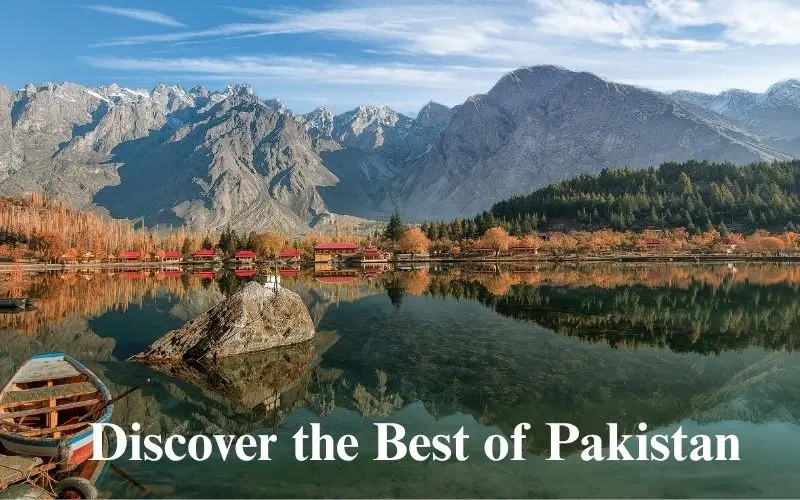
Pakistan doesn’t feel like one type of destination. In the north, roads climb into valleys where glaciers sit close to villages and rivers change colour with the seasons. Down south, the landscape flattens into desert stretches, coastal cities and centuries-old trade routes that still shape daily life.
That contrast is what makes the country interesting for travelers searching for the best places to visit in Pakistan. You’re not moving between similar destinations but you’re moving between completely different worlds. Hunza and Skardu feel remote and quiet, while Lahore is full of movement, food and history layered into every corner.
This guide brings together 15 places across Pakistan that actually show that range, mountains, cities, lakes and historic sites that define how people experience the country today.
Best Cities to Visit in Pakistan
Pakistan’s cities each feel like a different version of the country. Some are shaped by centuries of history, others by modern growth, and a few by a mix of both that you notice only after spending time there. If you’re planning a trip and looking for the best cities to visit in Pakistan, these three are usually where most journeys begin.
Lahore (Punjab, Pakistan)
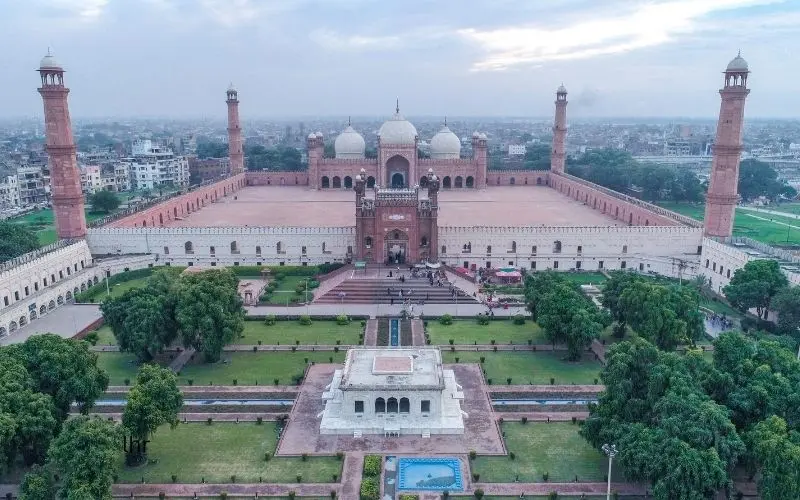
Lahore is one of the largest cities in Punjab, Pakistan, and it stays busy throughout the day. Traffic is heavy in most central areas, so moving between attractions can take longer than expected.
Most tourist activity is centered around the old city. The main highlights are the Lahore Fort and Badshahi Mosque, located next to each other and usually visited together. These remain the most important historical landmarks for visitors in Lahore.
The surrounding Walled City of Lahore is where narrow streets, markets, and residential areas are still active. Visitors usually walk through parts of this area while heading toward the main monuments, rather than treating it as a separate attraction.
Outside the old city, modern Lahore becomes more visible. Popular urban areas like Liberty Market (Gulberg) are known for shopping, restaurants, and evening activity. The MM Alam Road area is also a major dining and commercial strip, especially for cafes and modern restaurants.
For a more relaxed public space, Jilani Park (Race Course Park) is commonly visited for walking, greenery, and open space within the city. It is one of the more structured parks in Lahore and offers a break from the traffic-heavy surroundings.
Food culture is present across the city, especially in areas like Gawalmandi and around Fort Road, where street food and traditional restaurants stay active into the evening.
Tip: Staying near Gulberg or the Walled City gives access to both modern Lahore (Liberty, MM Alam Road) and historical Lahore (Lahore Fort and Badshahi Mosque) without long cross-city travel.
Islamabad (Capital Territory, Pakistan)
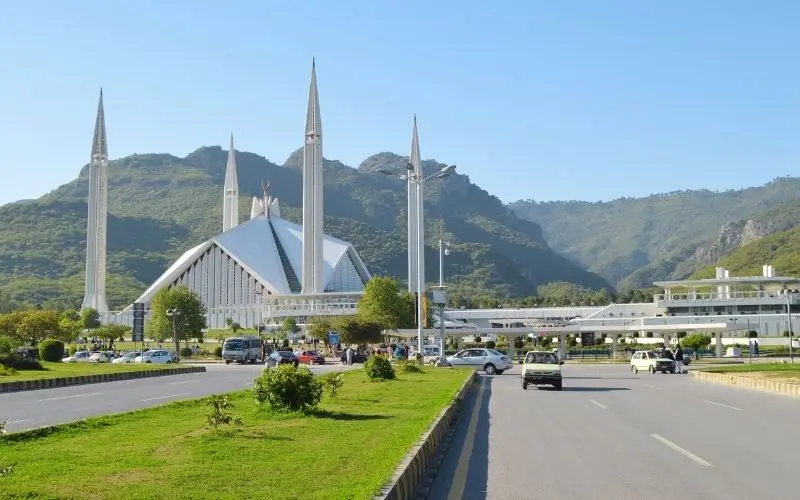
Islamabad is the capital city of Pakistan and a planned city known for its wide roads, green surroundings, and calm layout. Unlike older cities, it is not built around a historic center, so attractions are spread out and usually visited by car or ride service.
The most visited landmark is the Faisal Mosque, located near the Margalla Hills. It is one of the main attractions in the city and is often the first stop for visitors.
For city views, Daman-e-Koh offers a clear viewpoint over Islamabad, while Pir Sohawa sits higher in the Margalla Hills and is known for its cooler weather and restaurants with mountain views.
For outdoor space, Fatima Jinnah Park is one of the largest green areas in the city and is commonly used for walking and leisure.
Islamabad’s main appeal comes from its clean environment, organized layout, and easy access to nature rather than dense historical sites or crowded markets.
Tip: Most visitors stay in central Islamabad for easy access to Faisal Mosque, viewpoints and the Margalla Hills without long travel times.
Karachi (Sindh, Pakistan)
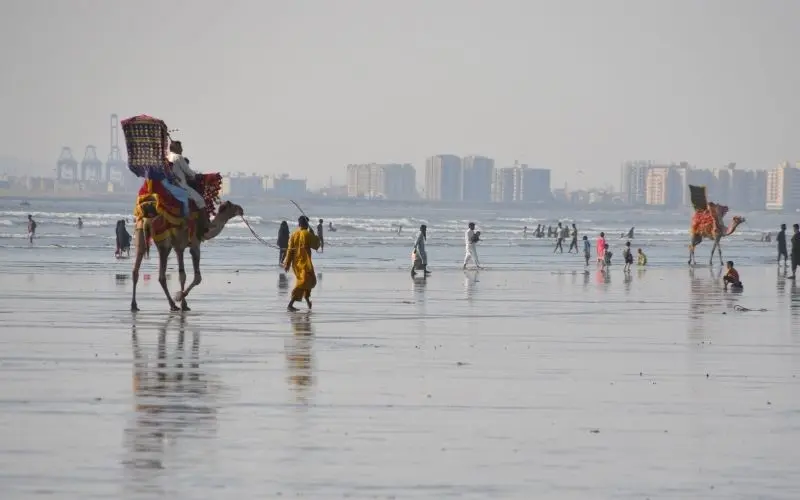
Karachi is the largest city in Pakistan and the main coastal hub of the country. It sits along the Arabian Sea and feels very different from cities like Lahore or Islamabad. The city is active throughout the day, with heavy traffic, busy markets, and constant movement across most areas.
One of the main attractions is the coastline. Clifton Beach is the most visited public beach area, where people come in the evenings for sea views, horse rides, and food stalls nearby. Further along the coast, Hawksbay and Sandspit beaches are quieter and less built-up, offering a more open stretch of sand and sea.
In the city itself, areas like Saddar represent the older commercial side of Karachi, with markets, shops, and dense street activity. It is one of the busiest parts of the city and reflects its trading and business history.
For modern food and leisure, Karachi has a strong café and restaurant culture spread across different neighborhoods. Places like Clifton and DHA are known for restaurants, shopping areas, and evening activity that continues late into the night.
Karachi does not follow a single central tourist zone. Instead, attractions are spread across the city, and visiting usually involves longer travel times due to traffic and distance between areas.
Tip: Plan travel in Karachi with extra time. Coastal spots are best visited in the evening, while markets and food areas are easier to explore earlier in the day or at night depending on traffic.
Historical & Cultural Places in Pakistan
These are some of the most well-known historical places in Pakistan. Most of them are easy to visit from major cities like Lahore, Islamabad and Karachi, and they help show how long and layered the country’s history is.
Badshahi Mosque (Lahore)
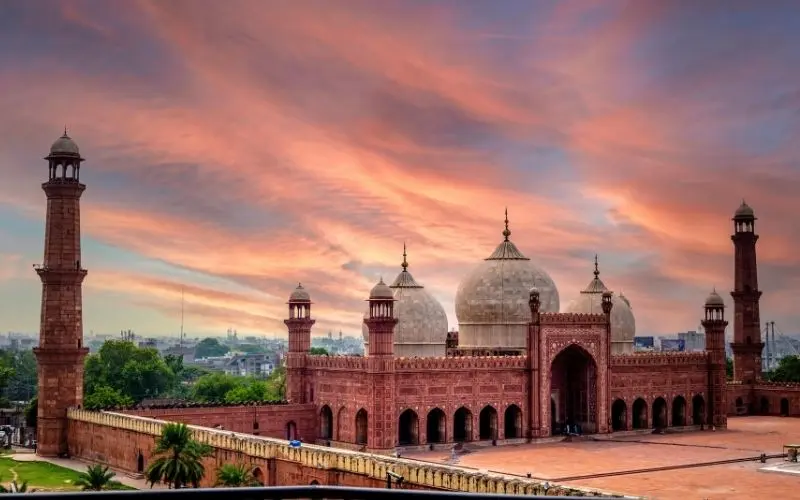
Badshahi Mosque is one of the first places people usually visit in Lahore. It is located close to the old city and the Lahore Fort. The mosque is large and open, and it usually feels busy with both visitors and local families. The design comes from the Mughal period, and it still looks well preserved.
Lahore Fort (Shahi Qila)
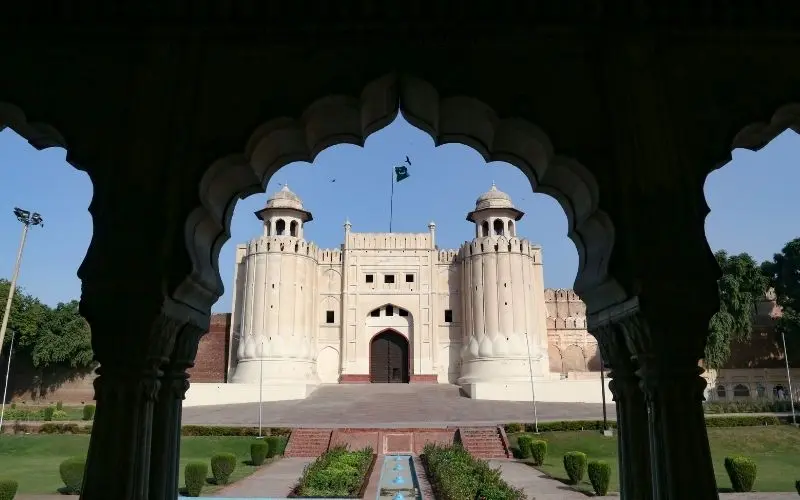
Lahore Fort is right next to the Badshahi Mosque, so both are usually visited together. It is a large complex with courtyards, old halls, and restored sections from different Mughal rulers. Walking inside gives a sense of how important Lahore once was during the Mughal era.
Mohenjo-daro
Mohenjo-daro is located in Sindh and is much older than most historical sites in Pakistan. It is an ancient city with ruins of streets and buildings from the Indus Valley Civilization. There are no modern structures here, just remains of one of the earliest urban settlements in the region.
Rohtas Fort
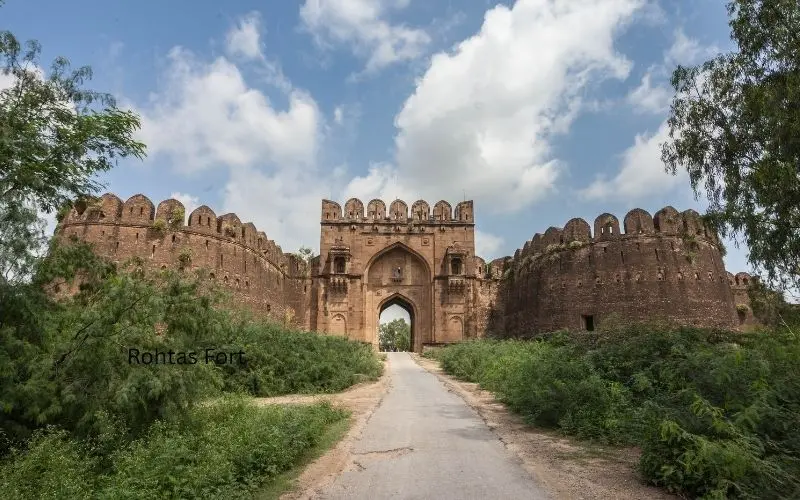
Rohtas Fort is located near Jhelum in Punjab. It is a massive stone fort built for defense, with thick walls and large gates. The area is open and spread out, so exploring it means walking through different parts of the fort at your own pace.
Taxila Ancient City
Taxila is near Islamabad and is made up of several archaeological sites instead of one single place. It includes old ruins from Buddhist and early civilizations, including monasteries and settlement remains. It is usually visited as a half-day trip from the capital.
Makli Necropolis (Thatta)
Makli Necropolis is near Thatta in Sindh and is one of the largest historical graveyards in the world. It has old tombs and carved structures that reflect different periods of Islamic history. The site is quiet and spread out, and it feels more like an open historical landscape than a city site.
Mountains, Valleys & Scenic Destinations in Pakistan
These are some of the most visited northern areas in Pakistan outside the main cities. They are usually part of road trips or longer travel routes and each place feels quite different depending on the region.
Swat Valley
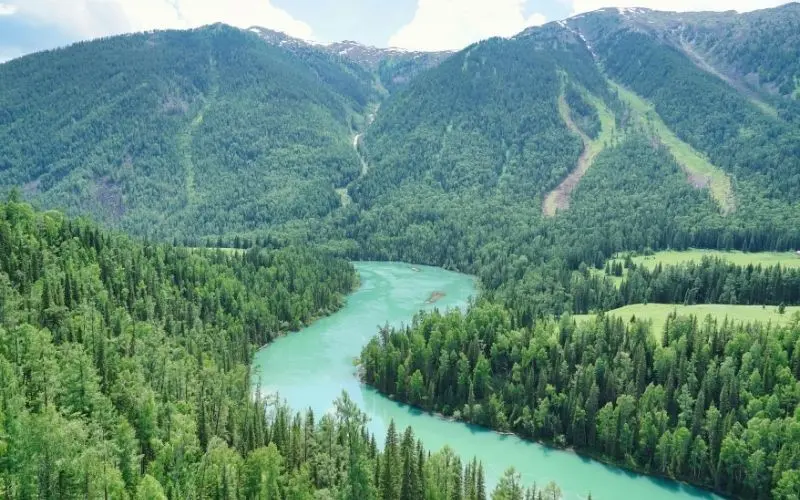
Swat Valley is located in Khyber Pakhtunkhwa and is one of the more accessible scenic regions in northern Pakistan. The main town, Mingora, is usually the starting point for travel inside the valley. From there, roads lead toward places like Kalam and Malam Jabba. The valley has rivers, green hills, and forested areas, especially noticeable during the summer months.
Gilgit (Gateway City)
Gilgit is a travel hub in Gilgit-Baltistan and is often used as a stopover point before continuing toward deeper northern routes. Most people pass through Gilgit while traveling on the Karakoram Highway. The city itself sits between mountains and rivers and is mainly focused on transport, travel, and basic stayovers rather than sightseeing.
Saif-ul-Malook Lake
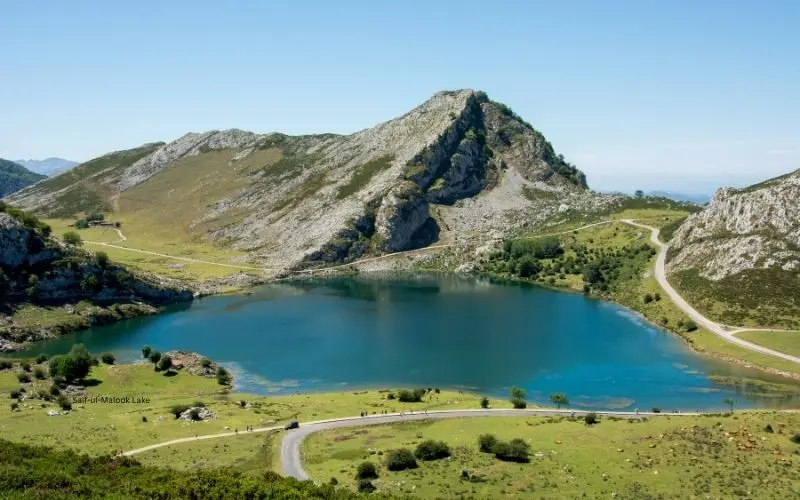
Saif-ul-Malook Lake is located near Naran in Khyber Pakhtunkhwa. It is reached by a short jeep ride from the main town. The lake is surrounded by mountains, and the water changes appearance depending on the weather and light. It is one of the most visited alpine lakes in the region during summer.
Ratti Gali Lake
Ratti Gali Lake is an alpine lake located in Azad Kashmir. Reaching it usually involves a jeep ride followed by a short hike. The area is known for its green meadows in summer and snow-covered surroundings in colder months. It feels more remote compared to other easily accessible lakes.
Manchar Lake / Kenjhar Lake
Manchar Lake in Sindh is one of the largest lakes in Pakistan and has a flat, open landscape around it. It is quite different from northern lakes and feels more local and less mountainous. Kenjhar Lake is another popular spot nearby, often visited for boating and short day trips from surrounding towns.
Read: Top 10 Highest Mountains in the World
Cultural Experiences in Pakistan
Along with places, some of the most memorable parts of traveling in Pakistan come from everyday cultural experiences. These are usually found in cities and border areas, and they help show how people live, eat, and celebrate.
Wagah Border Ceremony (Lahore)

The Wagah Border ceremony takes place outside Lahore at the Pakistan–India border. It happens every evening before sunset. Visitors sit in stands on both sides of the border to watch a coordinated military parade. The atmosphere is loud and energetic, with crowds reacting strongly throughout the event. It is usually a short visit but one of the most unique experiences near Lahore.
Food Streets of Lahore
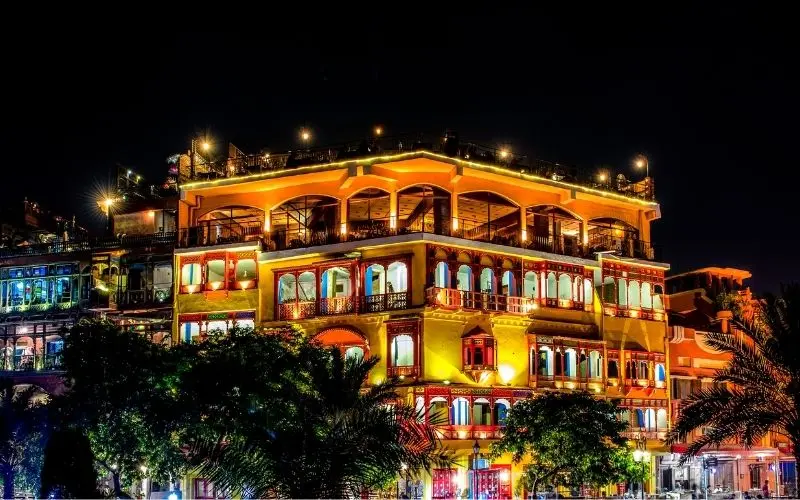
Lahore’s food streets are some of the busiest evening areas in the city. The most popular ones are near the old city, where narrow streets fill up with food stalls and small restaurants. Local dishes are cooked fresh, and people usually visit in the evening when the area becomes fully active. It is less about sitting in one place and more about walking, trying different foods, and experiencing the crowd.
Karachi Food & Night Culture
Karachi has a different kind of evening life compared to other cities in Pakistan. Areas like Clifton and DHA stay active at night with restaurants, tea spots, and open-air food places. People often go out late, and many food areas stay busy well into the night. The experience is spread across the city rather than in one central place, which makes it feel more dynamic and fast-moving.
Quick Takeaways
- For a mix of modern life and culture, Lahore, Islamabad and Karachi give three very different city experiences across Pakistan.
- Pakistan’s history is best understood through sites like Badshahi Mosque, Lahore Fort, Mohenjo-daro, Taxila and Rohtas Fort, which reflect different eras and civilizations.
- Northern travel routes around Swat Valley, Saif-ul-Malook Lake, and Ratti Gali Lake are where most of the country’s natural scenery becomes visible.
- Lakes such as Attabad Lake and Manchar Lake show how dramatically landscapes change from north to south.
- Cultural highlights are not limited to monuments, with experiences like the Wagah Border ceremony and Lahore’s food streets offering more interactive travel moments.
- Gilgit mainly works as a starting point for northern journeys rather than a destination on its own.
- A balanced first trip usually includes one major city, one historical area, and one natural destination instead of trying to cover everything.
- Travel feels very different depending on region, from structured city life to slower mountain and lake areas.