Plan Your Trip: Discover the Best Time to Visit Southeast Asia
Published: 6 Mar 2026
The best time to visit Southeast Asia is during the dry season, when the weather is more predictable and ideal for travel.
Southeast Asia consists of 11 countries, including Thailand, Vietnam, Indonesia, the Philippines, Malaysia, Singapore, Cambodia, Laos, Myanmar, Brunei and Timor-Leste.
The region stays warm and humid throughout the year due to its tropical climate, so temperatures don’t change much month to month. What really affects your trip is rainfall.
Drier months make it easier to explore beaches, cities, and outdoor attractions without frequent interruptions. In contrast, the monsoon period can bring sudden downpours that may affect travel plans, although rain usually doesn’t last all day. Even in the drier season, quick showers can still happen occasionally.
Knowing how the seasons work helps you plan more efficiently, avoid peak crowds, and enjoy a smoother travel experience.
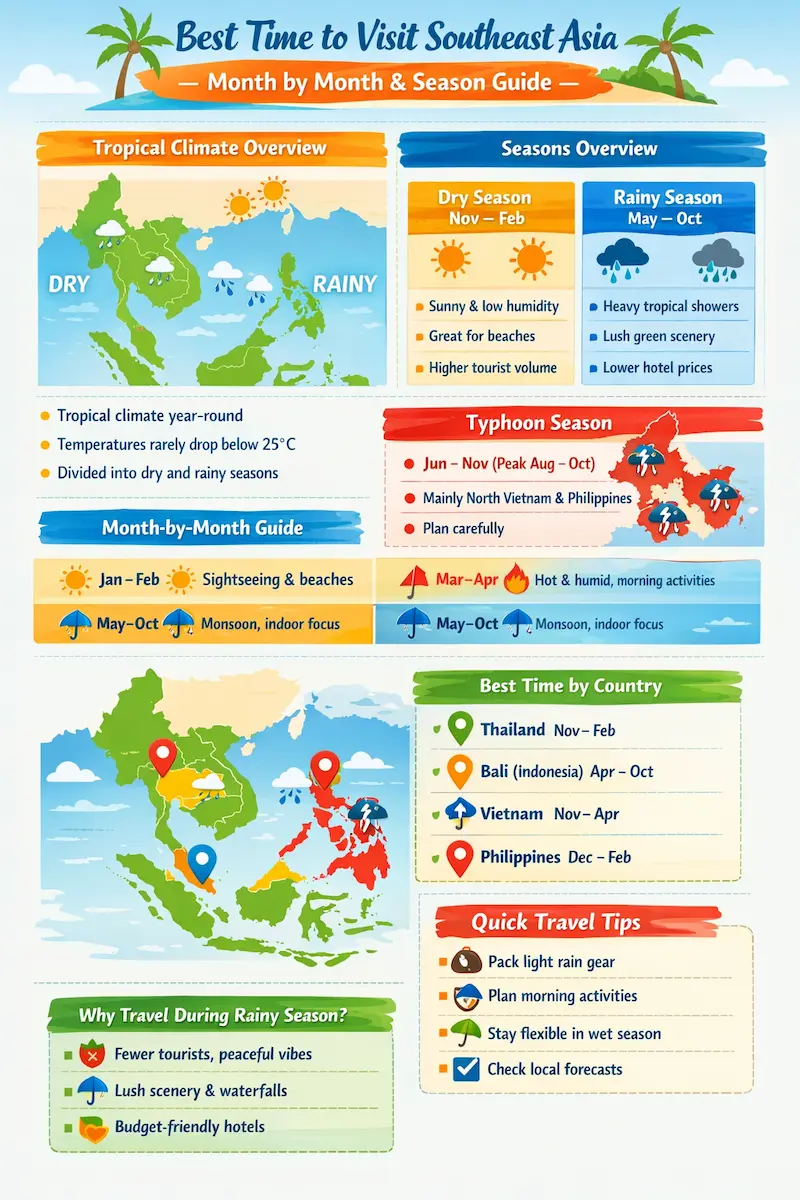
This guide walks you through Southeast Asia’s weather month by month, so you can choose the right time and get the most out of your trip.
What Is the Climate Like in Southeast Asia?
Southeast Asia has a tropical climate, meaning it stays warm and humid throughout the year with distinct dry and rainy seasons.
Most countries in this region experience consistently high temperatures, often staying above 25°C even during the cooler months. Instead of big seasonal temperature changes, the main difference comes from rainfall patterns.
Weather here is typically divided into two phases: a dry period with more sunshine and a wet period linked to the monsoon. During the rainy months, showers are usually intense but short-lived, rather than lasting all day.
Rainfall patterns can vary depending on the country or island you visit. Even in drier months, brief showers can still occur, so it’s always smart to stay prepared.
Knowing how the climate works makes trip planning much easier. By choosing the right time to visit, you can enjoy better conditions for beaches, sightseeing, and outdoor activities while avoiding the heaviest rains.
Seasons in Southeast Asia
Southeast Asia has two main seasons: a dry season with more sunshine and a rainy season influenced by monsoon patterns.
According to the UN World Tourism Organization, November through February is generally the ideal period to visit Southeast Asia for dry and pleasant weather.
Across most of the region, these seasons don’t follow the same exact calendar everywhere, but there is a general pattern travelers can rely on.
The drier months bring clearer skies, lower humidity and comfortable conditions for exploring cities, relaxing on beaches and enjoying outdoor activities.
The wetter period commonly runs from May to October. During this time, rainfall can be heavy at times, rivers may rise, and travel in some areas can become slower. However, these showers are often brief, and the surroundings become greener and more vibrant, giving the region a fresh, scenic feel.
Quick Weather Overview by Month
| Month | Weather | Travel Tip |
|---|---|---|
| Jan – Feb | Dry, sunny, pleasant | Perfect for beaches and sightseeing |
| Mar – Apr | Very hot, humid | Explore early mornings or evenings |
| May – Oct | Rainy season, short heavy showers | Plan indoor activities, travel still possible |
| Nov – Dec | Dry season returns | Great for trips, beaches and tours |
Southeast Asia Weather by Month
Planning your trip month by month makes a huge difference in Southeast Asia. Weather can shift quickly, so here’s a simple breakdown to help you choose the right time.
January – February:
One of the best times to visit. Expect sunny days, lower humidity and comfortable temperatures across most countries.
March – April:
These months bring the most intense heat, especially during the middle of the day. Midday heat can be intense, so plan sightseeing early in the morning or later in the evening.
May – October:
Rainy season begins in many parts of the region. Showers are usually short but heavy, mostly in the afternoon. Northern areas get more rain while some southern destinations remain good for travel.
November – December:
Dry season returns. The weather becomes pleasant again, making it a great time for beaches, city exploring and longer trips.
Rainy Season in Southeast Asia
The rainy season in Southeast Asia typically occurs from May to October, bringing short but heavy tropical showers across many parts of the region.
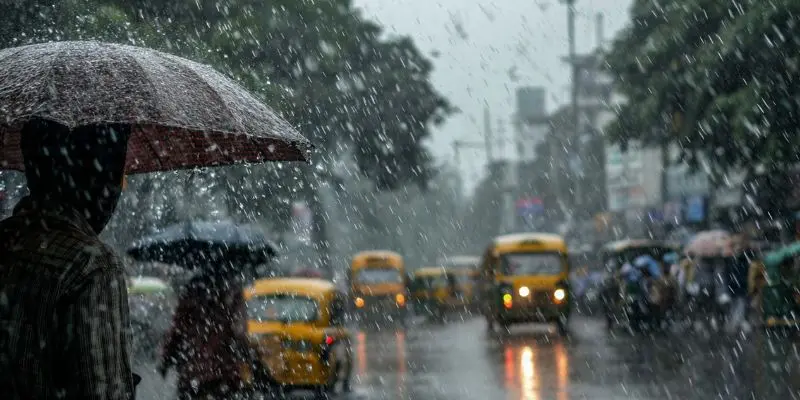
Across much of Southeast Asia, the wet season usually falls within these months, although the exact timing can vary by country. Rain often arrives in quick, intense bursts later in the day, and some low-lying areas may experience temporary flooding after heavier downpours.
While sudden showers can interrupt plans, this season also changes the landscape in a beautiful way. Forests become greener, waterfalls flow stronger, and popular destinations feel less crowded. You’ll often find lower hotel prices too, making it a good option for budget travelers.
With a bit of planning, traveling during this time can still be enjoyable. Start your day early for outdoor activities, carry light rain protection and check local forecasts so you can adjust your plans when needed.
Typhoon Season in Southeast Asia
Typhoon season in Southeast Asia generally runs from June to November, with the highest risk in coastal areas like northern Vietnam and the Philippines.
Typhoons don’t impact the entire region, but they can affect certain areas especially coastal parts of northern Vietnam and the Philippines. These storms are most likely between June and November, with stronger activity usually seen from August to October.
In contrast, destinations further south such as Malaysia, Singapore and Indonesia are rarely in the path of typhoons. That said, they still experience frequent rain during the monsoon season, so it’s worth planning your days with some flexibility.
If you want to stay updated on storm activity while traveling, you can track real-time conditions using the Tropical Storm Risk (TSR) worldwide tracker, which provides global updates on typhoons, hurricanes and cyclones.
Even during peak storm months, large parts of Southeast Asia particularly inland and southern regions remain suitable for travel. With a bit of planning, like avoiding coastal boat trips during rough weather and scheduling outdoor activities earlier in the day, you can still have a smooth and enjoyable trip.
Best Months to Visit Southeast Asia

The best time to visit Southeast Asia is November to February, when the weather is dry, humidity is lower and conditions are ideal for sightseeing and beaches.
However, each season has its advantages:
November – February: Best overall weather
March – April: Best for fewer crowds (but hot)
May – October: Best for budget travel and lush landscapes
If you want the perfect balance of weather and crowds, aim for late November or early December.
While planning your trip, don’t forget to check out the Safest Countries in South East Asia and Safest Countries in Asia if you want peace of mind during your travels.
Final Tips for Visiting Southeast Asia
Southeast Asia is one of those destinations where timing can completely change your experience.
If you visit during the dry season, you’ll enjoy smoother travel, sunny beaches and easier sightseeing. But if you travel during the rainy months, you’ll see a quieter, greener and often more affordable side of the region.
The key is not to avoid a season but to plan smart around it.
- Start your day early
- Keep your itinerary flexible
- Always expect a quick rain shower
Do that, and you’ll enjoy Southeast Asia no matter when you go.
For more inspiration, check out our guides to the Most Beautiful Asian Countries or the Best Beaches in Asia to make the most of your trip.
Travel smart, pack accordingly and enjoy everything this incredible region has to offer!