Best Places to Visit in Chile: 8 Must-See Destinations
Published: 16 Aug 2026
Chile is one of the most varied countries to explore in South America. The best places to visit in Chile stretch from the dry Atacama Desert in the north to the mountains, lakes, and glaciers of Patagonia in the south. Along the way, you’ll find colorful coastal cities, volcanoes, forests, vineyards, and landscapes that look completely different from one region to the next.
With such a long and diverse country, deciding where to go can be difficult, especially on a first trip. Santiago is a natural starting point, while Valparaíso offers a very different coastal experience. Further north, San Pedro de Atacama is the gateway to some of Chile’s most unusual desert scenery, while Patagonia is home to places like Torres del Paine.
If you’re planning your first trip, these 8 places you shouldn’t miss in Chile cover a good mix of cities, nature, adventure, and local culture without trying to fit the entire country into one itinerary.
1. Santiago
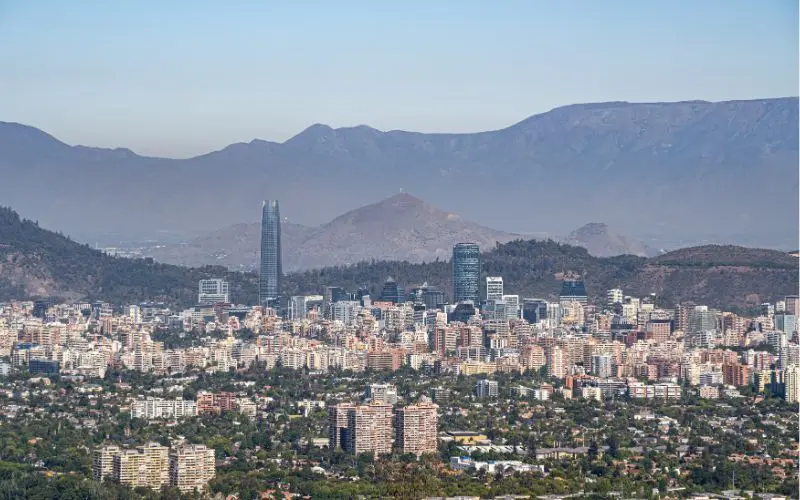
Santiago is the main gateway to Chile and a good place to start your trip. The capital sits between the Andes and the Coastal Range, so you get a mix of city life and mountain scenery. The historic center is a good starting point, with Plaza de Armas, La Moneda Palace, and Mercado Central all worth seeing.
For a different view of the city, head to Cerro San Cristóbal. You can take the funicular or cable car to the top and look across Santiago. When the weather is clear, the Andes rise in the distance behind the city. Haze and air pollution can sometimes reduce visibility, so don’t be surprised if the mountains are harder to see on some days.
Barrio Bellavista is another area worth exploring, especially if you like restaurants, cafés, street art, and a lively atmosphere. You can also visit Museo Chileno de Arte Precolombino to learn more about the history and cultures of the region.
Santiago is more than just a stop before heading elsewhere. The city also makes a useful base for trips to Maipo Valley, the Andes, Valparaíso, and Viña del Mar. Give yourself enough time to explore the city before continuing north to the Atacama Desert or south toward Patagonia.
Read Also:
- Best Countries to Visit in South America
- Most Beautiful Places in the World to Visit Once in a Lifetime
2. Valparaíso
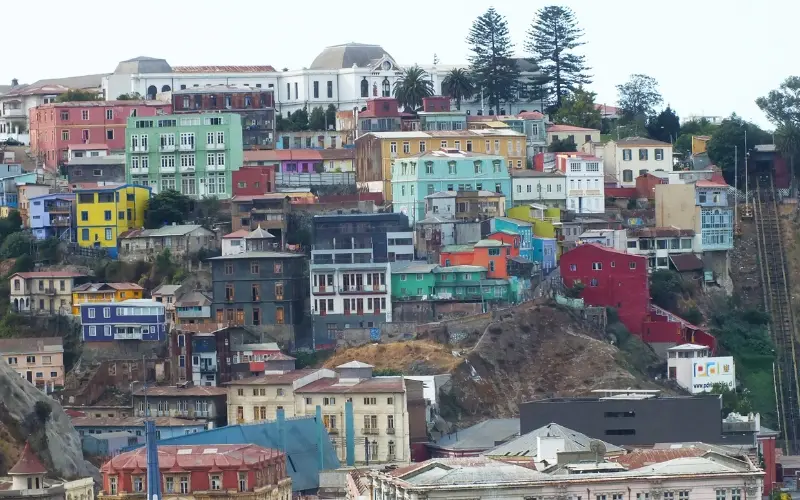
Valparaíso is a colorful port city on Chile’s Pacific coast and feels very different from Santiago. Built across steep hills, the city is known for brightly painted houses, old funiculars, narrow streets, and murals covering walls throughout the neighborhoods.
Spend some time around Cerro Alegre and Cerro Concepción, where you’ll find colorful buildings, cafés, small shops, galleries, and plenty of street art. The historic Ascensor Reina Victoria is also worth trying if you want to experience one of the city’s old hillside elevators without tackling the climb on foot.
Around Plaza Sotomayor, you can see more of Valparaíso’s connection with the sea and its history as an important port. Another interesting stop is La Sebastiana, the former home of Chilean poet Pablo Neruda. The house sits high above the city and has views over the bay.
Valparaíso is very hilly, and some streets are steep or uneven. Wearing comfortable walking shoes will make exploring much easier. If you have the choice, staying overnight lets you see more of the city without having to fit everything into a day trip from Santiago.
3. San Pedro de Atacama
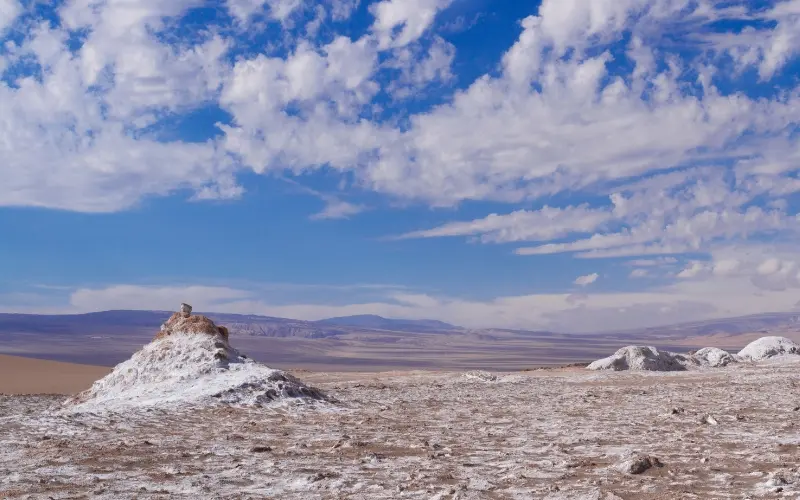
San Pedro de Atacama is a small desert town in northern Chile and the main base for exploring the surrounding Atacama Desert. The town has adobe-style buildings, restaurants, shops, and plenty of tour operators, but the real attraction is the landscape outside town.
Valle de la Luna is an easy introduction to the area, with dry valleys, salt formations, and unusual rock shapes. El Tatio Geysers offer a completely different experience. Most trips leave very early in the morning to reach the geothermal fields around sunrise, when steam rises from the ground in the cold air.
You can also visit Laguna Miscanti and Laguna Miñiques, two high-altitude lagoons surrounded by volcanoes and open desert. Flamingos can sometimes be seen around the water. After dark, the clear skies make San Pedro a popular place for stargazing.
Altitude is something to consider when planning your trip. Some excursions reach more than 4,000 meters, much higher than the town itself. Give yourself time to adjust to the altitude, and make sure you stay well hydrated and get enough rest before heading on a high-altitude tour.
San Pedro de Atacama is a particularly good choice if you want desert scenery, volcanoes, wildlife, and some of the clearest night skies in Chile.
4. Torres del Paine National Park
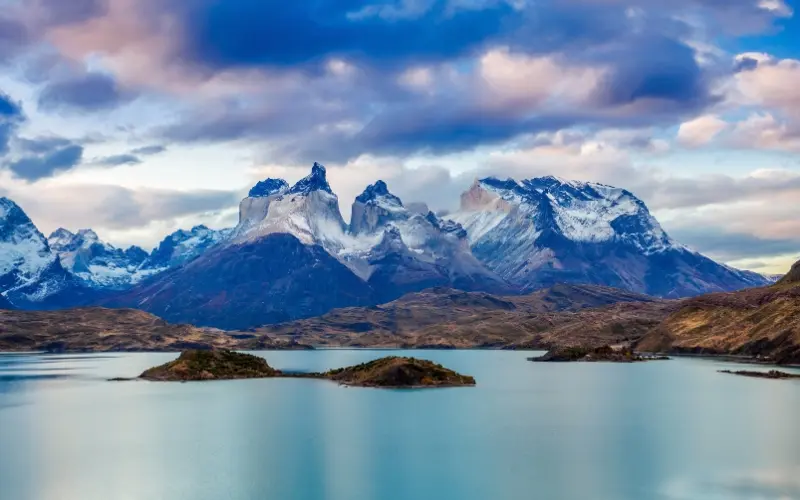
Torres del Paine National Park is the place to go if dramatic mountain scenery and hiking are high on your Chile wish list. Located in Patagonia, the park is filled with granite peaks, blue lakes, glaciers, forests, and wide valleys.
The Base Torres hike is the park’s most famous day hike. The trail ends at a viewpoint facing the three granite towers above a mountain lake. If you’re looking for a longer trek, the W Trek takes you through several of the park’s best-known areas, including Grey Glacier and French Valley.
You don’t have to spend several nights on a trail to enjoy the park. Shorter walks, scenic drives, boat trips, and guided tours give you other ways to see the landscape. This makes Torres del Paine suitable for visitors with different levels of hiking experience.
Wildlife is also part of the experience. Guanacos, foxes, and Andean condors are commonly associated with the area, while pumas are sometimes spotted by lucky visitors. If you spot wildlife, give it plenty of space and avoid feeding or approaching it.
Patagonia’s weather can change quickly, so pack layers and waterproof clothing even when the forecast looks good. If hiking is your main reason for visiting, leave enough time in your itinerary to enjoy the park rather than trying to rush through it.
5. Pucón
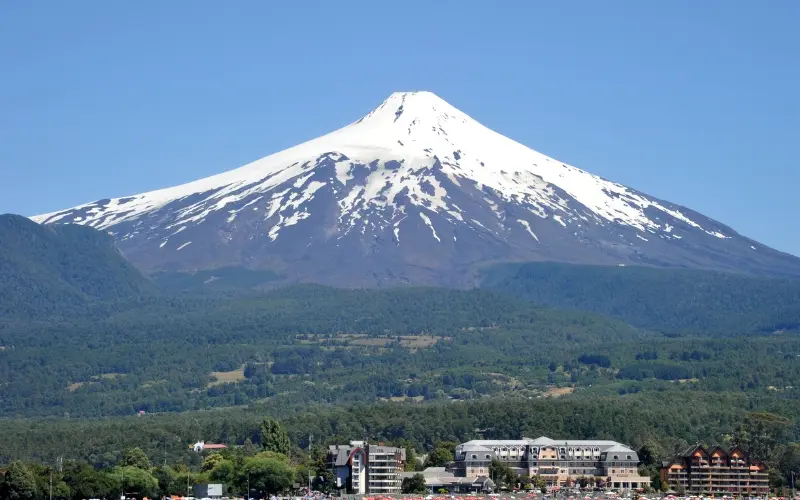
Pucón is a small town beside Lake Villarrica in Chile’s Lake District, with Villarrica Volcano rising above the area. It is a good choice if you want to add outdoor activities to your trip without heading all the way to Patagonia.
There are plenty of ways to spend your time here. You can hike around Villarrica Volcano, go rafting on local rivers, kayak on the lake, or explore the surrounding forests. Huerquehue National Park is another worthwhile stop, with trails leading through native forests and past mountain lakes.
Pucón itself has a relaxed feel, with restaurants, cafés, shops, and places to enjoy the lake views. You can easily use the town as a base while exploring the surrounding area instead of changing accommodation every night.
If you’re planning a volcano hike or another mountain activity, check the current conditions before you go. Weather can change quickly, and access to some routes depends on safety conditions. For technical activities, it is better to go with an authorized guide who knows the area.
Pucón suits travelers who want a mix of mountains, lakes, hiking, and adventure without giving up the comfort of staying in a lively small town.
6. Puerto Varas
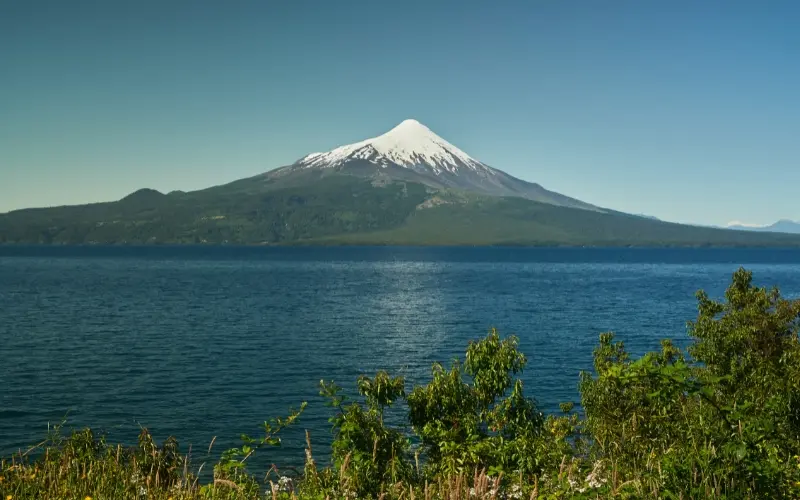
Puerto Varas sits beside Lake Llanquihue in Chile’s Lake District and is known for its views of Volcano Osorno. On a clear day, the volcano rises above the lake and creates one of the most memorable views in the region.
You can explore the town on foot. Take a walk along the lakefront, visit the gardens, and look at the older buildings that show the area’s German influence. There are also plenty of restaurants and cafés, making Puerto Varas a comfortable place to stay while exploring the Lake District.
The best part of visiting Puerto Varas is being able to reach several natural attractions from the town. Petrohué Waterfalls and Vicente Pérez Rosales National Park are popular choices, while Lake Todos los Santos offers more mountain and volcano scenery.
Weather can change the experience quite a bit. Clouds can cover the volcanoes even when the town itself is sunny, so don’t plan your entire visit around getting one perfect photograph of Osorno. If the weather clears, take advantage of it and head out to the lake or surrounding viewpoints.
Puerto Varas works well for travelers who want beautiful scenery, comfortable accommodation, good food, and easy access to nature.
7. Chiloé Island
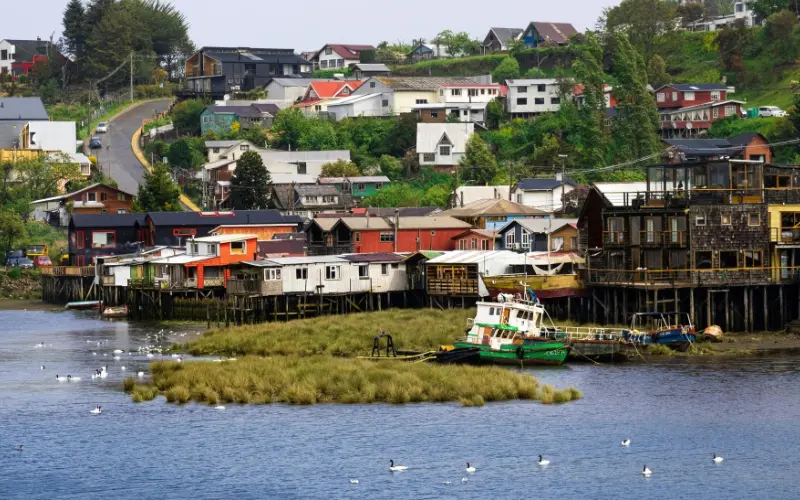
Chiloé Island has a strong local character and offers a different experience from the better-known destinations on mainland Chile. The island is known for its wooden churches, colorful houses, green countryside, seafood, and small coastal communities.
Start in Castro, the island’s main town. Its palafitos, colorful wooden houses built over the water, are among Chiloé’s most recognizable sights. Castro is also home to the wooden Church of San Francisco, one of the historic churches on Chiloé recognized as a UNESCO World Heritage Site.
There is plenty to see outside the town as well. Chiloé National Park has forest trails and beaches along the Pacific coast, while the island’s wetlands are important areas for birds and other wildlife.
Food is another part of the Chiloé experience. Try curanto, a traditional dish made with seafood, meat, potatoes, and other local ingredients. Different versions are served around the island, so it’s worth trying it more than once if you enjoy local food.
Chiloé is quite spread out, so plan your transport before setting off. A rental car can make it much easier to visit smaller communities and natural areas. This is a destination for slowing down and getting to know a different side of Chile rather than rushing between attractions.
8. Rapa Nui (Easter Island)
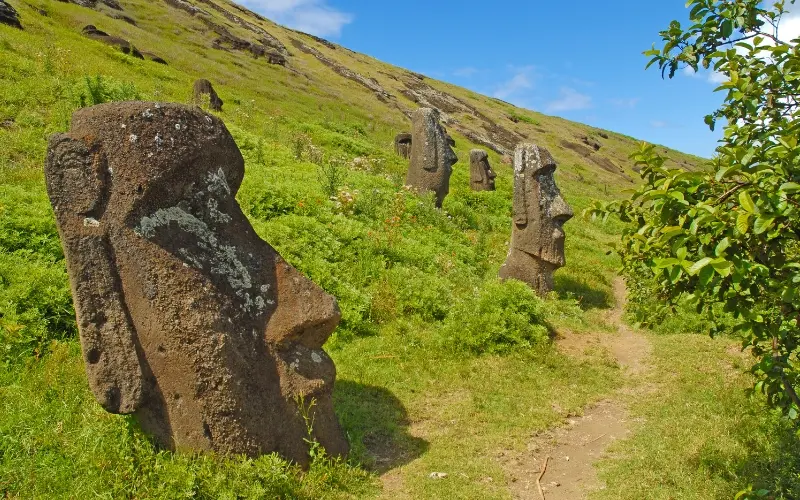
Rapa Nui, also known as Easter Island, is one of the most remote places you can visit as part of a trip to Chile. The island is famous for its moai, the huge stone figures created by the Rapa Nui people, but there is much more to see beyond the statues.
At Ahu Tongariki, 15 restored moai stand together on a large ceremonial platform. Rano Raraku is another important site because the volcanic crater was where many of the moai were carved. At Orongo, you can explore an important ceremonial village beside the crater of Rano Kau.
The island also has beaches and volcanic landscapes. Anakena Beach is a good place to take a break from visiting archaeological sites, with sandy shores and palm trees surrounded by a very different landscape from mainland Chile.
Rapa Nui takes more planning than most destinations on this list because it is far from mainland Chile and flight options are limited. Some archaeological areas also have rules about where visitors can walk. Follow the marked paths and local instructions, and avoid touching or climbing on the moai.
Choose Rapa Nui if you want to combine Rapa Nui culture, archaeology, beaches, and volcanic scenery in one trip. It adds something completely different to a Chile itinerary.
How to Plan a Trip to Chile
Chile is a long country, so think about your route before booking everything. Trying to fit Santiago, the Atacama Desert, the Lake District, and Patagonia into a short holiday can mean spending too much time traveling.
For a first trip, choose two or three regions. You could visit Santiago and Valparaíso, then head north to San Pedro de Atacama. If you have more time, add Patagonia or places such as Pucón, Puerto Varas, or Chiloé.
Flying is usually the easiest way to cover long distances. Buses are useful between many cities and towns, and a rental car can be handy in the Lake District and on Chiloé Island.
Check the travel time between destinations before booking your accommodation. Chile is much longer than it looks on a map, and journeys between central Chile and Patagonia can take a large part of a day.
Best Time to Visit Chile
The best time depends on which part of Chile you want to visit. The country covers several climate zones, so the weather in the Atacama Desert can be very different from Patagonia at the same time of year.
Spring and fall are good times for visiting Santiago and central Chile. The Atacama Desert can be visited during much of the year, while the warmer months are generally better for hiking in Torres del Paine and Patagonia.
If you’re visiting several regions, check the weather for each place before you travel rather than relying on one forecast for the whole country.
For more detail, see our guide to the Best Time to Visit Chile
Is Chile Worth Visiting?
Yes. Chile is a great choice if you want to see very different landscapes on one trip. You can explore Santiago, walk through the colorful streets of Valparaíso, visit the Atacama Desert, see volcanoes and lakes in the south, and hike among the mountains and glaciers of Patagonia.
There is plenty to do beyond sightseeing too. You can visit vineyards, try local seafood, go hiking, watch wildlife, or spend an evening stargazing in the desert.
The main thing to remember is that Chile is a very long country. You won’t see everything on one short holiday. Pick a few places that interest you most and give yourself enough time to travel between them.