Best Places to Visit in Argentina: 14 Must-See Destinations
Published: 1 Sep 2026
Argentina is the kind of country that can make trip planning feel almost as exciting as the trip itself. There is so much to see, from the colorful streets of Buenos Aires and Mendoza’s famous wine country to the glaciers, mountains, and wild landscapes of Patagonia. The difficult part is deciding which places deserve a spot on your itinerary.
When you start looking for the best places to visit in Argentina, the choices can quickly become overwhelming. Should you spend more time exploring cities, head south for Patagonia, visit the spectacular Iguazú Falls, or travel into the Andes? The answer depends on what you want from your trip, and how much time you have.
I’ve put together this guide to help you narrow down the options without trying to fit every corner of this enormous country into one vacation. Below, you’ll find the best places to visit in Argentina, from famous tourist attractions to scenic destinations that are worth going a little further for. I’ll also share what makes each place special, so you can choose the ones that best match your travel plans.
1. Buenos Aires
Best for: Culture, tango, food and nightlife

Buenos Aires is one of the best places to visit in Argentina, and it deserves more than a quick stop between flights. Argentina’s capital brings together European-influenced architecture, Argentine traditions, tango, excellent food and lively neighborhoods.
Start in Recoleta, where elegant buildings, museums and the famous Recoleta Cemetery give the neighborhood its distinctive character. San Telmo feels older and more traditional, with cobbled streets, antique shops, cafés and tango performances. In La Boca, the brightly painted buildings around Caminito are among the most recognizable tourist attractions in Buenos Aires.
Palermo is a good area for restaurants, cafés, bars and green spaces. In the city center, Plaza de Mayo, Casa Rosada and Teatro Colón are some of the main landmarks to see.
Food is another reason to spend time in Buenos Aires. This is the place to try Argentine steak, empanadas and alfajores, as well as experience a traditional tango show. If you have several days, you can also explore the city’s parks, markets and nearby Tigre Delta.
Read Also:
- 12 Best Countries to Visit in South America
- Beautiful Places in the World to Visit Once in a Lifetime
2. Iguazú Falls
Best for: Waterfalls, rainforest and nature
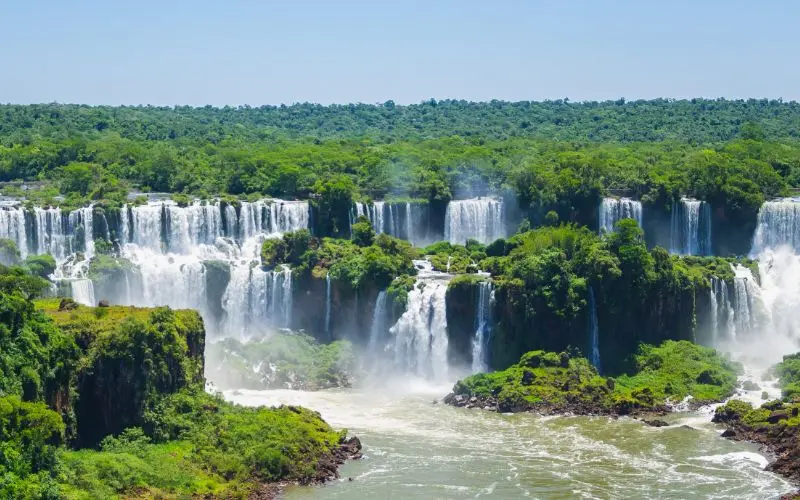
Iguazú Falls is one of the most spectacular places to visit in Argentina and one of the country’s most famous natural attractions. Set within the lush rainforest of Iguazú National Park, the falls stretch along the border between Argentina and Brazil, with hundreds of cascades spread across a vast area.
The Argentine side is particularly good for getting close to the waterfalls. Several walking trails lead through the rainforest to viewpoints over the different sections of the falls. The highlight is Garganta del Diablo (Devil’s Throat), where an enormous volume of water drops into a deep gorge surrounded by mist and rainforest.
There is more to Iguazú National Park than the waterfalls themselves. Keep an eye out for colorful birds, butterflies and other wildlife along the trails. The town of Puerto Iguazú is the main base for visiting the falls and is easy to combine with other stops in northeastern Argentina.
If you are deciding which tourist attractions to include on an Argentina itinerary, Iguazú Falls is one of the Most Beautiful UNESCO World Heritage Sites in the World worth making room for, even if you only have a short time in the region.
Read also:
3. Mendoza
Best for: Wine, the Andes and outdoor adventures
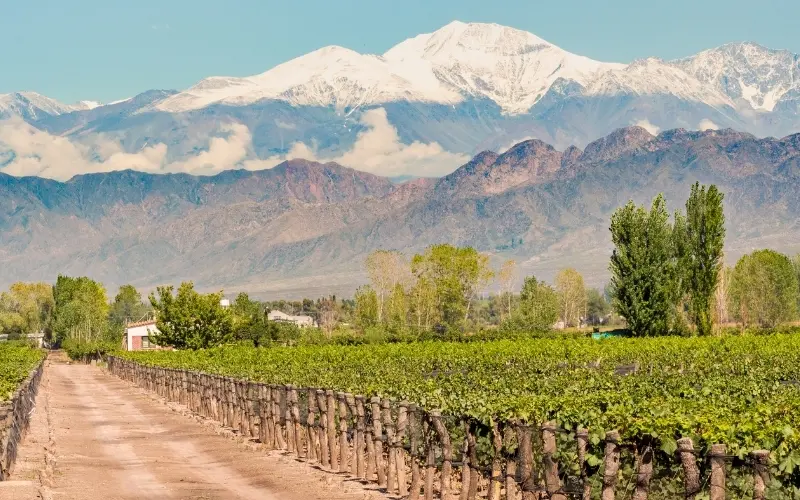
Mendoza is one of the best places to visit in Argentina for wine lovers, mountain scenery and outdoor activities. Located at the foot of the Andes, the city is surrounded by vineyards and is best known for Malbec, which has become closely associated with the Mendoza wine region.
The main wine areas include Luján de Cuyo and the Uco Valley, where you can visit wineries, taste local wines and enjoy views of the Andes. Mendoza itself is pleasant to explore, with tree-lined streets, plazas, cafés and restaurants.
Beyond the vineyards, the Andes provide plenty to do. Day trips from Mendoza can take you toward Aconcagua, the highest mountain in the Americas, while the surrounding valleys are popular for hiking, horseback riding and rafting.
Mendoza works especially well if you want to combine Argentine wine and food with some time in the mountains. It is also one of the easiest destinations to add to a wider Argentina itinerary.
4. Bariloche & the Lake District
Best for: Lakes, mountains and skiing
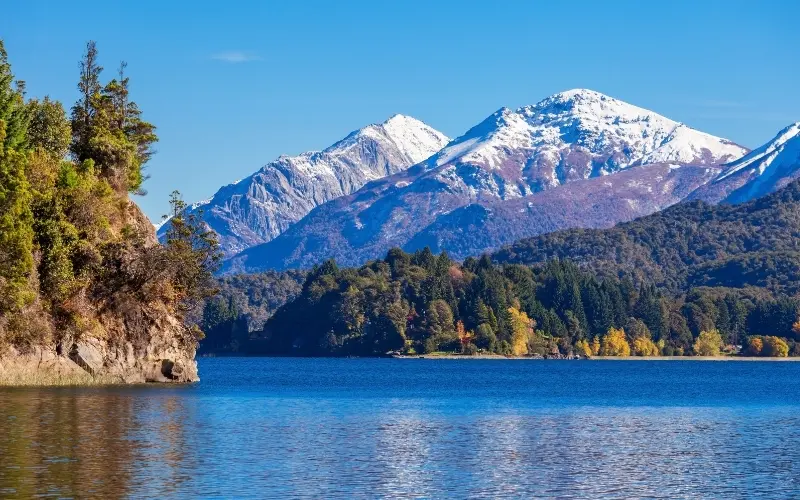
Bariloche is one of the most beautiful places to visit in Argentina if you enjoy mountain scenery, clear lakes and outdoor activities. Set beside Lake Nahuel Huapi in northern Patagonia, the city is surrounded by forests, snow-capped peaks and some of the country’s most scenic landscapes.
In summer, Bariloche is a popular base for hiking, kayaking, cycling and exploring the surrounding lakes. The Seven Lakes Route is one of the region’s best-known scenic drives, linking forests, viewpoints and turquoise lakes between Bariloche and San Martín de los Andes.
Winter brings a different experience, with snow covering the mountains and Cerro Catedral becoming one of Argentina’s main ski areas. Bariloche is also famous for its chocolate, with shops and cafés throughout the town.
The wider Lake District is worth exploring beyond Bariloche itself. Small mountain towns, winding roads and quiet lakes make this one of the best areas in Argentina for a road trip and time outdoors.
5. El Calafate & Los Glaciares National Park
Best for: Glaciers and Patagonia
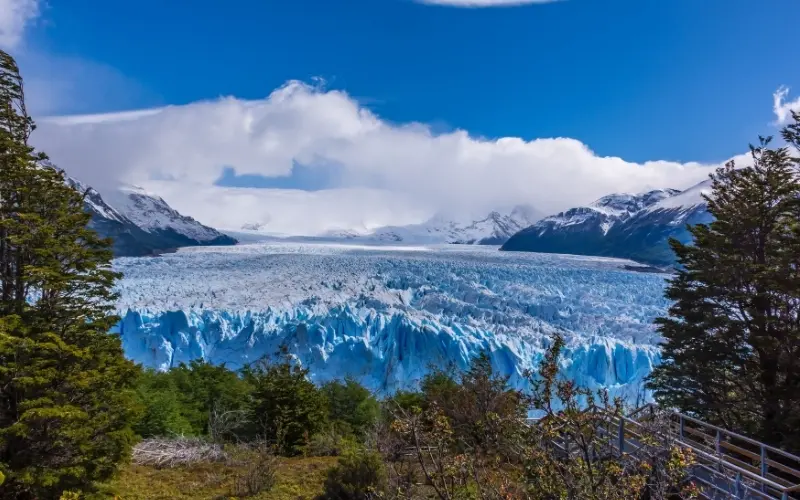
El Calafate is the main gateway to Los Glaciares National Park and one of the best places to visit in Argentina for seeing Patagonia’s famous ice fields. The town sits beside Lake Argentino, with the rugged landscapes of southern Patagonia beginning just beyond it.
The biggest reason people come here is Perito Moreno Glacier. Its enormous blue-white ice wall rises above Lago Argentino, and viewing platforms give you several angles over the glacier. If you’re lucky, you may even hear the deep crack of ice before a section breaks away and crashes into the water.
A boat trip is another good way to experience the area. From the water, you can get a closer look at Perito Moreno and other glaciers that are difficult to reach on foot.
El Calafate has plenty of restaurants, cafés and places to arrange excursions, making it a convenient base for exploring this part of Patagonia. For many travelers, a visit here is the easiest way to add glaciers to an Argentina itinerary.
6. El Chaltén
Best for: Hiking and mountain scenery
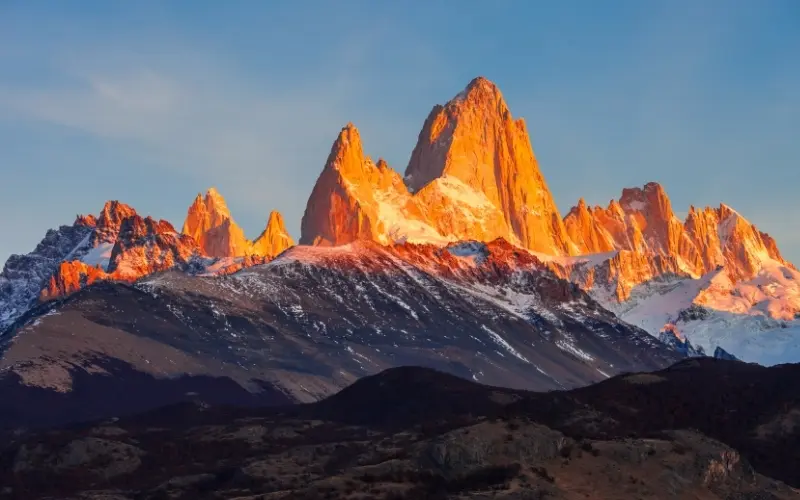
If Patagonia is the part of Argentina you are most excited about, El Chaltén should be high on your list. This small mountain town is surrounded by trails leading into some of the most impressive scenery in Los Glaciares National Park, with Mount Fitz Roy dominating the horizon.
You don’t have to be an experienced trekker to enjoy El Chaltén. There are shorter walks through forests and valleys, while longer routes take you toward glacial lakes and some of the best views of Fitz Roy. Laguna de los Tres is the big hike for many visitors, ending with a close view of the mountain and its jagged peaks.
The town itself has a relaxed, outdoorsy feel, with hiking gear shops, cafés and restaurants catering to people returning from the trails. Weather can change quickly in this part of Patagonia, so it pays to keep some flexibility in your plans.
For travelers looking for things to do in Argentina beyond cities and sightseeing, El Chaltén offers some of the country’s best hiking without needing to join a major expedition.
7. Ushuaia and Tierra del Fuego
Best for: Southern wilderness, wildlife and adventure
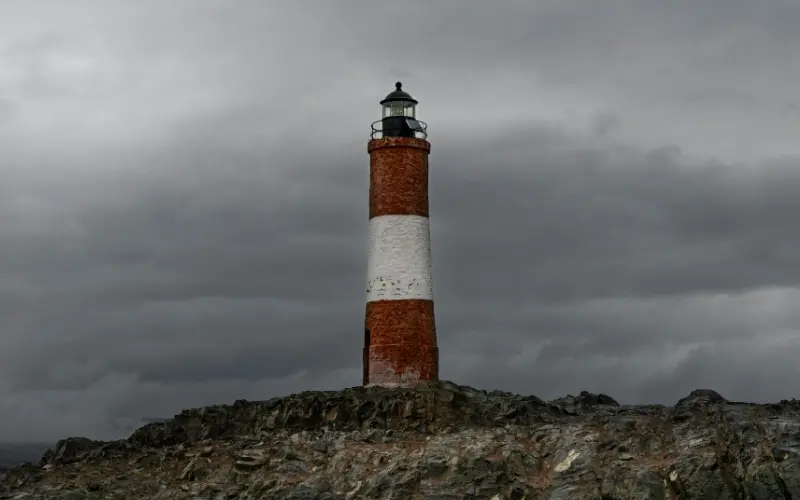
Ushuaia sits at the southern tip of Argentina, surrounded by mountains and the waters of the Beagle Channel. Its nickname, the End of the World, comes from its remote position and has helped make it one of the most memorable places to visit in Patagonia.
The city is a starting point for exploring Tierra del Fuego National Park, where trails pass through forests, lakes, rivers and rugged coastal landscapes. You can spend a day hiking, take a boat along the Beagle Channel, or simply enjoy the views of the mountains around the city.
Wildlife is another reason to come south. Boat trips can take you past colonies of seabirds and sea lions, while the surrounding forests are home to a variety of native species.
Ushuaia is also the main departure point for many Antarctica cruises, so travelers heading to the White Continent often spend a few days here before setting sail. Even without an Antarctic trip, the combination of mountains, water and remote wilderness makes Ushuaia a worthwhile stop in Argentina.
8. Salta and the Northwest
Best for: Colorful landscapes, colonial architecture and local culture
Northern Argentina feels very different from Buenos Aires and Patagonia, and Salta is a good place to experience that contrast. The city has preserved much of its colonial character, with historic buildings, lively plazas and a strong regional food culture.
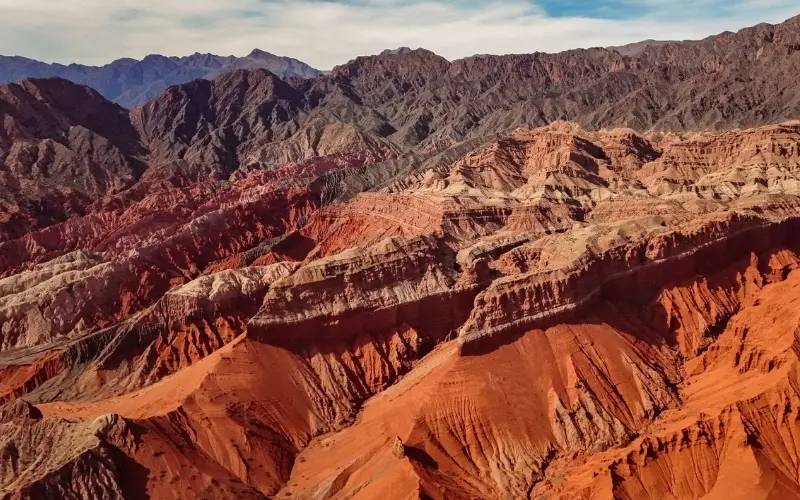
Salta also makes a useful base for exploring the landscapes beyond the city. Roads lead into dry valleys, high-altitude mountains and small villages where the scenery changes dramatically with every stretch of the journey. The route toward Cafayate is particularly scenic, passing through the red-rock formations of the Quebrada de las Conchas and vineyards that produce some of Argentina’s distinctive northern wines.
The region is also known for its Indigenous heritage, traditional crafts and Andean influences. In places such as Cachi and Cafayate, you get a very different view of Argentina from the cosmopolitan atmosphere of the capital.
For travelers who have already seen the country’s major cities and want landscapes, culture and a road-trip experience, Salta and the surrounding northwest are well worth adding to the itinerary.
9. Córdoba
Best for: History, architecture and countryside
Córdoba is Argentina’s second-largest city and a good choice if you want to see a different side of the country. Its historic center has strong colonial and Jesuit influences, while the surrounding Sierras offer a change of pace with mountain towns, rivers and countryside.
The Jesuit Block and Estancias of Córdoba are among the city’s most important historical attractions and are recognized as a UNESCO World Heritage Site. Around the central area, you can also find churches, museums, old university buildings and lively streets filled with cafés and restaurants.
Outside the city, the Sierras de Córdoba are popular for hiking, swimming and scenic drives. Towns such as Villa General Belgrano and La Cumbrecita are especially appealing if you want to spend some time in the countryside.
Córdoba is often overlooked by visitors heading straight to Patagonia or Buenos Aires, but its combination of history, local life and mountain scenery makes it one of the more interesting places to visit in Argentina.
10. Península Valdés and Puerto Madryn
Best for: Whales, penguins and marine wildlife
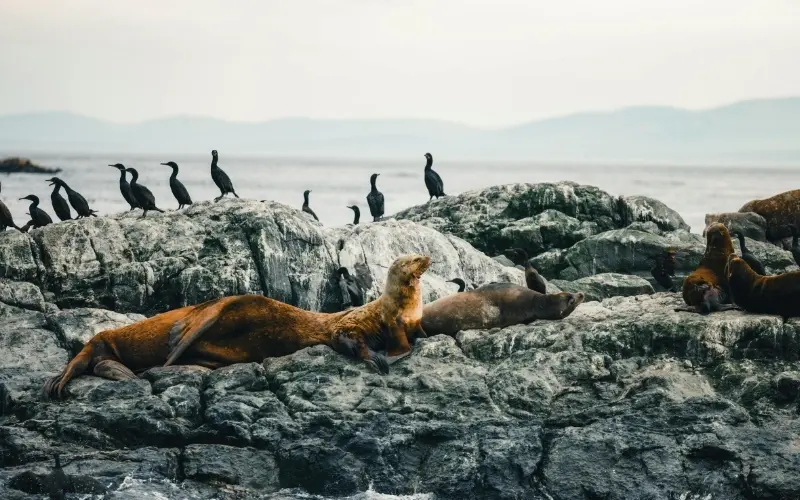
Península Valdés is one of the best places to visit in Argentina for wildlife. This protected peninsula on the Atlantic coast is known for its marine animals, including southern right whales, sea lions, elephant seals and penguins.
Puerto Madryn is the main base for exploring the area. From here, trips head into Península Valdés to look for wildlife along the coast. During whale season, southern right whales can often be seen close to shore, while other parts of the peninsula are important breeding grounds for seals and sea lions.
The wildlife changes with the seasons, which is part of what makes the region interesting. Magellanic penguins gather along the coast, and large numbers of seabirds can be seen throughout the peninsula.
If you would rather spend your time watching animals than hiking through mountains or exploring cities, Puerto Madryn and Península Valdés are best places to add to an Argentina itinerary.
11. Aconcagua
Best for: Andes scenery, trekking and mountaineering
Aconcagua is the highest mountain in the Americas, rising to 6,961 meters in the Andes west of Mendoza. You don’t need to climb the summit to appreciate it. The surrounding Aconcagua Provincial Park has trails and viewpoints where you can see the mountain and the enormous valleys around it.
The Horcones area is the main access point for visitors, with several walking routes through the high-altitude landscape. On a clear day, the scale of the Andes is striking, with rocky peaks stretching far beyond the main mountain.
Experienced mountaineers come from around the world to attempt the summit, while other visitors make a day trip from Mendoza simply to see Aconcagua. The drive through the Andes is part of the experience, passing mountain valleys and changing landscapes along the way.
If you are already visiting Mendoza, Aconcagua is a natural addition for a taste of Argentina’s high-altitude mountain country without committing to a major expedition.
12. Esteros del Iberá
Best for: Wetlands, wildlife and birdwatching

Esteros del Iberá offers a completely different landscape from the glaciers and mountains of Patagonia. This vast wetland system in northeastern Argentina is made up of lagoons, marshes, grasslands and waterways that support an impressive range of wildlife.
Capybaras are among the animals you are most likely to spot, often appearing beside the water or along the edges of the trails. Depending on where you explore, you may also see caimans, marsh deer, howler monkeys and hundreds of bird species.
Boat excursions are one of the best ways to explore the wetlands, allowing you to move quietly through the waterways while looking for animals along the banks. Guided walks and horseback rides offer another way to experience the landscape.
Iberá is particularly appealing to photographers and wildlife enthusiasts because the scenery is open, peaceful and packed with opportunities to observe animals in their natural environment.
13. Quebrada de Humahuaca
Best for: Colorful mountains, history and Indigenous culture
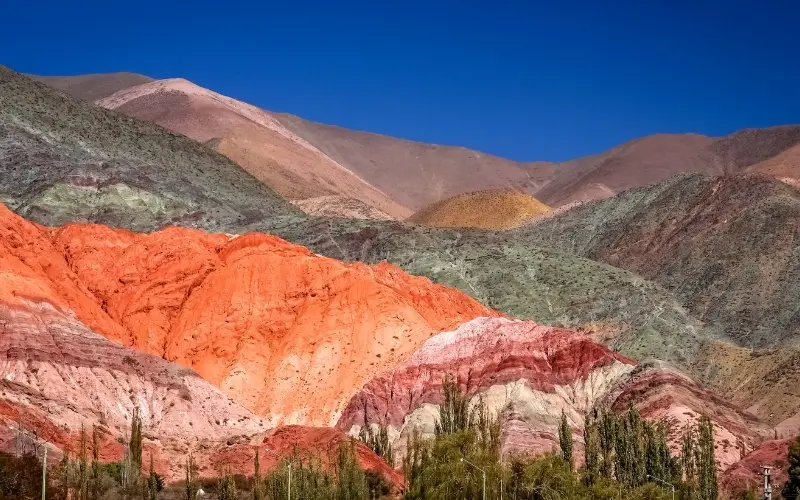
Quebrada de Humahuaca is a dramatic mountain valley in northern Argentina, stretching through the province of Jujuy. Its layered red, orange and purple hills are among the most distinctive landscapes in the country, but the region is just as interesting for its long history and Andean culture.
Purmamarca is one of the most popular stops, with the Cerro de los Siete Colores rising behind the town. Further north, Humahuaca has narrow streets, adobe buildings and a strong connection to the traditions of the surrounding highlands. The area has been inhabited for thousands of years, and traces of its pre-Hispanic past can still be found throughout the valley.
The changing colors of the mountains are especially noticeable as the sunlight moves across the valley. Small villages, local markets and roadside viewpoints make the journey between towns as interesting as the main sights themselves.
For photographers and travelers interested in Argentina’s northern culture, Quebrada de Humahuaca provides some of the country’s most distinctive scenery.
14. Mar del Plata
Best for: Beaches, seafood and a seaside escape

Mar del Plata is Argentina’s best-known beach resort and has been a popular summer destination for generations. Located on the Atlantic coast, the city combines long sandy beaches with a busy waterfront, seafood restaurants and a lively atmosphere during the warmer months.
Playa Grande is one of the city’s most popular beaches, while other stretches of coastline offer quieter places to sit by the sea. The waterfront is also lined with cafés, restaurants and places to enjoy fresh seafood.
Mar del Plata has more character than a simple beach resort. You can walk along the harbor, see the traditional sea lion population around the port and explore the city’s older buildings and neighborhoods.
Summer is when the city is at its busiest, with Argentines arriving from Buenos Aires and other parts of the country for their seaside holidays. Outside the peak season, Mar del Plata is considerably quieter and can be a pleasant coastal break.
How to Choose Where to Go in Argentina
Argentina covers an enormous area, so choosing destinations based on your interests is more practical than trying to see everything in one trip. Buenos Aires is the country’s cultural and culinary center, Mendoza is known for wine and the Andes, and Patagonia is the place to go for glaciers, hiking and dramatic mountain scenery.
For a first trip to Argentina, Buenos Aires, Iguazú Falls and Mendoza make a strong combination. If you have two weeks or more, you can add Patagonia and spend time around El Calafate and El Chaltén.
If hiking and mountain landscapes are your priority, focus on El Chaltén, Bariloche and Aconcagua. Travelers interested in wildlife can choose between the rainforest around Iguazú Falls, the marine life of Península Valdés and the wetlands of Esteros del Iberá.
For wine and food, Mendoza is the obvious choice, with the Uco Valley and Luján de Cuyo offering some of Argentina’s best-known wine experiences. Cafayate is another option, particularly if you are already traveling through Salta and the northwest.
Those interested in history and culture should consider Buenos Aires, Córdoba, Salta and Quebrada de Humahuaca. Each offers a different perspective on Argentina, from colonial architecture and European influences to Andean traditions and Indigenous heritage.
If you simply want time by the sea, Mar del Plata is Argentina’s best-known beach destination and a popular summer retreat.
The distances between these regions are significant, so build your trip around two or three areas rather than trying to cover the entire country.
Best Time to Visit Argentina
Argentina can be visited throughout the year, but the ideal season depends on where you are going. The country stretches from subtropical regions in the north to the cold, windswept landscapes of southern Patagonia, so conditions can vary considerably at the same time of year.
Spring, from September to November, is a good period for exploring Buenos Aires, Mendoza and northern Argentina. Temperatures are generally comfortable for sightseeing, and the landscapes begin to turn green after winter.
Summer, from December to February, is the main travel season for Patagonia. Longer daylight hours are useful for hiking around El Chaltén, exploring Los Glaciares National Park and visiting Tierra del Fuego. Buenos Aires and northern Argentina can be hot during these months.
Autumn, from March to May, brings cooler temperatures and attractive colors to Mendoza’s vineyards. It is also a pleasant period for exploring Buenos Aires and parts of northern Argentina.
Winter, from June to August, is the best season for skiing in destinations such as Bariloche. Northern Argentina can also be appealing during the cooler months, while parts of Patagonia become much more difficult to access because of snow and winter conditions.
If your itinerary covers several regions, check conditions for each destination individually. There is a significant difference between the weather in Buenos Aires, Iguazú and southern Patagonia.
How Long Do You Need in Argentina?
Argentina’s size means that the length of your trip makes a major difference. A week is enough for a focused visit, while two or three weeks allow you to combine several very different regions.
7 days: Choose Buenos Aires plus one additional destination, such as Mendoza or Iguazú Falls. Keeping the route simple will leave more time for sightseeing.
10 days: Buenos Aires, Mendoza and Iguazú Falls can be combined, although you’ll need to allow time for domestic flights.
2 weeks: This is enough for a more varied trip. Buenos Aires combined with El Calafate and El Chaltén works well for travelers who want to experience Patagonia.
3 weeks: You can comfortably include several regions, such as Buenos Aires, Mendoza, Iguazú Falls and Patagonia, with careful planning.
4 weeks or more: A longer trip allows you to explore beyond the major highlights and include places such as Salta, Quebrada de Humahuaca, Córdoba, Península Valdés or Esteros del Iberá.
When planning your route, remember that distances in Argentina are substantial. A destination that looks close on a map may still require a flight or a long bus journey.
Argentina Travel Tips for First-Time Visitors
Traveling around Argentina is relatively straightforward, but the country’s size requires some planning. A few practical considerations can make a significant difference to your trip.
Plan by region. Group destinations that are geographically close rather than crossing the country repeatedly. Mendoza and Aconcagua, for example, work naturally together, while El Calafate and El Chaltén are easy to combine on a Patagonia trip.
Consider domestic flights. Flying is often the most efficient way to cover Argentina’s longer distances. Long-distance buses are comfortable and useful on many routes, but journeys can take considerably longer.
Keep payment options available. Cards are widely accepted in cities and tourist areas, but carrying some local currency is useful for smaller businesses, markets and more remote destinations.
Know some basic Spanish. English is commonly spoken in hotels and tourist businesses, particularly in major destinations, but Spanish becomes increasingly useful outside the main tourist areas.
Pack for changing conditions. This is particularly important in Patagonia, where wind, rain and temperature can change quickly. Good layers and suitable footwear are essential for outdoor activities.
Allow some flexibility. Weather can affect excursions, particularly in Patagonia. Leaving a little space in your schedule can make it easier to adjust plans when conditions change.